
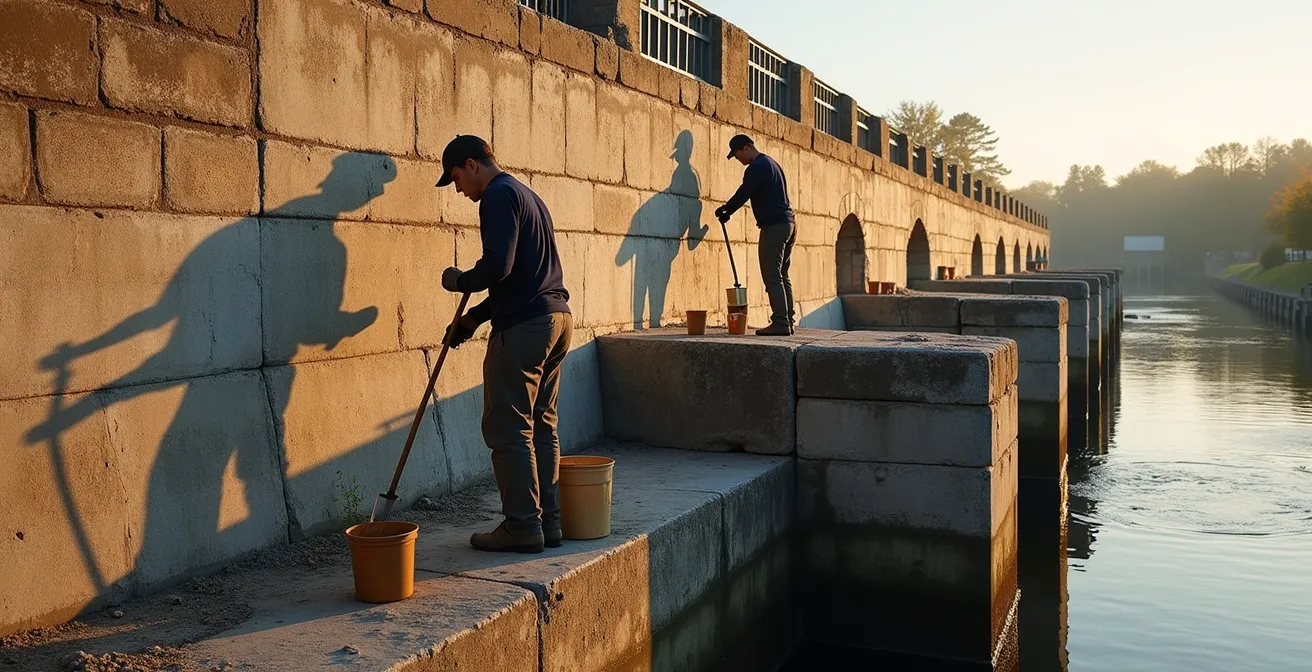
A UNESCO designation isn’t just an honour; it’s an engineering contract with the past that transforms every repair into a complex, high-stakes negotiation between centuries.
- Preservation requires using historically accurate materials and techniques, which are often less durable and far more expensive than modern alternatives.
- Managing modern demands—from public safety and tourism to environmental regulations—often clashes directly with strict conservation mandates.
Recommendation: To truly appreciate a World Heritage site, one must understand the constant, intricate engineering battle being waged to keep it authentic for the future.
For many Canadians, a UNESCO World Heritage designation is a badge of honour, a symbol of global significance for places of profound cultural or natural value. From the Rocky Mountains to the shores of Newfoundland, these sites represent the pinnacle of our shared heritage. But from a civil engineering perspective, this prestigious label is also a binding contract. It transforms a structure like the Rideau Canal from a mere historic artifact into a living engineering paradox, where the fundamental goal is not to improve or modernize, but to meticulously manage its decay.
Most people assume maintenance is about following a set of strict rules. While true, this overlooks the core tension. The real challenge lies in the constant conflict between the principles of material authenticity and the demands of 21st-century reality. We are tasked with preserving 19th-century structures using 19th-century methods, all while ensuring they can withstand modern usage, meet contemporary safety codes, and comply with environmental laws that didn’t exist when they were built. This creates a state of perpetual regulatory friction.
The central question is no longer just “how do we fix this?” but “how do we fix this in a way that honours the original builders’ intent, materials, and techniques, even when modern engineering offers a cheaper, stronger, and more durable solution?” Answering this requires a deep dive into the specific challenges faced not just at the Rideau Canal, but across Canada’s diverse portfolio of protected sites. It’s a world where the skills of a heritage mason are as valuable as a structural engineer’s calculations.
This article will deconstruct the complexities inherent in this preservation mandate. We will explore the tangible challenges of ice monitoring on a historic waterway, the conservation logic behind remote locations, the scientific imperative of fossil preservation, the staggering costs of material accuracy, and the strategies for managing overwhelming tourism, all through the lens of the engineers, scientists, and planners on the front lines.
Summary: The Engineering Paradox of Preserving Canadian Heritage
- The “Green Flag” Rule: How to Know if the Rideau Canal Skateway Is Actually Open?
- L’Anse aux Meadows: Why You Need a Car to Reach the Only Viking Site in North America?
- Why You Can’t Keep the Fossil You Found at Dinosaur Provincial Park?
- What Makes the Joggins Fossil Cliffs More Important Than Other Coastal Rocks?
- How Lunenburg Maintains Its Colorful Facades Despite Salt Air Corrosion?
- When to Capture the Perfect Sunrise at Moraine Lake to Avoid the Influencers?
- Why More Public Buildings Are Adopting Indigenous Roundhouse Concepts?
- How to Hack the Parks Canada Reservation System to Get a Spot at Lake O’Hara?
The “Green Flag” Rule: How to Know if the Rideau Canal Skateway Is Actually Open?
The Rideau Canal is a masterpiece of 19th-century military engineering, a 202-kilometre system of locks and channels that has remained remarkably intact. In winter, a 7.8-kilometre section transforms into the world’s largest skating rink, a defining Canadian experience. This modern recreational use creates a direct conflict with the site’s primary mandate: preservation. The National Capital Commission (NCC) can’t simply flood a field; they must manage a dynamic ice surface on a historic, flowing waterway without compromising the 200-year-old stone lock structures beneath.
This requires a sophisticated, data-driven approach. The “Green Flag” is not just a signal; it’s the public-facing result of a rigorous scientific protocol. Teams drill the ice daily, measuring its thickness. A minimum of 30 centimetres of solid, clear ice is required for the Skateway to open to the public. However, the quality of the ice is as important as its thickness. Factors like underwater currents, insulating snow cover, and rapid temperature fluctuations can create weak spots or “grey ice.” Consequently, the NCC employs ground-penetrating radar alongside physical drilling to create a detailed map of ice integrity, ensuring public safety on a scale that the canal’s original builders could never have imagined.
Action Plan: Verifying Rideau Canal Skateway Conditions
- Check the official NCC Skateway conditions website for real-time status updates and interactive maps.
- Look for the green flag indicator at access points, which signals safe ice conditions of at least 30cm thickness.
- Verify which specific sections of the 7.8km skateway are open, as conditions can vary significantly by location.
- Review the local weather forecast, as rapid temperature changes, heavy snow, or rain can affect ice quality and lead to closures.
- Follow NCC social media channels for the most current, last-minute updates on opening times and ice conditions.
L’Anse aux Meadows: Why You Need a Car to Reach the Only Viking Site in North America?
While the Rideau Canal demands active, intensive management due to its urban setting and heavy use, other UNESCO sites are preserved through a completely different strategy: isolation. L’Anse aux Meadows National Historic Site, located at the remote tip of Newfoundland’s Great Northern Peninsula, is a prime example. This site is globally significant as it preserves the earliest known European presence in the Americas, with excavated remains of an 11th-century Viking settlement.
Its remoteness is not an inconvenience; it is its most effective conservation tool. The nearest major airport is hours away, and there is no significant public transit. This logistical hurdle naturally limits visitor numbers, drastically reducing the physical wear and tear on the fragile archeological site. The timber-framed turf buildings, which are reconstructions based on the archeological footprint, are similar to those found in Greenland and Iceland. The harsh, windy climate and low population density have helped keep the surrounding landscape largely unchanged for centuries, allowing visitors to experience the site in a context that is remarkably close to what the Norse settlers would have seen 1,000 years ago.
From an engineering and conservation perspective, this “passive preservation” is highly effective. It minimizes the need for obtrusive infrastructure like large parking lots, extensive pathways, or crowd control barriers that would compromise the site’s historical integrity. The decision to not develop extensive tourist access is a deliberate conservation choice, prioritizing the authenticity of the site over commercial convenience. Reaching L’Anse aux Meadows requires effort, and that effort is part of the experience, filtering for visitors who are genuinely invested in its unique history.
Why You Can’t Keep the Fossil You Found at Dinosaur Provincial Park?
Dinosaur Provincial Park in the Alberta Badlands presents another facet of the preservation paradox: the protection of scientific data ‘in-situ’. The park is one of the richest dinosaur fossil sites in the world, a landscape so dense with 75-million-year-old remains that bones literally litter the ground. For a visitor, the temptation to pick up a small, seemingly insignificant bone fragment is immense. However, the strict “no-take” rule is fundamental to the site’s Outstanding Universal Value.
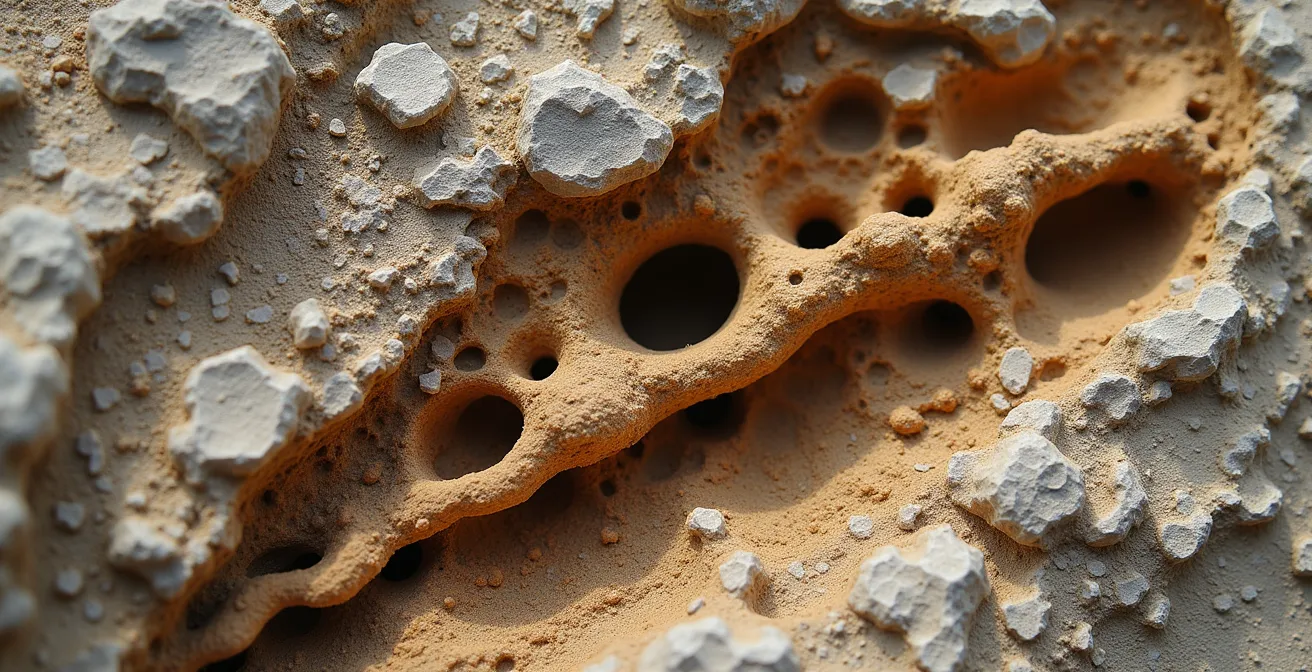
Every fossil, no matter how small, is a data point. Its exact location, the geological layer it was found in, and its position relative to other fossils provide critical information to paleontologists about the ancient ecosystem. Removing a fossil from its context is like tearing a page out of a priceless book—the object itself remains, but its story is lost forever. This principle of contextual integrity is paramount. As Melissa Grey, Curator of Palaeontology at the Joggins Fossil Institute, states about a similar rule in Nova Scotia:
All fossils in Nova Scotia are protected, so, while visitors are able to find fossils, they are not allowed to keep them: take photos, not fossils!
– Melissa Grey PhD, Curator of Palaeontology at Joggins Fossil Institute
This rule transforms the park from a simple tourist destination into a massive, open-air scientific laboratory. Park management and scientists work to document, excavate, and preserve specimens, but also to protect the unexcavated areas for future generations of researchers with potentially more advanced technologies. Allowing visitors to collect fossils would not only deplete the resource but would irrevocably corrupt the scientific record of one of the most important Late Cretaceous sites on Earth.
What Makes the Joggins Fossil Cliffs More Important Than Other Coastal Rocks?
At first glance, the Joggins Fossil Cliffs in Nova Scotia might look like any other stretch of eroding coastline. However, their UNESCO designation stems from the unparalleled scientific story they tell. These cliffs are not just rocks; they are the world’s most complete fossil record of life from the Coal Age, a period from over 300 million years ago during the Late Carboniferous period. This is the “Outstanding Universal Value” (OUV) that UNESCO seeks to protect: an attribute so exceptional that it transcends national boundaries and is of importance to all of humanity.
What makes Joggins unique is its preservation of an entire ecosystem. The cliffs contain the fossilized remains of ancient forests with trees still in their upright growth positions, as well as the creatures that lived in them. Most notably, Joggins is where Sir William Dawson discovered *Hylonomus lyelli*, the earliest known reptile in the fossil record. This discovery was a key piece of evidence in Charles Darwin’s theory of evolution, as it provided a concrete link between amphibians and reptiles. The fossils here are not just of large, charismatic animals; they include primitive tetrapods, invertebrates, and extensive plant life, offering a complete snapshot of a terrestrial world from a pivotal moment in Earth’s history.
The constant erosion by the Bay of Fundy’s massive tides is both a threat and a blessing. While it wears away the cliffs, it also continually exposes new fossils. Managing the site, therefore, is not about stopping the natural process of erosion—an impossible engineering feat—but about managing the research and collection process to salvage new discoveries as they emerge. It is a dynamic, ever-changing outdoor laboratory, and its importance lies in the completeness of the story it tells about the dawn of reptiles.
How Lunenburg Maintains Its Colorful Facades Despite Salt Air Corrosion?
The Old Town of Lunenburg in Nova Scotia is recognized by UNESCO as the best surviving example of a planned British colonial settlement in North America. Its iconic, brightly coloured wooden buildings are not just a charming aesthetic choice; they are a core component of its heritage value. Maintaining this historic streetscape in a harsh maritime environment presents a significant and costly engineering and materials science challenge.
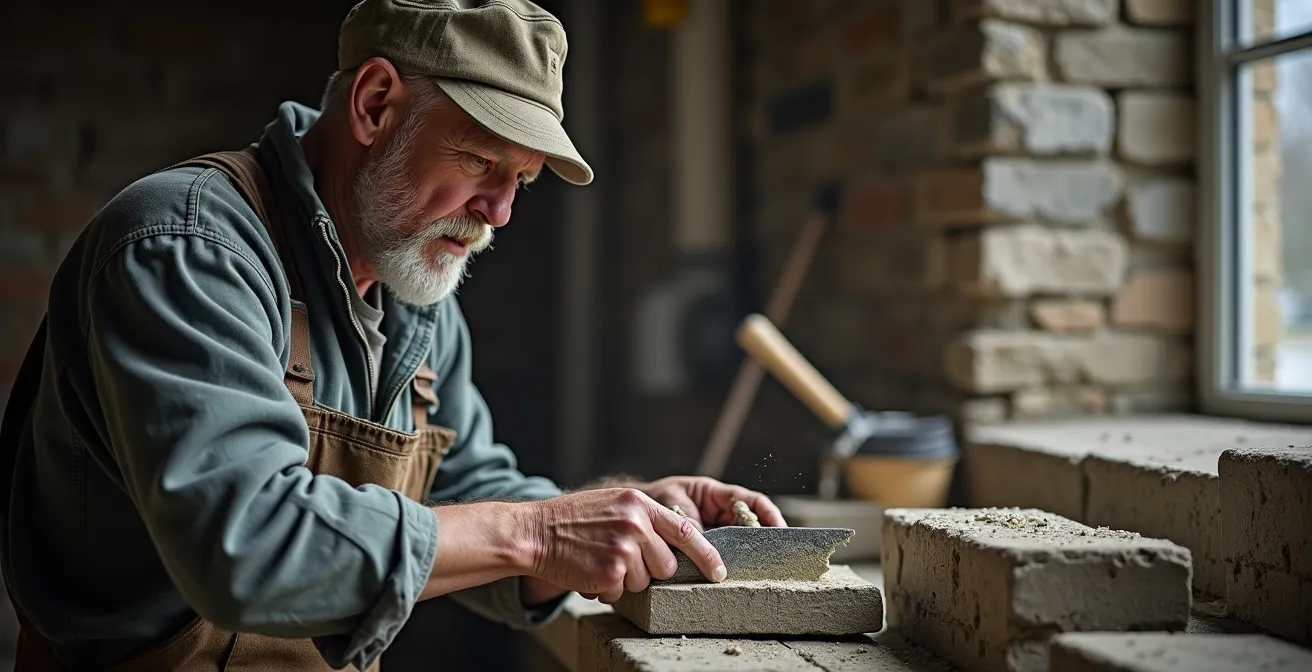
The primary enemy is the salt-laden air, which accelerates the decay of wood and the corrosion of metal fixings. UNESCO’s preservation guidelines mandate material authenticity. This means that repairs cannot be made with modern, low-maintenance materials like vinyl siding or PVC windows, even if they would be more durable and cost-effective. Instead, homeowners and the town must use traditional materials and techniques. Wood clapboard must be replaced with wood clapboard, and historic multi-paned wooden sash windows must be repaired or replaced with custom-built wooden replicas, not standard vinyl units. This commitment to authenticity comes at a staggering premium, as illustrated by a comparison of material costs.
The following table breaks down the financial implications of adhering to these strict heritage requirements, showing the stark difference between traditional, compliant materials and their modern, non-compliant alternatives.
| Material Type | Traditional (UNESCO Required) | Modern Alternative | Cost Difference |
|---|---|---|---|
| Windows | Custom wooden sash | Vinyl replacement | 3x more expensive |
| Paint | Marine-grade historic formulas | Standard exterior paint | 2x more expensive |
| Siding | Wood clapboard | Vinyl siding | 4x more expensive |
This table, based on an analysis of building costs in heritage zones, clearly demonstrates the economic burden of preservation. The paint itself must be of a specific historic formulation, often marine-grade paints designed to withstand the salt spray, which are significantly more expensive than standard exterior latex. For property owners, maintaining a home in Lunenburg is a significant financial commitment to collective heritage, a tangible example of the high price of authenticity.
When to Capture the Perfect Sunrise at Moraine Lake to Avoid the Influencers?
Not all UNESCO site management challenges involve material decay; some of the most complex involve managing human desire. Moraine Lake, within Banff National Park, is a case in point. Its impossibly turquoise water and the backdrop of the Ten Peaks have made it one of the most photographed landscapes on Earth. Its popularity, fueled by social media, created a traffic and environmental crisis, forcing Parks Canada to close the access road to personal vehicles permanently. The challenge here is not preservation of stone or fossils, but of the “wilderness” experience itself, and the ecological integrity of the fragile alpine environment.
As a site established in 1885 as Canada’s first National Park, Banff has a long history of managing tourism, but the scale of modern “Instagram tourism” is unprecedented. The engineering solution was not to build bigger parking lots—which would only induce more demand and further damage the ecosystem—but to implement a system of managed access. Now, the only way to reach the lake for sunrise is via a Parks Canada shuttle or a commercial tour operator. This shifts the problem from traffic chaos to a logistical challenge of capacity management and reservation systems.
For photographers aiming to capture that perfect, crowd-free shot, the strategy has changed from a simple early alarm to a calculated tactical plan. Success requires navigating the Parks Canada reservation system, which is notoriously competitive. The goal is to secure a spot on the earliest “Alpine Start” shuttle, which departs around 4 a.m., to arrive well before the sun crests the peaks and before the subsequent waves of visitors arrive. Beyond timing, photographers are encouraged to move past the iconic and often crowded Rockpile Trail to find unique compositions along the shoreline, preserving both their shot and the trail itself from overuse.
Key Takeaways
- UNESCO preservation is an active engineering process, not a passive status, defined by the conflict between historical authenticity and modern standards.
- Management strategies vary drastically, from intensive, hands-on intervention in urban sites to deliberate isolation for remote ones.
- The cost of authenticity is a major factor, often requiring the use of materials that are multiples more expensive than modern, more durable alternatives.
Why More Public Buildings Are Adopting Indigenous Roundhouse Concepts?
The concept of “heritage” in Canada is rightly expanding beyond colonial and geological history to more fully embrace living Indigenous cultures. This is reflected in a growing architectural movement where modern public buildings are incorporating traditional Indigenous design principles, such as the roundhouse. This is not mere aesthetic appropriation; it is a fundamental shift in how we think about the purpose of a building and its relationship to community and land. This movement is a powerful part of how Parks Canada, with support from the Canadian Commission for UNESCO, is working to implement the World Heritage Convention by broadening the scope of what is considered heritage.
The traditional roundhouse, or similar circular structures, is common to many Indigenous cultures. Its design is inherently non-hierarchical. With no corners and no head of the table, a circle encourages consensus-building, dialogue, and a sense of equality among occupants. This contrasts sharply with the rectilinear, hierarchical spaces typical of Western architecture (e.g., the courtroom, the lecture hall). Adopting these concepts is a form of reconciliation in action, creating spaces that are culturally inclusive and reflect Indigenous worldviews.
Case Study: Wanuskewin Heritage Park
A powerful example is the recent renovation of Wanuskewin Heritage Park in Saskatchewan, a sacred gathering place for Northern Plains Indigenous Peoples for over 6,000 years. The modern interpretive centre and facilities prominently feature circular design principles. The main building incorporates a large, circular atrium that serves as a central gathering space, echoing the form of a tipi. This design facilitates storytelling, ceremony, and community events. Furthermore, the park’s layout, including viewing platforms for the reintroduced bison herd, follows organic, flowing lines that respect the natural topography, a core tenet of Indigenous architecture that emphasizes harmony with the land.
By integrating these concepts, architects are not just preserving a static idea of the past. They are demonstrating that Indigenous heritage is a living, evolving source of knowledge that can provide elegant solutions to modern social and design challenges. It represents a move away from seeing heritage as something frozen in time and toward understanding it as a continuous, vital cultural practice.
How to Hack the Parks Canada Reservation System to Get a Spot at Lake O’Hara?
For many outdoor enthusiasts, Lake O’Hara in Yoho National Park represents the pinnacle of Canadian alpine beauty. To protect its exceptionally fragile ecosystem of meadows, larch forests, and turquoise lakes, Parks Canada enforces one of the most restrictive access protocols in the entire national park system. There is no “hacking” the system in a malicious sense; rather, securing a coveted spot on the daily access bus requires understanding the system’s engineering and applying a diligent, strategic approach.
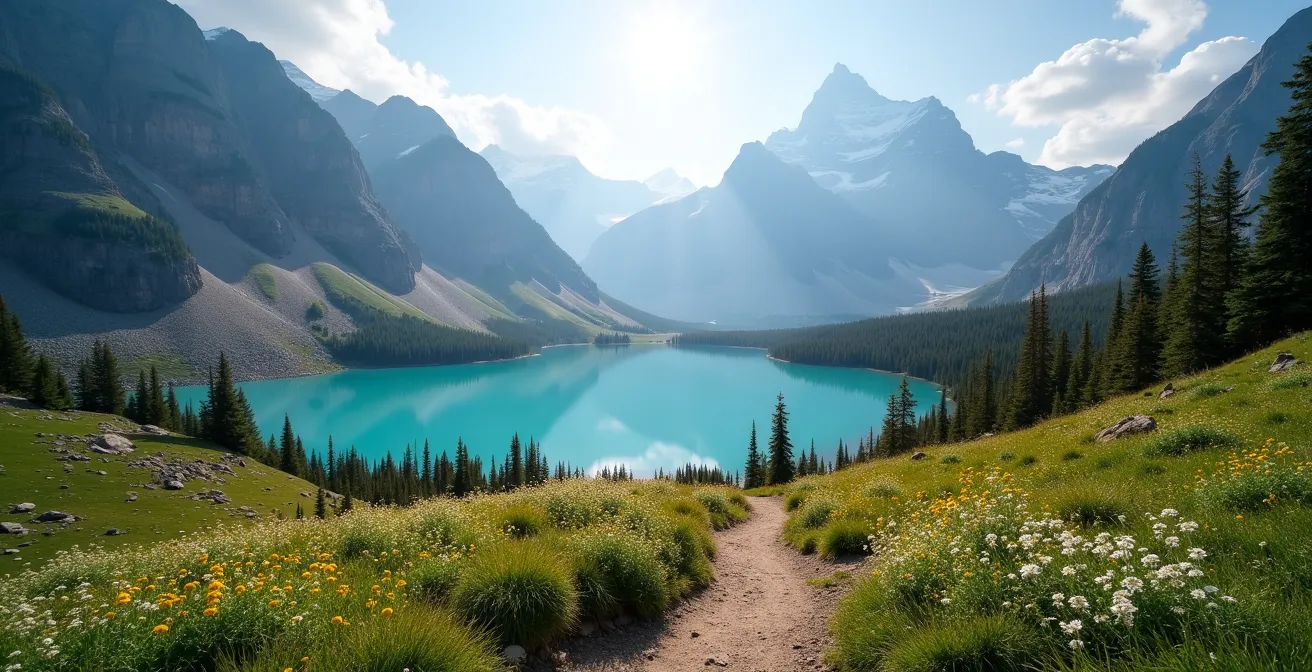
Access is primarily controlled by a random-draw lottery for bus seats, which has an extremely low success rate due to overwhelming demand. This is the first layer of protection. However, a small number of seats become available through a rolling 24-hour cancellation window. This is where the “hack” comes in: persistent, timed refreshing of the Parks Canada reservation portal. Most cancellations are processed overnight, making early morning the prime time to check for newly available spots for the following day. This requires patience and a bit of luck, but it is a viable strategy for those who miss the lottery.
Ultimately, the system is designed to reward planning and dedication while severely limiting impulse visitation, thereby minimizing human impact. The strict quotas ensure the trail network remains uncrowded, vegetation is not trampled, and the area’s wildlife can thrive with minimal disturbance. The difficulty of access is the primary tool of its preservation. It is the logical endpoint of the heritage management paradox: when a site is too beautiful and too fragile, the only effective engineering solution is to engineer human access to a near-standstill, ensuring its “Outstanding Universal Value” is preserved for generations who will, hopefully, also have the dedication to see it.
Frequently Asked Questions About Lake O’Hara Access
Can I access Lake O’Hara without a bus reservation?
Yes, you can hike the 11km access road which takes 2-3 hours with significant elevation gain.
When do last-minute cancellations typically appear?
Most cancellations appear 2-3 days before the date when people’s plans change.
Are there guaranteed ways to access Lake O’Hara?
Booking with certified local guide companies provides near-guaranteed access through their allocated quotas.