

In summary:
- A truly sustainable Toronto-to-Halifax trip requires looking beyond the train and scrutinizing every logistical detail.
- Key decisions involve choosing genuinely energy-efficient accommodations (LEED vs. Green Key) and packing for zero waste on the long journey.
- Renting an EV in Nova Scotia is viable but demands careful planning around winter range loss and the specific heating system (heat pump vs. resistive).
- Positive impact can be made through local volunteering or citizen science projects directly from the train.
- The future High-Frequency Rail will improve efficiency, but current sustainable travel relies on informed, data-driven choices today.
For the climate-conscious traveller, the decision to forgo a flight from Toronto to Halifax is the easy part. It’s a clear win for reducing your carbon footprint. But the real work, and the true measure of a sustainable journey, lies in the complex web of logistics that follows. Many guides will tell you to simply take the train and enjoy the scenery, but this overlooks the critical details that separate a “green-in-name-only” trip from one that is genuinely low-impact. It’s important to clarify that VIA Rail’s Ocean service does not transport private vehicles, so the journey is about passengers, not their cars.
This journey, which takes approximately 28 hours by rail including the Toronto-Montreal leg, presents a unique set of challenges and opportunities. The common advice—pack a reusable water bottle, offset your carbon—scratches the surface. But what if the key to sustainable travel wasn’t just about grand gestures, but about a series of calculated, informed decisions? This guide adopts a logistics-first approach, moving beyond platitudes to give you a framework for planning every detail.
We will dissect the real-world impact of your choices, from the energy certification of your Halifax hotel to the technical specifications of a rental EV for tackling the Cabot Trail. We will explore how to pack a true zero-waste kit for a multi-day train ride and how you can contribute to conservation efforts without even leaving your seat. This is your playbook for transforming a simple flight-free goal into a masterclass in logistical sustainability.
To navigate this detailed planning process, this article is structured to address each key logistical decision you’ll face. Explore the sections below to build your truly sustainable Canadian cross-country adventure from the ground up.
Summary: The Ultimate Logistical Guide to a Flight-Free Trip from Toronto to Halifax
- Green Key vs. LEED: Which Hotel Certification Actually Saves Energy?
- How to Pack a Zero-Waste Food Kit for a 3-Day Camping Trip?
- Is the Range of an Electric RV Sufficient for the Cabot Trail?
- Tree Planting vs. Trail Maintenance: Which Volunteer Gig Suits Your Fitness Level?
- Which Canadian Carbon Offset Programs Actually Plant Trees in Canada?
- When Will the High-Frequency Rail Corridor Actually Connect Toronto and Quebec City?
- The ‘Minus 30 Rule’: How Much Range Will Your EV Lose in Deep Freeze?
- Heat Pump or Resistive Heater: Which EV Feature Matters Most in Winter?
Green Key vs. LEED: Which Hotel Certification Actually Saves Energy?
Once you arrive in Halifax, your choice of accommodation becomes the next critical factor in your trip’s energy calculus. Many hotels boast “eco-friendly” practices, but certifications like Green Key Global and LEED (Leadership in Energy and Environmental Design) provide a more tangible measure of commitment. Understanding the difference is key to making a choice based on data, not marketing. Green Key is an operational certification, focusing on a hotel’s ongoing sustainable practices, from waste management to staff training. It’s a strong indicator of day-to-day environmental stewardship.
LEED, on the other hand, is a much more intensive certification focused on the design and construction of the building itself. It evaluates factors like site selection, materials used, and, most importantly, energy and water efficiency. A LEED-certified building is fundamentally designed to be less resource-intensive. For the sustainability-focused traveller, this often translates to more verifiable impact. While an office tower and not a hotel, the LEED Platinum-certified Manitoba Hydro Place in Winnipeg serves as a benchmark for what’s possible in a harsh Canadian climate, using extensive glass and solar design to maximize natural light and heat.

The numbers confirm the impact of this structural approach. Independent research shows that LEED-certified buildings, on average, achieve a 26% energy reduction and 30% water savings compared to non-certified buildings. While a hotel with a high Green Key rating is making a positive effort, a LEED-certified hotel has demonstrated a deeper, structural commitment to energy efficiency. For the logistical planner, prioritizing a LEED-certified property in Halifax offers a greater guarantee of minimizing your stay’s footprint.
Ultimately, the ideal choice is a hotel that holds both certifications, but if you must choose, the verifiable energy savings of a LEED-certified building provide a more robust foundation for a sustainable stay.
How to Pack a Zero-Waste Food Kit for a 3-Day Camping Trip?
The long train journey to Halifax is a contained ecosystem, making it a perfect opportunity to practice rigorous zero-waste principles. This isn’t just about avoiding single-use plastics; it’s a logistical challenge of packing for self-sufficiency over a 28-hour trip, especially if your journey continues with outdoor activities like camping. The goal is to generate as little trash as possible, both on the train and at your destination. This requires a shift from buying on-the-go to preparing in advance.
The core of your kit should be reusable containers, but with limited cabin space on a train, bulky items are impractical. This is where a thoughtful selection of materials makes all the difference. Think lightweight and compressible. Beeswax wraps are excellent for sandwiches and snacks, taking up almost no space once used. Reusable silicone bags are perfect for holding everything from trail mix to leftover portions, and they can be compressed flat. A compact spork and cloth napkin set eliminates the need for disposable cutlery and paper products often found in dining cars or station cafes.
VIA Rail itself is making strides in this area, with a public commitment to offer zero-waste trains in the Québec City-Windsor corridor by 2025. Aligning your personal habits with the carrier’s goals enhances the overall impact of your trip. Pre-portioning dry goods like oats or pasta for a subsequent camping trip into reusable mesh produce bags not only saves space but also streamlines meal prep once you arrive in the Maritimes. The key is to think of your food kit not as a burden, but as an integrated part of your sustainable travel system.
- Use reusable silicone food bags instead of plastic bags – they compress flat for train travel storage.
- Pack beeswax wraps for sandwiches and snacks – they are lighter than containers for limited train cabin space.
- Bring a collapsible water bottle and coffee cup to refill at train stations and on board.
- Pre-portion dry goods in reusable mesh produce bags for easy access and minimal packaging.
- Include a compact spork set and cloth napkins to avoid single-use cutlery and paper waste.
By curating a lightweight, efficient, and entirely reusable food kit, you actively reduce your environmental footprint throughout the entire duration of your journey, from the train car to the campsite.
Is the Range of an Electric RV Sufficient for the Cabot Trail?
Arriving in Nova Scotia, the allure of exploring iconic landscapes like the Cabot Trail is strong. For the flight-free traveller, renting an electric vehicle (EV) or even an electric RV seems like the logical next step. However, the reality of EV touring in a region with rugged terrain and variable weather demands careful logistical planning. The primary concern is not just range, but predictable range, especially outside of the main Halifax hub.
The Cabot Trail is a 298-kilometre loop with significant elevation changes and long stretches between major towns. While charging infrastructure is improving, it’s not as dense as in the Greater Toronto Area. Planning your overnight stops around available Level 2 or DC fast chargers is non-negotiable. Apps like PlugShare or ChargeHub are essential tools for mapping out a viable itinerary before you even book the vehicle. You must assume that you will not be able to “just find a charger” in more remote parts of Cape Breton.
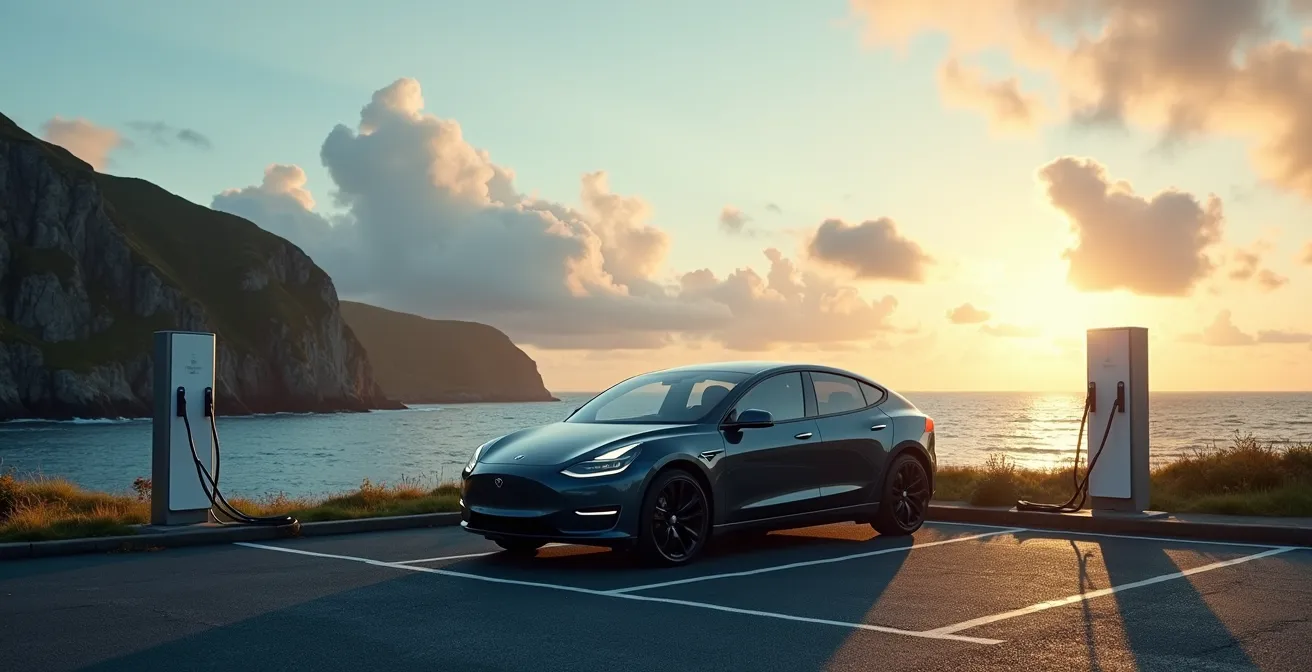
The biggest variable in Canadian EV travel is the cold. Even during shoulder seasons in the Maritimes, a sudden cold snap can have a significant impact on battery performance. A study by the Canadian Automobile Association (CAA) provides crucial data for this kind of planning. The winter test found that in temperatures between -7°C and -15°C, EVs experienced a range reduction of 14% to 39%. For an electric RV with a listed range of 300 km, this could mean a real-world range of as little as 183 km, turning a comfortable drive between chargers into a source of significant range anxiety.
The answer is yes, an EV’s range can be sufficient, but only if the driver operates like a pilot: checking conditions, planning for contingencies, and never pushing the limits of the vehicle’s stated capacity.
Tree Planting vs. Trail Maintenance: Which Volunteer Gig Suits Your Fitness Level?
A truly sustainable trip can go beyond simply minimizing your negative impact and actively seek to create a positive one. “Voluntourism” offers a way to connect with your destination on a deeper level, but choosing the right activity is crucial. In the context of the Maritimes, opportunities often revolve around conservation work, with tree planting and trail maintenance being two popular options. However, these are not interchangeable; they demand vastly different levels of physical fitness and offer different experiences.
Tree planting is a high-intensity, repetitive activity. It often involves working on uneven terrain, carrying saplings, and using tools like a planting shovel or dibble bar for hours. It requires significant cardiovascular endurance and leg and back strength. Conversely, trail maintenance can be more varied. Tasks might range from light work like clearing brush and fallen leaves to strenuous activities like building water bars or moving rocks. It can often be adapted to a wider range of fitness levels. Before committing, it’s essential to have a frank conversation with the organizing body (like a local conservation authority or a group like the Nature Conservancy of Canada) about the specific physical demands of the day.
However, contributing doesn’t always require strenuous physical labour. A broader interpretation of giving back includes supporting local communities and knowledge systems. For instance, engaging with authentic Indigenous tourism initiatives, such as those promoted by Indigenous Tourism Ontario or similar organizations in the Maritimes, is a powerful form of sustainable practice. It helps preserve culture and ensures that tourism dollars directly support the communities you visit. Another accessible option is citizen science, which can be done with minimal physical exertion.
Your Action Plan for Auditing Voluntourism Impact
- Points of contact: List all potential organizations (e.g., Nature Conservancy, local trail associations, Indigenous tourism operators) you could partner with.
- Collecte: Inventory the specific tasks involved in each opportunity (e.g., “carrying 15kg sapling bags,” “using hand shears,” “attending a cultural workshop”).
- Coherence: Confront each opportunity with your personal fitness level, available time, and sustainable travel values. Is it a good fit?
- Mémorabilité/émotion: Evaluate whether the activity provides a genuine connection or feels like a token gesture. Prioritize authenticity.
- Plan d’intégration: Choose and schedule the activity that best aligns with your physical abilities and ethical goals, confirming all logistical details.
Whether you’re digging in the dirt, clearing a path, or participating in a cultural exchange, the most impactful choice is one that is sustainable for both the environment and for you.
Which Canadian Carbon Offset Programs Actually Plant Trees in Canada?
Even after choosing the train and making countless sustainable choices, any long-distance trip will have an unavoidable carbon footprint. Carbon offsetting presents itself as a solution, but the market is filled with options of varying quality and transparency. For a trip focused on exploring Canada, it’s logical to seek out programs that have a direct, verifiable impact within the country, particularly through reforestation projects.
Many offset providers operate on a global scale, investing in projects from South American rainforests to African renewable energy. While these may be legitimate, they lack the direct connection to the landscape you are travelling through. The key is to look for organizations that are transparent about where their projects are located. Reputable Canadian-based programs like Tree Canada or Carbonzero often specify that their reforestation efforts occur on Canadian soil, sometimes even allowing you to choose the province. This ensures your contribution is directly addressing environmental needs within the national context of your journey.
It’s also worth considering the efforts of your travel providers. VIA Rail, for its part, is tackling its emissions at the source. The company is actively working towards a 30% reduction in its greenhouse gas (GHG) emissions by 2030 compared to a 2005 baseline. Supporting a carrier with documented, science-based reduction targets is, in itself, a powerful form of contributing to a lower-carbon travel system. As Cynthia Garneau, former VIA Rail President and CEO, stated, this commitment is central to the organization’s vision.
Sustainability is fundamentally related to our value of acting today for a better tomorrow.
– Cynthia Garneau, VIA Rail President and CEO
For the logistical planner, the best strategy is twofold: first, support carriers with their own aggressive GHG reduction plans, and second, if you choose to offset, select a program that guarantees your investment grows roots here in Canada.
When Will the High-Frequency Rail Corridor Actually Connect Toronto and Quebec City?
While your current journey to Halifax relies on the existing “Ocean” line, it’s crucial for any long-term sustainable travel planner to look at the horizon. The single largest development in Canadian passenger rail is the upcoming High-Frequency Rail (HFR) project. This project aims to transform train travel in the Toronto-Quebec City corridor by using dedicated tracks, which will significantly increase speed, frequency, and reliability. This isn’t just an upgrade; it’s a fundamental shift in how passenger rail will operate in Canada’s busiest region.
So, when will it be a reality? The HFR project is a massive infrastructure undertaking currently in the procurement phase. The federal government is actively seeking a private partner to help design and build the new system. While a definitive, final completion date is still years away and subject to the complexities of a project this size, official timelines point towards major construction beginning in the coming years with the system becoming operational in the early to mid-2030s. This project is the culmination of years of advocacy and investment in passenger rail.
This future vision is backed by substantial recent investment. A clear indicator of this commitment is that over the past five years, the Government of Canada has invested more than $3 billion in the modernization of VIA Rail. This includes the complete replacement of the fleet used in the current corridor, bringing in more modern, accessible, and efficient trains. While the HFR project focuses on dedicated tracks, these new trainsets are a tangible, here-and-now improvement that lays the groundwork for that future system. They represent a down payment on a faster, more sustainable rail network.
While you’ll be travelling the conventional route today, the HFR project promises a future where a flight-free journey is not just the most sustainable option, but also the most efficient and convenient one.
Key Takeaways
- True sustainable travel is an exercise in logistics, requiring data-driven decisions on everything from hotels to rental cars.
- Canadian winters are a non-negotiable factor in EV planning; always calculate range based on a potential 30-40% loss in cold weather.
- Contributing positively through volunteering or supporting local communities is as important as reducing your negative footprint.
The ‘Minus 30 Rule’: How Much Range Will Your EV Lose in Deep Freeze?
The “Minus 30 Rule” is a mental model every Canadian EV driver, or prospective renter, should adopt. It’s not a scientific law, but a practical guideline: assume your EV’s battery will be significantly less effective as the temperature plummets towards -30°C. The chemical reactions inside a lithium-ion battery slow down dramatically in the cold, reducing both its ability to discharge power (affecting range) and accept a charge (affecting charging speed). This is the single most critical piece of logistical information for planning an EV trip outside of summer in Canada.
The range loss isn’t linear. While the CAA study showed a 14-39% loss down to -15°C, the drop-off becomes more severe in a deep freeze. At -20°C or colder, a 40-50% reduction in range is a realistic expectation. A vehicle with a 400 km official range might only deliver 200-240 km of real-world driving. This dramatically alters the calculus for a trip like the Cabot Trail, turning what looks like an easy drive on paper into a route requiring multiple charging stops. Ignoring this rule is the fastest way to find yourself stranded.

However, this range loss can be managed with smart strategies. The goal is to keep the battery in its optimal temperature range as much as possible. This involves changing your habits from how you might drive a gasoline-powered car. A proactive approach is essential for mitigating the worst effects of the cold on your battery’s performance and ensuring your winter EV journey is a success.
- Keep your EV plugged in when not in use, even if fully charged. This allows the battery thermal management system to keep the battery warm using grid power, not its own charge.
- Precondition the cabin while still connected to power before you depart. Warming the car’s interior is a huge energy drain; doing it from the grid saves precious range for driving.
- Rely on heated seats and steering wheel instead of blasting the cabin heat. These are far more energy-efficient than heating the entire air volume of the car.
- Avoid rapid acceleration. Hard acceleration demands a high power draw, which is less efficient for a cold battery. Smooth inputs conserve energy.
By respecting the physics of batteries in the cold and adapting your driving style, you can make an EV a viable and sustainable option even in the harshest Canadian conditions.
Heat Pump or Resistive Heater: Which EV Feature Matters Most in Winter?
For the truly logistics-obsessed sustainable traveller, understanding an EV’s heating system is the final frontier of winter range optimization. It’s a technical detail that has a massive impact on real-world efficiency. EVs generate cabin heat in two primary ways: a traditional resistive heater or a more advanced heat pump. When renting or buying an EV for use in Canada, knowing which system it has is critical.
A resistive heater works like a space heater or a toaster: it runs electricity through a heating element to generate warmth. It’s simple and effective, but incredibly energy-intensive. It can be one of the single biggest drains on an EV’s battery in cold weather, directly contributing to the significant range loss discussed previously. A heat pump, conversely, works like a refrigerator or air conditioner in reverse. It’s a more complex system that moves existing heat from the outside air and the vehicle’s drivetrain into the cabin. This process is vastly more efficient. A testimonial from a Tesla owner in Sudbury, Ontario—a city known for its harsh winters—highlights the user experience.
Around town, the range impact is negligible. It’s nice and warm when you get inside. It’s no different to essentially driving a gas vehicle.
– Steve Holmik, Tesla Model Y owner from Sudbury
The efficiency difference between the two systems is not marginal; it’s monumental. This table, based on comparative data, illustrates the stark contrast in performance and its direct effect on your vehicle’s range in cold conditions.
As demonstrated by a recent comparative analysis of EV heating systems, a heat pump can be over 300% efficient, meaning it moves three units of heat energy for every one unit of electrical energy it consumes. A resistive heater is, at best, 95% efficient. This difference is directly reflected in winter range loss.
| Heating System | Energy Efficiency | Range Impact at -20°C | Cost Premium |
|---|---|---|---|
| Heat Pump | 300% efficient | 15-20% range loss | $1000-1500 |
| Resistive Heater | 95% efficient | 30-40% range loss | Standard |
| Combined System | Variable | 20-25% range loss | $1500-2000 |
When planning your trip, specifically requesting a rental EV equipped with a heat pump is one of the most impactful logistical decisions you can make to preserve range and ensure the viability of your low-carbon road trip.