
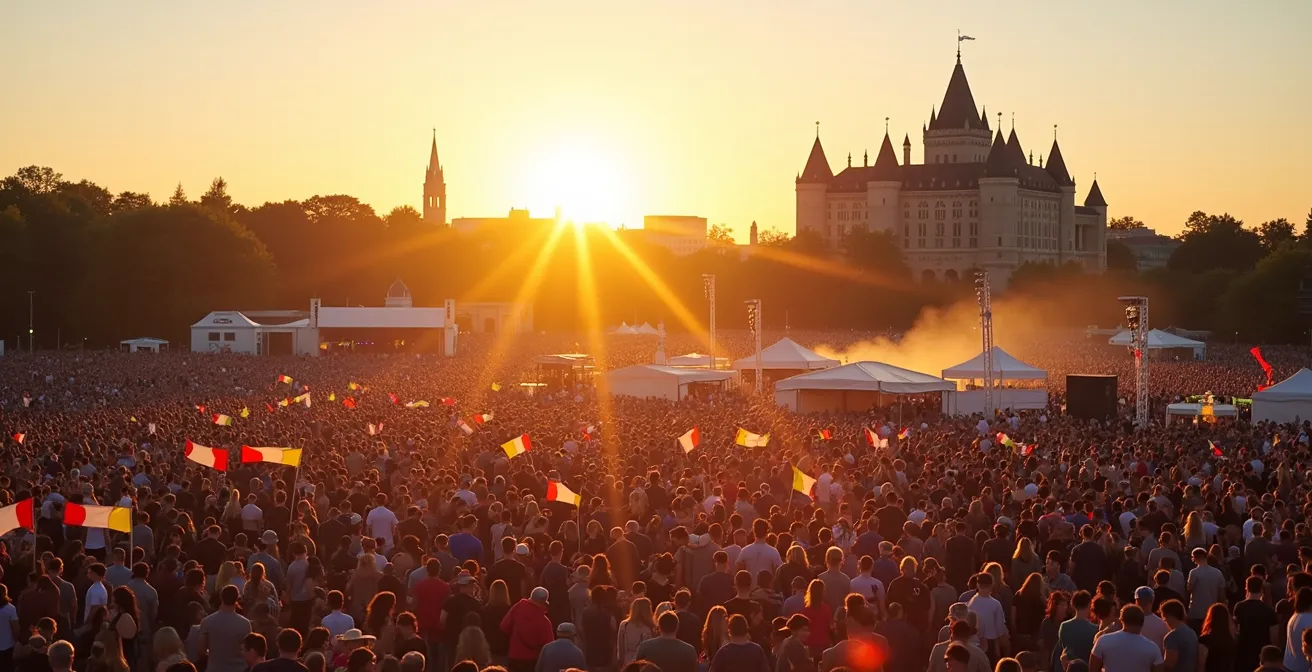
Sharing a Festival d’été de Québec (FEQ) pass is technically forbidden, but maximizing its value when you can’t attend all 11 days is entirely possible by understanding the festival’s core systems.
- The RFID wristband has anti-transfer measures; a red light often indicates it’s been tampered with or scanned by a different person than its first user.
- True value comes from logistical arbitrage: using free official stages, strategic dining outside the main festival grounds, and understanding crowd dynamics on the Plains of Abraham.
Recommendation: Focus on legal workarounds like coordinating with your group and leveraging free festival events rather than attempting a risky pass transfer that could get you ejected.
The Festival d’été de Québec (FEQ) pass is one of the best deals in the North American music scene: 11 days of incredible music for the price of a single concert. But this incredible value comes with a significant challenge—the pass-holder’s dilemma. Life happens. It’s nearly impossible for most people to attend every single night, leading to the inevitable question: can I sell or share my wristband for the days I can’t go? While the official answer is a firm no, simply saying “don’t do it” ignores the reality of the situation.
Most guides will offer generic advice like “book early” or “be careful with your pass.” This guide takes a different approach. Instead of repeating the obvious, we’re going to dissect the festival’s operational system. We will explore the technology behind the wristband, the logic of the crowd flow, and the economic ecosystem of the event. By understanding *how* the FEQ works from the inside out, you can discover legitimate strategies to maximize every dollar and minute of your experience, even if you’re sharing the festival days with a friend or only attending a fraction of the event.
This is not a guide to breaking the rules. It’s a guide to understanding them so deeply that you can navigate the festival with the confidence of a seasoned logistics expert. From finding last-minute accommodation to getting a great spot on the Plains and knowing what that flashing red light on your wristband really means, we will cover the practical realities of attending Canada’s biggest music festival.
This article provides a complete logistical framework for your FEQ experience. Below, you will find a detailed breakdown of each key challenge, from securing accommodation to enjoying the festival atmosphere without a pass.
Summary: Your Complete Logistical Guide to the Festival d’été de Québec
- Where to Stay in Quebec City When Hotels Are Booked for FEQ?
- Plains of Abraham: How to Get a Good Spot for the Headliner Without Waiting 6 Hours?
- The Flashing Light Code: What Does It Mean If Your Wristband Turns Red?
- How to Eat at FEQ Without Spending $50 a Day on Food Trucks?
- Is the Festival d’été de Québec Actually Kid-Friendly in the Evening?
- The “Rush Line” Strategy That Gets You Into Sold-Out Shows?
- Where to Eat in Old Montreal Without Paying “Tourist Tax” Prices?
- How to Enjoy Quebec City’s Free Street Performances Without Buying a Festival Pass?
Where to Stay in Quebec City When Hotels Are Booked for FEQ?
By the time the lineup drops, most hotels in and around Old Quebec are either fully booked or have astronomical prices. This is the first logistical hurdle for any out-of-town festival-goer. The key is to think like a local and look beyond traditional hotels. Neighborhoods like Saint-Roch, Saint-Jean-Baptiste, or even Limoilou offer a more authentic and affordable experience and are often just a short bus ride or a 20-30 minute walk from the main sites.
One of the most underutilized options is university residences. During the summer, universities like Université Laval open their dorms to the public. These rooms are basic but clean, safe, and significantly cheaper than any hotel. They provide a no-frills base of operations, which is all you really need when you’ll be out at the festival all day. Furthermore, exploring student housing platforms can yield surprisingly affordable sublets. According to recent Quebec student housing data, monthly rents can range from $550 to $1500 CAD, meaning a weekly sublet could be a fraction of a hotel stay.
Finally, don’t underestimate the public transit system (RTC). Staying further out along a major bus route, such as in Sainte-Foy, can unlock a huge number of more affordable chain hotels and motels. The RTC often enhances its service during the festival, making it a reliable and cost-effective way to get to and from the Plains of Abraham. This strategy of logistical arbitrage—trading a bit of travel time for significant cost savings—is a hallmark of a smart festival plan.
Plains of Abraham: How to Get a Good Spot for the Headliner Without Waiting 6 Hours?
The generic advice is “arrive early,” but at FEQ, that’s not enough. Understanding the specific topography and crowd dynamics of the Plains of Abraham is far more critical. The main stage area is a massive natural amphitheater, but not all spots are created equal. Many first-timers rush to the front, only to find themselves in a flat, compressed area with poor visibility unless you’re in the first few rows.
The smartest festival veterans use the terrain to their advantage. The ground slopes upwards on the sides, particularly on the Cap-aux-Diamants side (stage left). Securing a spot on this natural slope provides an elevated, panoramic view of the stage over the heads of the crowd in front of you. You might be further away horizontally, but your vertical advantage guarantees a much better sightline. Another pro-tip is to use the side entrances near the Musée national des beaux-arts du Québec instead of the main entrance on Grande Allée, which is always the most congested.
Remember the sheer scale of the event. The main stage on the Plains of Abraham is designed for massive crowds; an official source notes the main stage accommodates up to 100,000 people, which creates intense competition. True opportunities to move forward often appear during the hour *before* the main opening act. This is when the ultra-early arrivals, who have been holding their spots for hours, often leave for bathroom or food breaks. This is your window to strategically advance. For groups, a relay system where members rotate for breaks is an effective way to hold a prime position without anyone burning out.
The Flashing Light Code: What Does It Mean If Your Wristband Turns Red?
This is the heart of the pass-sharing dilemma. The FEQ wristband is your key, and its flashing light is the lock. It’s equipped with RFID technology designed to ensure it is used by one person. Here’s how the system integrity works: the first time you scan your wristband at a gate, the system associates that unique RFID chip with a generic profile for the day. Subsequent scans at other venues or re-entry points check against that initial scan.
A green light means all is well. A red light, however, signals an error. This can happen for a few reasons. It could be a simple scanner glitch—the first thing to do is always step aside and try a different scanner or gate. However, a persistent red light is the system’s way of flagging a potential transfer. The technology may use algorithms that detect if a pass is scanned in two distant locations in an impossibly short time or if the physical characteristics of the person using it change too drastically between scans. If you’ve acquired a pass from a resale site, a red light could mean the original owner reported it lost or stolen, deactivating it.
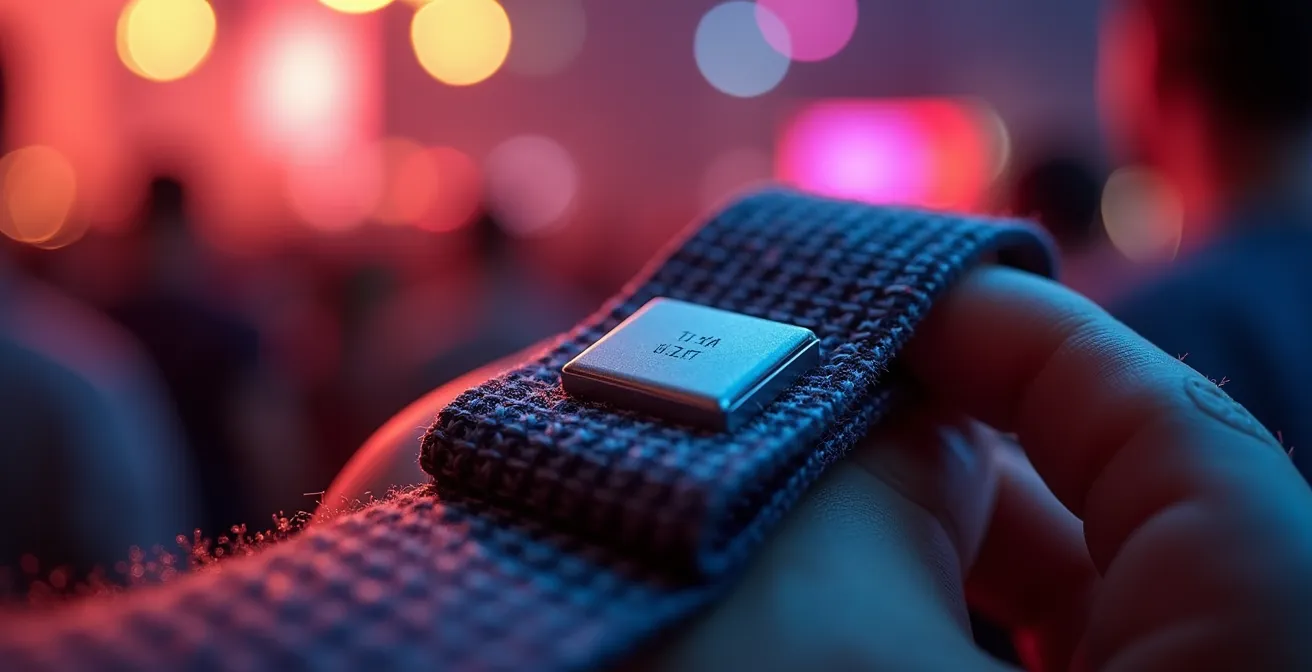
The festival’s official stance is clear: they are not responsible for wristbands purchased through unofficial channels. If your wristband is damaged or consistently flashing red, your only official recourse is to visit one of the customer service tents. It is crucial to remember that the wristband contains only a unique ID number; it does not have GPS and is not tracking your every move. The red light is a symptom of a broken link in the one-pass, one-person chain.
Your Red Light Response Plan: Troubleshooting Your FEQ Wristband
- Initial Scan Glitch: If it’s your first scan of the day, don’t panic. Calmly step aside and try a different scanner or gate as it might be a temporary system error.
- Resale Risk: Be aware that the FEQ officially warns against resale sites. If the pass was reported lost by the original owner, it will be deactivated and flash red.
- Physical Damage: Check for visible damage to the chip area. If it’s bent or cracked, head directly to an FEQ customer service tent, marked on the festival map, for assistance.
- Lost Wristband: If you have lost your own wristband, immediately visit the Lost & Found booth to see if it has been turned in and to report it missing.
- System Verification: Remember the wristband only contains a unique ID. If you are denied entry, ask the staff for the specific reason, but know their primary job is to enforce the one-person-per-pass rule.
How to Eat at FEQ Without Spending $50 a Day on Food Trucks?
Festival food is part of the experience, but relying solely on food trucks for 11 days can decimate your budget. A meal at an on-site food truck can easily cost $15-$25. The solution is a blended approach that combines convenience with cost-saving measures. You are generally not allowed to bring outside food or drinks onto the main festival sites, so the strategy involves eating well *before* you enter the gates for the evening.
The Grande Allée and Rue Saint-Jean areas, which border the festival, are packed with restaurants. A smart move is to explore the side streets just off these main arteries. Here, you’ll find smaller, locally-owned restaurants, bakeries, and dépanneurs (convenience stores). A classic Quebec “dépanneur picnic”—a fresh baguette, local cheese like a simple cheddar or oka, and some fruit—can be a delicious and incredibly affordable meal for under $10.
For a sit-down meal, look for restaurants offering a “Table d’Hôte” for lunch. This fixed-price menu is a staple in Quebec and offers a multi-course gourmet meal for a fraction of the evening dinner price. Having a large, late lunch around 3 or 4 PM can keep you full for most of the evening, requiring only a small snack later on. This is a perfect example of logistical arbitrage, shifting your main meal outside of peak hours and locations to save money without sacrificing quality.
This table gives a clear breakdown of the cost-benefit for each dining option.
| Food Option | Approximate Cost | Best For |
|---|---|---|
| Festival Food Trucks | $15-25 per meal | Convenience |
| Dépanneur Picnic | $8-12 per meal | Budget conscious |
| Saint-Jean Restaurants | $10-15 per meal | Local experience |
| Table d’Hôte Lunch | $20-30 | Gourmet on budget |
Is the Festival d’été de Québec Actually Kid-Friendly in the Evening?
Yes, but with planning. The FEQ makes a significant effort to be family-friendly, which is a major draw for many attendees. The most important policy to know is that, according to the official festival FAQ, children aged 0 to 10 do not need a wristband for general admission areas when accompanied by an adult. This is a huge cost-saver for families and a clear signal of the festival’s welcoming stance.
However, “kid-friendly” doesn’t mean every area is suitable for children, especially during headline performances. The compressed crowd directly in front of the main stage is no place for a small child. The key, once again, is using the festival grounds strategically. The back and sides of the Plains of Abraham offer plenty of space for families to lay down a blanket, giving kids room to move around without being overwhelmed. The natural slopes are also excellent for families, providing good visibility from a safe distance.
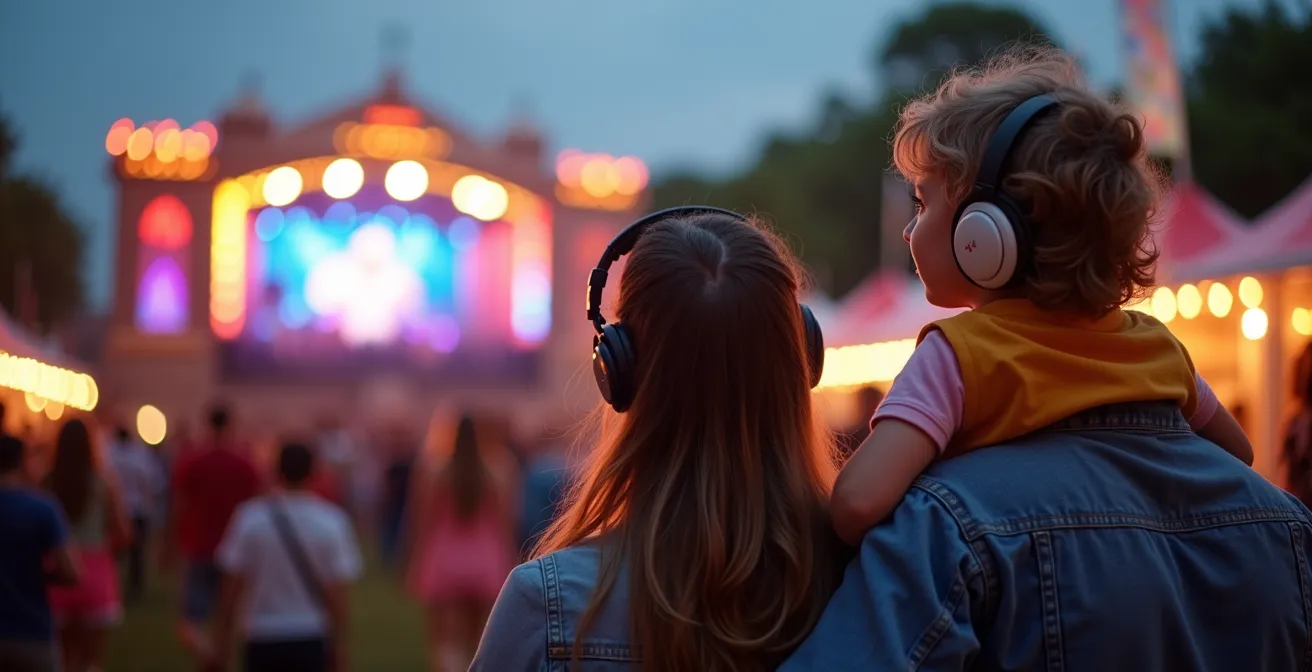
Many parents invest in a good pair of noise-cancelling headphones for their children, which is essential for protecting their hearing and making the experience more comfortable. The festival also features the “Place de la Famille,” a dedicated zone with games, activities, and services tailored for children, which typically runs until the early evening. Using this area earlier in the day and then finding a spacious spot on the Plains for the main show is a common and effective strategy for families looking to enjoy the full FEQ experience together.
The “Rush Line” Strategy That Gets You Into Sold-Out Shows?
Many festivals have “rush lines” where fans can snag last-minute spots for popular shows. The FEQ operates differently. The concept of a traditional rush line doesn’t really exist because the main venues are open-access for all pass holders. The real “sold-out” experience at FEQ is getting into the premium front-stage areas, known as the Zone Avant-Scène (ZAS).
Access to these zones is not about luck or waiting in a last-minute line. It is a highly organized system that requires a separate ZAS wristband in addition to your main festival pass. This is a crucial point many visitors miss.
Case Study: The Zone Avant-Scène (ZAS) Access System
Instead of a rush line, FEQ uses a specific system for its Gold and Silver front-stage zones. As detailed on the festival’s official site, access requires a dedicated ZAS pass or wristband, regardless of age. These wristbands are distributed daily in limited quantities at specific kiosks, usually in the morning for that evening’s headliner. This is not a “rush” in the traditional sense; it’s a “queue early for a limited resource” system. It separates the most dedicated fans who are willing to trade time for proximity.
The strategy, therefore, is not about finding a secret line but about a calculated decision. Do you spend several hours of your morning queueing for a ZAS wristband, which guarantees you a spot up front? Or do you use that time to explore Quebec City and instead rely on your knowledge of the Plains’ topography to secure a great, elevated sightline in the general admission area? For many, the latter is a more efficient use of time and provides a less stressful, and often equally enjoyable, viewing experience. A ZAS pass is a bonus, not a necessity for a fantastic show.
Where to Eat in Old Montreal Without Paying “Tourist Tax” Prices?
This is a common point of confusion for first-time visitors, and it’s a critical piece of logistical advice: the Festival d’été de Québec takes place in Quebec City, not Montreal. The two cities are about a three-hour drive (250 km) apart. While Montreal is a fantastic city, your dining strategy for FEQ needs to be focused entirely on Quebec City’s neighborhoods.
Now, let’s address the real question: Where to eat in *Old Quebec* without paying the “tourist tax”? The answer is to walk uphill. The most tourist-heavy (and expensive) restaurants are concentrated in the Lower Town (like Quartier Petit Champlain) and along Rue Saint-Louis in the Upper Town. A ten-minute walk away from these hotspots can save you 30-40% on a meal. The Saint-Jean-Baptiste neighborhood, just outside the city walls along Rue Saint-Jean, is where locals go. It’s bustling with authentic, fairly-priced bistros, pubs, and international cuisine.
Another fantastic local strategy is to embrace the “5 à 7” culture. This is Quebec’s version of happy hour, typically from 5 PM to 7 PM. Head to the restaurants along Cartier Avenue, a lively street a bit further from the Old City. Many places offer drink specials that come with complimentary snacks or have heavily discounted appetizer menus. This can be a perfect pre-festival meal. With over 1 million people attending the Festival d’été de Québec each year, the main tourist areas become incredibly crowded; exploring these local-frequented neighborhoods is not just a way to save money, but also a way to have a more authentic experience.
Key Takeaways
- The FEQ wristband system is designed for single-person use; a red light often signals a transfer or damage, with limited recourse for passes bought on resale sites.
- Maximize your viewing experience on the Plains of Abraham by using the natural slopes for elevated sightlines, not just by rushing to the front.
- Significant savings can be achieved by eating your main meal outside the festival grounds and hours, particularly by exploring the Saint-Jean-Baptiste neighborhood.
How to Enjoy Quebec City’s Free Street Performances Without Buying a Festival Pass?
The ultimate act of value maximization is enjoying the incredible festival atmosphere for free. The FEQ is more than just the ticketed shows on the Plains of Abraham; it’s a city-wide celebration, and a significant portion of it is accessible to everyone, no wristband required. The festival organization itself runs several high-quality free stages.
The Hydro-Québec Stage at Place de l’Assemblée-Nationale and the Crave Stage at Place D’Youville are official FEQ venues that offer a full schedule of excellent artists, completely free of charge. These are not secondary, amateur stages; they feature established and emerging artists from Quebec and around the world. You can build a fantastic evening of music just by hopping between these two locations.
Beyond the official free stages, the entire city becomes a performance venue. Grande Allée, the main artery leading to the Plains, is lined with partner activations, pop-up bars, and street performers. The streets of Old Quebec and Saint-Jean-Baptiste are filled with live music pouring out of pubs and bars. Many concurrent events also pop up during the festival period, such as the Flip Fabrique circus shows in public squares or the ‘Les Passages Insolites’ public art walk. By checking local event listings, you can piece together a full itinerary of free, high-quality entertainment and soak in the electric atmosphere of the city without ever needing to scan a wristband.
Now that you understand the system, your next step is to plan your festival strategy. Map out the free stages, pre-select your dining spots, and coordinate with your group to ensure every day of the festival delivers maximum value, whether you’re using a pass or not.