
Canada stands at a fascinating crossroads where cutting-edge technological innovation meets practical challenges unique to its vast geography and diverse population. From artificial intelligence transforming bilingual businesses in Montreal to virtual reality revolutionizing skills training in Calgary, technology is reshaping how Canadians work, learn, and connect with one another. Understanding these innovations isn’t just about keeping pace with change—it’s about making informed decisions that affect your career, your business, and your daily life.
This comprehensive resource explores the major technological trends currently transforming Canadian society. Whether you’re a small business owner wondering how AI might streamline your operations, a professional considering a career shift into data science, or simply curious about how biotechnology might personalize your healthcare, you’ll find clear explanations and practical insights anchored in the Canadian context. We’ll examine not just what these technologies can do, but also the ethical questions they raise and the real-world barriers to their adoption across this country’s unique landscape.
Artificial intelligence has moved beyond the realm of tech giants and research labs to become a practical tool for businesses of all sizes across Canada. The transformation is particularly visible among small and medium enterprises, where AI tools are addressing challenges that would have required prohibitive investments just a few years ago.
Canadian SMEs are discovering that AI can tackle surprisingly specific problems. A Toronto-based consulting firm might use AI-powered scheduling tools to coordinate meetings across multiple time zones—essential when clients span from St. John’s to Vancouver, a distance covering four and a half hours. Meanwhile, administrative tasks that once consumed hours of staff time—invoice processing, customer inquiry routing, expense categorization—can now be largely automated, freeing teams to focus on strategic work that actually grows the business.
One uniquely Canadian application of AI addresses the country’s bilingual reality. Creating quality content in both English and French has traditionally meant hiring specialized translators or maintaining duplicate teams. Modern AI translation and content generation tools are changing this equation, though not without complications. While these tools have improved dramatically, they still require human oversight to catch cultural nuances and ensure that marketing messages resonate equally well in both languages. The technology works best as an accelerator for bilingual teams rather than a complete replacement.
The most successful implementations share a common factor: thoughtful staff training. Employees need to understand not just which buttons to push, but when AI recommendations should be trusted and when human judgment must prevail. Organizations that invest in building this literacy see faster adoption and fewer costly mistakes. Training also addresses a crucial concern—helping team members see AI as a tool that enhances their roles rather than threatens them.
As AI systems make increasingly consequential decisions—from screening job applications to determining insurance rates—Canadians are grappling with fundamental questions about fairness, accountability, and the role of human oversight. These aren’t abstract philosophical debates; they have direct implications for how technology gets deployed in healthcare, justice, employment, and public services.
Bias in training data represents one of the most insidious challenges. An AI system trained primarily on data from urban Ontario might perform poorly when applied to rural Saskatchewan contexts, or fail to account for the needs of Indigenous communities. Recognizing these limitations requires understanding what data fed the system and actively testing for disparate impacts across different populations. Some Canadian organizations have begun conducting “algorithmic audits” to identify these blind spots before systems go live.
The regulatory landscape is evolving in response to these concerns. Canadian authorities are examining frameworks for high-risk AI applications—those used in contexts where errors could cause significant harm. This includes systems used for:
The principle of human oversight remains central to these discussions. Even sophisticated AI should inform human decision-makers rather than replace them entirely in high-stakes situations. This means designing systems with meaningful opportunities for human review, appeal mechanisms when automated decisions seem wrong, and clear accountability when things go awry.
Canada’s technology sector offers compelling career opportunities, particularly in data science and related fields. Major urban centers like Toronto, Vancouver, and Montreal have developed robust tech ecosystems, but opportunities increasingly extend to mid-sized cities as remote work normalizes and companies seek talent beyond traditional hubs.
The path to a high-paying data science career typically combines three elements: technical skills, domain expertise, and the ability to communicate insights to non-technical stakeholders. While many data scientists hold advanced degrees in statistics, mathematics, or computer science, the field has become more accessible through intensive bootcamp programs and online learning platforms. The key differentiator often comes down to practical experience solving real business problems.
Building a portfolio that attracts recruiters requires more than displaying technical proficiency. The most effective portfolios tell a story about your problem-solving approach:
Industry-specific knowledge can provide a significant competitive advantage. A data scientist who understands healthcare regulations, mining operations, or financial services can bridge the gap between raw analytics and business strategy in ways that purely technical specialists cannot. This is why many successful data professionals develop T-shaped expertise—deep skills in data science complemented by substantial knowledge in at least one industry vertical.
Canada’s vast geography creates connectivity challenges that urban-focused technology discussions often overlook. The experience of accessing digital tools varies dramatically between a downtown Toronto condo and a rural community in Northern Ontario or the Maritimes, yet both populations increasingly depend on reliable internet access for work, education, and essential services.
Rural and remote areas face a fundamental infrastructure gap. While urban Canadians increasingly take gigabit fiber connections for granted, many rural residents struggle with connections that barely support video calls, let alone cloud-based productivity tools or large file transfers. This digital divide has real economic consequences—limiting remote work opportunities, constraining business growth, and placing rural students at a disadvantage in increasingly digital educational environments.
Even in urban centers, connectivity isn’t guaranteed. Modern concrete and steel condo buildings can create unexpected dead zones where cellular and Wi-Fi signals struggle to penetrate. Residents may find reliable connectivity on their balcony but not in their living room—a frustrating paradox in supposedly well-connected cities. Solutions range from mesh Wi-Fi systems to cellular signal boosters, though these add costs and complexity.
Security considerations add another layer of complexity. Public Wi-Fi networks in cafes, libraries, and airports offer convenience but create vulnerabilities for sensitive data transmission. Using public networks for casual browsing is one thing; accessing banking information, client files, or corporate systems requires additional protection through virtual private networks (VPNs) or waiting for a trusted connection. Understanding when convenience crosses into risk is an essential digital literacy skill.
Virtual reality has evolved from a promising novelty into a practical tool with applications spanning entertainment, education, and professional development. The technology’s ability to create immersive, consequence-free environments for practice and exploration addresses learning challenges that traditional methods struggle to solve.
For consumers exploring VR, the hardware landscape offers options at multiple price points. Entry-level standalone headsets provide accessible experiences for virtual tourism—exploring the Canadian Rockies from your living room or revisiting historical moments in Canadian history. More advanced systems with PC connectivity offer higher-resolution graphics and more sophisticated tracking, essential for extended entertainment experiences or detailed virtual environments.
Motion sickness remains the technology’s most common barrier to adoption. The disconnect between what your eyes see and what your inner ear senses can trigger discomfort, particularly during experiences with rapid movement or artificial locomotion. Manufacturers have made progress through higher refresh rates and improved tracking, but individual sensitivity varies. Starting with shorter sessions and experiences designed for comfort helps build tolerance, though some users simply find VR inherently uncomfortable regardless of the technology quality.
The professional applications of VR are perhaps even more compelling than consumer entertainment. Training scenarios that would be expensive, dangerous, or logistically complex in the real world become practical in virtual environments. A pipeline inspector can practice emergency procedures in a simulated confined space without actual risk. A manager can rehearse difficult conversations in a virtual office where mistakes become learning opportunities rather than career setbacks.
Soft skills development represents a particularly promising application. Leadership, conflict resolution, and communication skills are notoriously difficult to teach through traditional classroom methods. VR creates realistic scenarios where learners can practice these skills with simulated colleagues or customers, receive immediate feedback, and repeat situations until they develop confidence. Canadian organizations in healthcare, energy, and public services are exploring these applications to build workforce capabilities more efficiently.
Biotechnology advances are transforming healthcare from a one-size-fits-all model toward treatments tailored to individual genetic profiles. This shift promises more effective therapies with fewer side effects, though it also raises complex questions about privacy, access, and equity.
Personalized medicine uses genetic information to predict how individuals will respond to specific medications or therapies. A cancer patient might receive genetic testing to identify which chemotherapy drugs their tumor is most likely to respond to, sparing them from treatments unlikely to work. Similarly, genetic markers can identify people at elevated risk for specific conditions, enabling earlier interventions when they’re most likely to be effective.
Understanding the science doesn’t require an advanced degree. At its core, genetic testing examines variations in your DNA—the instruction manual that guides how your body functions. Some variations affect disease risk, drug metabolism, or other health factors in well-understood ways. The technology reads these variations and compares them against extensive databases linking genetic patterns to health outcomes.
Ethical and practical boundaries deserve careful consideration. Biobanks—large collections of genetic samples linked to health data—enable the research that makes personalized medicine possible. Canadian biobanks operate under strict protocols requiring informed consent and protecting participant privacy, but questions remain about who can access this data, for what purposes, and how to ensure that the benefits of research flow back to the communities that contributed samples. Indigenous communities in particular have raised important concerns about genetic research conducted without meaningful community consultation or benefit-sharing.
Energy systems are becoming increasingly digital and interconnected, creating opportunities for efficiency and resilience alongside new cybersecurity challenges. Canadian homes are at the center of this transformation, with smart meters, connected appliances, and home automation systems changing how we consume and manage energy.
Smart meters provide utilities with real-time data about electricity consumption, enabling more efficient grid management and time-of-use pricing that can lower costs for consumers willing to shift usage to off-peak hours. However, this detailed consumption data also creates privacy concerns—patterns can reveal when homes are occupied, what appliances are being used, and even what activities are taking place. Ensuring these systems have robust cybersecurity protections isn’t just about preventing billing fraud; it’s about protecting household privacy.
Energy storage technologies will play a crucial role in Canada’s transition toward renewable energy. The debate between hydrogen and battery storage reflects different visions for how that transition unfolds. Battery systems excel at short-term storage and are becoming cost-effective for residential use, helping homeowners maximize solar panel investments or maintain power during outages. Hydrogen storage offers potential for longer-term, larger-scale storage, though the technology faces efficiency and infrastructure challenges. Both approaches will likely find their place in a diverse energy system.
Home automation extends beyond energy management to security and convenience. Automated lighting systems can create the illusion of occupancy while you’re away—a simple but effective deterrent to opportunistic break-ins. Modern systems offer sophisticated scheduling that mimics natural patterns rather than rigidly turning lights on and off at the same time each day. The key is integration that enhances security without creating new vulnerabilities or requiring constant attention.
Technology offers powerful new tools for preserving and sharing Canadian history, particularly for engaging younger generations who might find traditional museum exhibits or textbooks less compelling. Digital storytelling combines multimedia elements—audio, video, interactive maps, augmented reality—to create immersive historical experiences that bring the past to life.
Local history projects benefit particularly from these approaches. A small community can create digital walking tours that overlay historical photos and oral histories onto present-day locations, helping residents and visitors understand how their town has evolved. Indigenous communities are using digital tools to preserve languages, traditional knowledge, and cultural practices, creating resources that can be shared across generations while maintaining appropriate community control over sensitive material.
Privacy considerations become complex in location-based storytelling. Historical events happened in specific places, but those places are often still inhabited. A story about a historic building needs to respect the privacy of current residents. Similarly, some Indigenous historical sites are sacred or culturally sensitive, and digital platforms must include appropriate protocols about what can be shared, with whom, and under what circumstances. Technology enables broader sharing, but traditional protocols about knowledge and place remain essential.
The democratization of storytelling tools means that creating compelling digital narratives no longer requires professional production budgets. Canadians from coast to coast to coast are documenting their communities’ stories, preserving dialects and traditions, and ensuring that diverse perspectives shape the historical record. This grassroots digital archiving complements but doesn’t replace professional historical work—both play important roles in preserving Canada’s complex, multifaceted heritage.
Technology and innovation touch nearly every aspect of contemporary Canadian life, from how we work and learn to how we stay healthy and connected to our heritage. The trends explored here—artificial intelligence, virtual reality, biotechnology, smart energy, and digital storytelling—represent just a fraction of the technological transformation underway. The key to navigating this landscape isn’t mastering every technology, but developing the literacy to ask good questions, understand tradeoffs, and make informed decisions about which innovations serve your specific needs and values. As these technologies continue evolving, that critical perspective becomes more valuable than any specific technical skill.

The key to engaging teens isn’t banning screens in museums, but transforming them into tools for active, embodied learning that give youth narrative agency over history. Interactive apps reframe “screen time” as physical and cognitive engagement, aligning with curriculum goals….
Read more
The long, uncertain journey of finding a diagnosis for your child’s rare condition is overwhelming, but Canadian genomic research now offers a clear and accelerated path to answers. Canada’s dedicated genomic projects can provide a definitive diagnosis in weeks, not…
Read more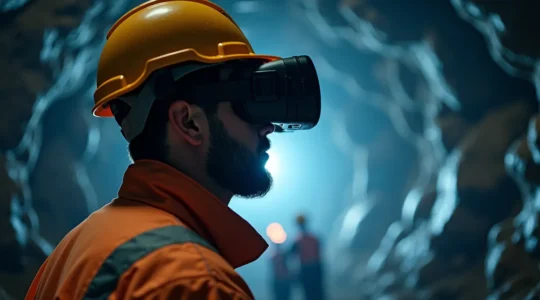
Virtual Reality training is proving to be the single most effective lever for reducing accidents in Canadian mines, delivering a measurable ROI that extends far beyond travel savings. Achieves significantly higher knowledge retention and confidence scores (up to 96%) post-training….
Read more
AI-driven hiring discrimination in Canada is a systemic issue caused by a fundamental misalignment between global technology and unique Canadian legal and cultural frameworks. Global AI models often fail to account for Canadian specifics like Indigenous data sovereignty and provincial…
Read more
Your non-tech background is your biggest asset for a Canadian data science career, not a liability, if you frame your transition as a strategic business case. Success isn’t about learning every tool, but about using data to solve specific problems…
Read more
In summary: AI’s true value for Canadian retailers lies in amplifying your team’s efforts, not replacing them, while strengthening your unique local brand. Navigating Canadian-specific regulations like PIPEDA, Law 25, and copyright law is non-negotiable before implementation. Focus on tools…
Read more
In summary: Establish a resilient internet connection by choosing the right rural technology like Starlink or LTE, as this is the foundation of your remote setup. Secure your data with a robust security protocol, especially on public networks, by using…
Read more