

The decision on triple-glazed windows is not about upfront cost, but about calculated value in total home comfort, quiet, and structural resilience specifically for Canadian climates.
- Beyond energy savings, the primary returns are preventing costly condensation damage and a quantifiable reduction in traffic and neighbourhood noise.
- The performance of the window is nullified by installation errors; the choice of installer and technique is as critical as the window itself.
Recommendation: Evaluate your windows as part of a complete “building envelope system.” Your return on investment depends on how the windows, walls, and insulation work together, not on a single R-value number.
As a Canadian homeowner, you know the feeling. It’s a frigid January evening, the furnace is running, yet you feel a persistent cold draft radiating from your living room window. Your heating bills climb, and you start looking at window replacements. The quotes arrive, and you’re faced with a serious financial question: is paying an extra $5,000 or more for triple-glazed windows truly worth it? The promise of a 30% reduction in heating costs sounds compelling, but is it the whole story?
Most advice focuses on simple energy savings, a platitude that barely scratches the surface. The real calculation for a Canadian home is far more nuanced. It involves understanding the physics of condensation in our humid interiors and cold exteriors, the value of acoustic comfort in our increasingly dense cities, and the long-term cost of seal failure caused by our dramatic freeze-thaw cycles. This decision isn’t just an expense; it’s a long-term investment in your home’s comfort, efficiency, and structural integrity.
But if the true key to unlocking this value isn’t just buying a better window, but ensuring it functions as a perfect component within your home’s entire system? This guide moves beyond the marketing claims to provide a mathematical and practical framework. We will deconstruct the real-world performance of triple-glazed windows in a Canadian context, from the specific gases used to the installation errors that can negate all benefits. We will arm you with the tools to calculate your true return on investment, so you can confidently decide if this upgrade is the right financial move for your home.
To help you navigate this complex decision, this article breaks down the essential factors you must consider. From the science of condensation to the practicalities of installation and warranty, here is a comprehensive overview of what truly matters.
Summary: A Canadian Homeowner’s Guide to Triple-Glazed Windows
- The Humidity Mistake That Causes Condensation Even on New Windows?
- How Much Traffic Noise Do Triple-Glazed Windows Actually Block?
- Argon vs. Krypton: Is the Extra Gas Cost Worth the Marginal Heat Gain?
- The Foggy Glass Sign That Means Your Window Warranty Is About to Expire?
- The Spray Foam Error Installers Make That Ruins Window Performance?
- The R-Value Myth: Why Higher Numbers Don’t Always Mean Warmer Rooms?
- The Engineering Secret Behind Flat Roofs That Don’t Collapse in Ottawa?
- How to Calculate the ROI of Installing Solar Panels in Cloudy British Columbia?
The Humidity Mistake That Causes Condensation Even on New Windows?
That frustrating layer of fog or frost on the inside of your windows isn’t just an obstructed view; it’s a warning sign of a thermal battle being lost. The core issue is the dew point: the temperature at which airborne moisture from cooking, breathing, and showering condenses into liquid water. On a cold Canadian winter day, the surface of a less efficient double-pane window can easily drop below this dew point. The result is condensation, which can lead to mould growth, water damage on window sills, and peeling paint.
A triple-glazed window combats this by creating a superior thermal barrier. The innermost pane of glass is effectively insulated from the frigid outdoor air by two separate gas-filled chambers. This keeps its surface temperature significantly warmer, staying above the dew point even when it’s -20°C outside. This isn’t just about comfort; it’s about preventing the slow, silent destruction that persistent moisture can inflict on your home’s structure. The mistake isn’t just having high humidity; it’s allowing a cold enough surface for that humidity to condense upon.
Therefore, investing in triple-pane is an investment in moisture management. It protects the surrounding wall assembly from rot and mould, a costly repair that far exceeds the initial window upgrade price. By maintaining a warmer interior surface, these windows create a more resilient and healthier indoor environment, addressing a fundamental challenge of living in a cold climate.
How Much Traffic Noise Do Triple-Glazed Windows Actually Block?
The value of a quiet home is often underestimated until it’s gone. For homeowners living near busy roads, train lines, or noisy neighbourhoods, the constant drone of traffic can be a major source of stress. While all windows offer some sound dampening, triple-glazed windows are engineered for superior acoustic comfort. The principle lies in disrupting sound waves as they attempt to travel through the glass.
Sound travels in vibrations. A standard double-pane window with two panes of the same thickness can vibrate in sympathy, allowing a significant amount of noise to pass through. Triple-pane windows disrupt this process in three ways:
- More Mass: The third pane of glass adds significant physical mass, which is harder for sound waves to vibrate.
- Asymmetrical Thickness: High-performance units often use glass panes of varying thicknesses (e.g., 6mm, 4mm, and 5mm). Each thickness vibrates at a different frequency, breaking up sound waves much more effectively.
- Gas Layers: The Argon or Krypton gas in the chambers is denser than air, further dampening sound vibrations as they pass from pane to pane.
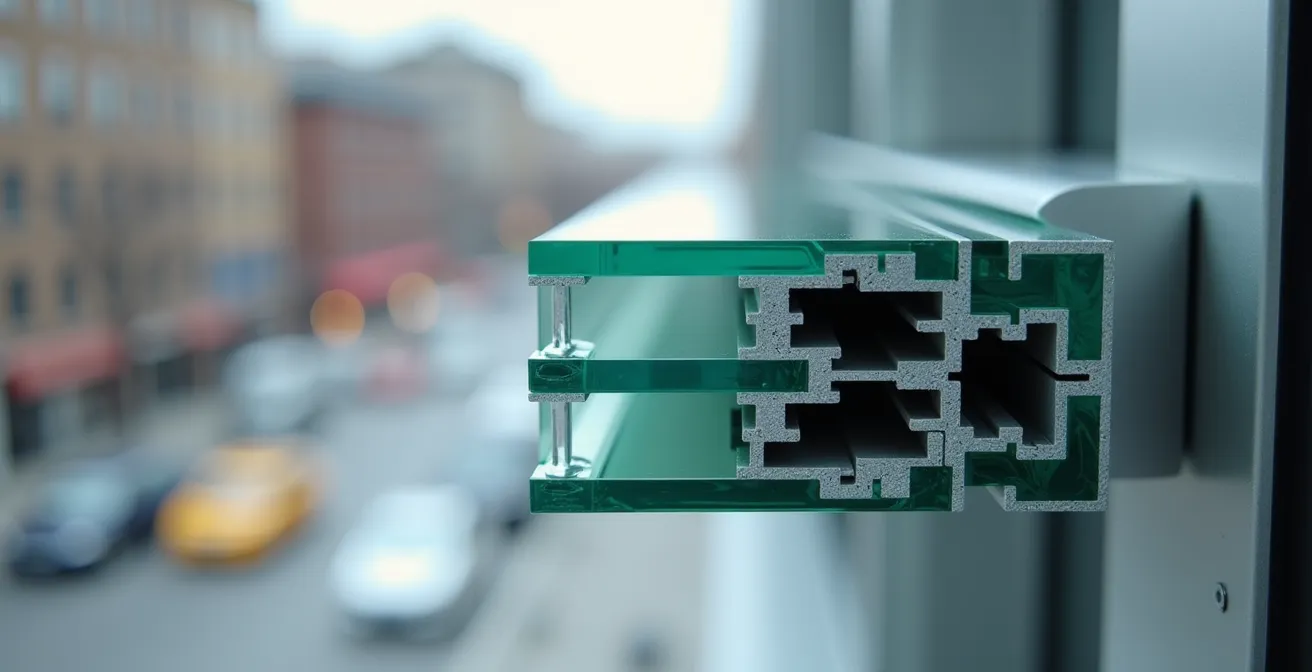
This multi-layered approach creates a formidable barrier to noise. A case study focusing on homes near major Canadian highways highlights the real-world impact. As noted in an analysis by Vinyl Light Windows & Doors, triple-pane windows provide the highest security and noise reduction, making them a practical necessity for maintaining peace and quiet in urban settings like those near Toronto’s Highway 401.
Case Study: Real-World Noise Reduction in Canadian Urban Settings
For homes situated near relentless noise sources, such as Toronto’s 401 highway or major airports, the upgrade to triple-pane windows is transformative. The combination of increased mass and sound-dampening gas layers effectively moves the home from a zone of constant auditory stress to one of tranquility. This improvement in acoustic comfort directly enhances quality of life, improves sleep, and can contribute to higher property resale value by mitigating a significant environmental negative.
Argon vs. Krypton: Is the Extra Gas Cost Worth the Marginal Heat Gain?
The empty-looking space between the panes of a high-efficiency window is anything but. It’s filled with an inert, colourless, and odourless gas—typically Argon or Krypton. These gases are significantly denser than air, which makes them poor conductors of heat. This property is what slows the transfer of your home’s warmth to the cold outdoors. While both are effective, the choice between them is a matter of cost-benefit analysis based on your specific Canadian climate zone.
Argon gas is the industry standard for triple-glazed windows. It is abundant, affordable, and offers a substantial performance boost over air-filled units. For most Canadian climates, Argon-filled windows provide an excellent balance of cost and efficiency. In fact, an analysis shows that adding an additional pane of glass with 2 chambers filled with argon gas improves the window ER rating by 20%. This makes it a foundational element of modern window performance.
Krypton gas is the premium option. It is even denser and a better insulator than Argon, but it is also rarer and more expensive. The performance gain is most noticeable in smaller gaps between panes, making it ideal for certain window designs. The real question is whether the marginal heat gain is worth the 15-20% cost premium. The answer lies in your local climate.
This comparative table breaks down the decision-making process for a Canadian homeowner:
| Gas Type | Cost Premium | R-Value Improvement | Best For (Canadian Cities) | Payback Period |
|---|---|---|---|---|
| Argon | Standard | R-6 to R-7 | Vancouver, Victoria | Baseline |
| Krypton | +15-20% | R-7 to R-8 | Winnipeg, Edmonton | 5-7 years in extreme cold zones |
For someone in a relatively mild coastal climate like Vancouver, the extra cost of Krypton is unlikely to pay for itself in energy savings. However, for a homeowner in Winnipeg or Edmonton, where extreme cold is the norm for months, the superior insulating power of Krypton can provide a tangible return, justifying the higher initial investment over the lifespan of the window.
The Foggy Glass Sign That Means Your Window Warranty Is About to Expire?
The dreaded sight of fog, haze, or condensation trapped *between* the panes of your window is a clear sign of failure. This means the hermetic seal of the insulated glass unit (IGU) has been broken. When this happens, the insulating gas (Argon or Krypton) escapes and is replaced by moisture-laden air. The window immediately loses its high-efficiency properties and becomes little more than an uninsulated hole in your wall. This is precisely what your window’s sealed unit warranty is designed to protect against.
In Canada, the extreme temperature swings and freeze-thaw cycles put immense stress on window seals. A low-quality or improperly installed window can experience seal failure within just a few years. Understanding your warranty is crucial. Most manufacturers offer a “lifetime” warranty on the vinyl or fiberglass frame, but the sealed unit warranty is often for a more limited period, such as 20 years, and it may be prorated, meaning the coverage value decreases over time. Spotting seal failure early, while the warranty is still in full effect, can save you thousands in replacement costs.
Acting before a warranty expires is a critical part of home maintenance. If you notice persistent fogging that doesn’t clear up, it’s time to take action. Document the issue with photos and contact your manufacturer immediately. Proactive inspection, especially as your warranty period nears its end, ensures you get the full value of your initial investment. The following checklist provides a clear plan for Canadian homeowners to assess their windows before their warranty coverage diminishes.
Your Pre-Warranty Expiry Audit Checklist
- Schedule Evaluation: Book a pre-retrofit EnerGuide evaluation to get an expert, third-party assessment of your current window performance and home ventilation needs.
- Inspect Seals: Closely check the edges of your glass for any signs of seal strain, discoloration, or gaps, which are often exacerbated by the unique freeze-thaw cycles of the Canadian climate.
- Verify Ventilation: Ensure your home’s HRV (Heat Recovery Ventilator) or ERV system is properly balanced and has been serviced annually, as poor ventilation can be misdiagnosed as window failure.
- Document Condensation: During an extreme cold snap (-20°C or below), take dated photos of any visible condensation patterns that appear between the panes.
- Review Warranty Terms: Carefully read your original warranty documents, paying close attention to the sealed unit coverage period and the transferability clause if you plan on selling your home within 5 years.
The Spray Foam Error Installers Make That Ruins Window Performance?
You can purchase the most expensive, highest R-value, Krypton-filled triple-pane window on the market, but its performance will be completely undermined by one common installation mistake: using the wrong type of spray foam. The small gap between the window frame and the rough opening of your house must be perfectly air-sealed. While spray foam is the right material, the specific type used is critical.
The error occurs when installers use high-expansion foam, often used for filling large cavities in walls. This type of foam expands aggressively and can exert immense pressure. When used around a window frame, this pressure can warp or bow the vinyl or fiberglass, causing several catastrophic problems: the window’s sashes may no longer open or close smoothly, and most critically, the pressure can compromise the integrity of the sealed glass unit, leading to premature seal failure.
The correct material is a low-expansion (or minimal-expansion) window and door foam. It is specifically formulated to fill the gap and create a perfect air seal without exerting damaging pressure on the frame. A professional, certified installer will know this difference instinctively. This is why certifications matter. As highlighted by the Siding and Window Dealers Association of Canada (SAWDAC), programs like Window Wise are essential. SAWDAC notes, “Window Wise independently audits and certifies contractors and window manufacturers, and conducts extensive window installation training seminars,” ensuring installers are trained on these critical details.

Your investment is only as good as its installation. Before hiring anyone, you must vet their qualifications and methods. Asking the right questions can save you from a costly performance failure down the road.
- Are you certified by a recognized Canadian body like Window Wise or Fenestration Canada?
- What specific type of spray foam will you use for the installation? Confirm it is a minimal-expansion formula.
- Can you provide proof of liability insurance, with a minimum of $2 million in coverage?
- How many years have you been installing windows? (A program like Window Wise requires a minimum of three years of experience).
- Will my installation be registered with the certification body for the possibility of a random inspection?
The R-Value Myth: Why Higher Numbers Don’t Always Mean Warmer Rooms?
In the world of insulation, “R-value” is the most commonly cited metric. It measures a material’s resistance to heat flow. A higher number is better, and on paper, the difference is clear: typical double-pane windows have an R-value of R-3 to R-4, while triple-pane windows typically achieve R-6 to R-9. This doubling of thermal resistance is the basis for the promised energy savings. However, fixating on R-value alone is a classic case of missing the forest for the trees.
A high R-value is meaningless if the window is not integrated perfectly into the home’s building envelope system. This system is the complete barrier between your conditioned indoor space and the exterior elements. It includes your walls, roof, foundation, and, critically, your windows and doors. A chain is only as strong as its weakest link. A brand new R-9 window with uninsulated gaps around its frame will perform worse than a properly sealed R-4 window.
The Canadian government’s energy efficiency programs emphasize this holistic approach. As Natural Resources Canada states, “Your house is a system where all parts work together… Improving the building envelope is your most important task for long-term energy efficiency.” This means the R-value of your window must be matched by the quality of the air sealing around it and the insulation in the surrounding walls.
Therefore, when you are evaluating the cost of triple-glazed windows, you must also factor in the cost of expert installation. The R-value you are buying is a *potential*. It is only fully realized when the window becomes a seamless part of a high-performance building envelope. A higher R-value does not automatically equal a warmer room; a well-sealed system does.
The Engineering Secret Behind Flat Roofs That Don’t Collapse in Ottawa?
A flat roof on a commercial building in Ottawa must be engineered to withstand immense snow loads, a weight that can crush a poorly designed structure. This same principle of structural load management is surprisingly relevant to your window replacement decision. The “secret” is a deep understanding of weight and structural integrity, and it’s a factor many homeowners overlook when choosing triple-glazed windows.
A triple-glazed sealed unit can be 30-50% heavier than its double-glazed counterpart. This is a significant amount of extra, constant weight that your window frame and the wall structure of your home must support for decades. As the experts at NorthShield Windows and Doors point out, “The weight difference between a double and triple-pane window simultaneously reflects the difference in performance” and the difference in structural demand.
This added weight is a primary reason why the quality of the window frame and the expertise of the installation are paramount. A flimsy, unreinforced frame can sag under the load, compromising the seals and leading to the very performance failures you paid to avoid. The house’s wall framing itself must be sound enough to handle the increased load without shifting or settling, which could also lead to frame distortion.
Thinking like an engineer means seeing the window not as a simple piece of glass, but as a heavy structural component being integrated into a larger system. The extra investment in a robust, well-engineered frame and a meticulous installation process is not an upsell; it’s the necessary insurance to ensure the window’s performance and your home’s structural integrity are maintained for the long term, just as a robust design keeps that Ottawa roof from collapsing.
Key Takeaways
- The true value of triple-pane windows in Canada lies in a combination of energy savings, moisture damage prevention, and a significant increase in acoustic comfort.
- The performance potential of a high-spec window is entirely dependent on the quality of its installation; errors like using the wrong foam can negate all benefits.
- Windows should be evaluated as part of a complete “building envelope system,” where their performance is linked to the quality of surrounding insulation and air sealing.
How to Calculate the ROI of Installing Solar Panels in Cloudy British Columbia?
Calculating the return on investment (ROI) for a major home upgrade like solar panels, especially in a region perceived as cloudy, seems daunting. Yet, homeowners do it every day by applying rigorous financial logic. This exact same logic must be applied to a significant investment in triple-glazed windows. The question isn’t “is it expensive?” but “when does it pay for itself, and what other value does it generate?”
Your ROI calculation is more than just the sticker price versus the energy savings. A comprehensive Canadian analysis must include several factors: the total installed cost, available government rebates, projected energy savings, and the added resale value to your property. While programs like the Canada Greener Homes Grant offered up to $5,000 for eligible retrofits, it’s important to note this program closed to new applicants in early 2024. However, various provincial programs may still offer incentives.
To determine your specific payback period, you need to work through the numbers methodically. The goal is to find the point where your accumulated savings and added home value equal your initial investment. For many in Canada’s colder climate zones, this period can be surprisingly short when all benefits are accounted for.
Your Step-by-Step ROI Calculation Worksheet for Triple-Glazed Windows
- Calculate Current Costs: Gather your last 12-24 months of utility bills and calculate your total annual heating cost.
- Get Total Quote: Obtain a detailed, all-inclusive quote for the window replacement from a certified installer. This is your “Total Investment.”
- Apply Rebates: Research and subtract any available provincial or municipal energy efficiency rebates from your Total Investment.
- Factor Energy Savings: Conservatively estimate a 25-30% reduction in your annual heating cost for upgrading to triple-pane in a cold climate zone. This is your “Annual Savings.”
- Project Future Savings: Factor in projected increases in energy costs, such as the federal carbon tax, by adding a 3-5% escalator to your Annual Savings each year.
- Add Property Value: Research local real estate trends. A conservative estimate for energy-efficient upgrades is a 1.5-2% increase in your home’s total value.
- Calculate Payback: Divide your net Total Investment by your Annual Savings to determine the simple payback period in years.
The decision to invest over $5,000 in triple-glazed windows is significant, but it shouldn’t be intimidating. By using this ROI framework, you transform a daunting expense into a calculated, strategic investment in your home’s long-term value, comfort, and resilience. Evaluate your specific situation, run the numbers, and you will have the clear answer you need.
Frequently Asked Questions About Canadian Window Warranties
What’s the difference between ‘lifetime’ frame warranty and sealed unit warranty?
Frame warranties typically cover the vinyl or fiberglass structure for the life of the product, while sealed unit warranties (covering the glass and gas seal) are usually for 20 years and often prorated, meaning coverage decreases over time.
How does seal failure manifest in Canadian winters?
Seal failure in large windows can occur within a few years if not installed correctly in a proper frame, especially with Canada’s intense freeze-thaw cycles. The most obvious sign is fogging or moisture trapped between the panes of glass that does not clear, indicating the insulating gas has escaped.
Is my window warranty transferable when I sell my home?
Most high-quality manufacturers offer transferable warranties, but this must be explicitly stated in the warranty document. A non-transferable warranty can be a red flag for potential buyers and may negatively affect your home’s resale value, so it’s a critical detail to verify.