
Many travellers wish to visit Indigenous lands in British Columbia but fear making a misstep. The key is to understand that you are not entering a park, but a sovereign nation with its own laws and protocols. This guide shifts the focus from simply asking for permission to actively practicing respect. By learning the ‘why’ behind specific protocols—from offering tobacco to pronouncing a place name correctly—you transform your visit from a transaction into a meaningful act of recognition on unceded territory.
Visiting the vast, beautiful, and culturally rich Indigenous territories of British Columbia is a profound opportunity. Yet, for many well-intentioned travelers, it brings a sense of uncertainty. You want to be respectful, but the rules seem unwritten and the fear of causing unintended offense is real. Mainstream travel advice often gives superficial tips like “be respectful” or “ask permission,” but fails to explain what that truly means in this unique context.
The fundamental truth is this: British Columbia is unlike almost anywhere else in North America. The vast majority of the province is unceded Indigenous territory, meaning it was never legally surrendered to the Crown through treaty. Therefore, entering these lands is not akin to visiting a national park; it is entering a sovereign space governed by Indigenous laws and protocols that have existed for millennia. A request for permission isn’t a ticket purchase; it’s the beginning of a relationship.
This guide moves beyond a simple checklist of dos and don’ts. Its purpose is to illuminate the ‘why’ behind the ‘how’. We will explore the deep significance of core protocols, reframing them not as quaint customs, but as tangible expressions of respect for living cultures and self-governing Nations. Understanding this foundation is the true key to obtaining permission and ensuring your presence is a welcome and positive one.
Through this article, you will learn the fundamental principles that govern respectful engagement. We will cover specific, practical actions and the cultural context that gives them meaning, ensuring you can travel with confidence, awareness, and the ability to build genuine, reciprocal relationships with your hosts.
Summary: A Guide to Protocol Beyond Permission
- The Etiquette of Photography at a Powwow: When to Put the Camera Down?
- Why You Should Carry Tobacco When Visiting an Elder and How to Offer It?
- How to Find Indigenous-Owned Businesses to Support During Your Road Trip?
- What You Need to Know About Alcohol Bans Before Entering a Dry Community?
- How to Learn the Correct Pronunciation of Indigenous Place Names Before You Arrive?
- Why US-Based Training Data Fails to Represent Canadian Indigenous Populations?
- What Does the ‘Transformation’ Motif Mean in West Coast Indigenous Art?
- How to Identify Authentic Indigenous Tourism Experiences vs. Tourist Traps?
The Etiquette of Photography at a Powwow: When to Put the Camera Down?
A powwow is a vibrant and powerful celebration of Indigenous culture, and it’s natural to want to capture its beauty. However, a camera lens can be intrusive if not used with awareness and respect. The core protocol is to understand that you are a guest at a cultural and often spiritual event, not a spectacle put on for tourists. With over 204 Indigenous communities in BC, each with its own specific traditions, there is no single rule, but there are universal principles to follow.
The first step is always to listen. The event’s Master of Ceremonies (MC) is the primary authority. They will announce when photography is and is not permitted. Certain moments, such as Grand Entry, prayers, honour songs, or specific ceremonies, are almost always off-limits. These are sacred times for the participants and the community, and the presence of a camera can be deeply disrespectful. If the MC has not given explicit permission, your default action must be to keep your camera down.
When photography is permitted, typically during inter-tribal dances or general exhibitions, another layer of protocol applies: individual consent. Never take close-up photos of individuals, especially children or Elders, without asking for their direct permission first. A dancer’s regalia is not a “costume”; it is a collection of sacred, personal, and often heirloom items with profound spiritual significance. Always treat the people and their regalia with the utmost respect. Avoid using flash, as it can be distracting to dancers and disruptive to the event’s atmosphere.
Why You Should Carry Tobacco When Visiting an Elder and How to Offer It?
Approaching an Elder for knowledge, guidance, or a story is a significant act that requires a specific and ancient protocol. In many Indigenous cultures across Canada, tobacco is the first and most important of the four sacred medicines. It is used to open a door for communication between people and with the spiritual world. Offering tobacco is not a payment; it is a physical symbol of respect and reciprocity, acknowledging the value of the knowledge you are seeking.
The act of offering shows that you are approaching the Elder in a good way, with a humble heart. As the University of Manitoba’s Indigenous protocol guide explains, the process itself is deliberate. The tobacco, which can be natural (kinikinik) or commercial, should be presented in a small cloth pouch or bundle. You do not place the gift directly into the Elder’s hands. Instead, you state your name and your request clearly, then place the tobacco tie on the table or ground in front of them. This is crucial: it gives the Elder the agency to either accept your request by picking up the tobacco, or decline without causing embarrassment to either party. If they accept, they have agreed to help you.
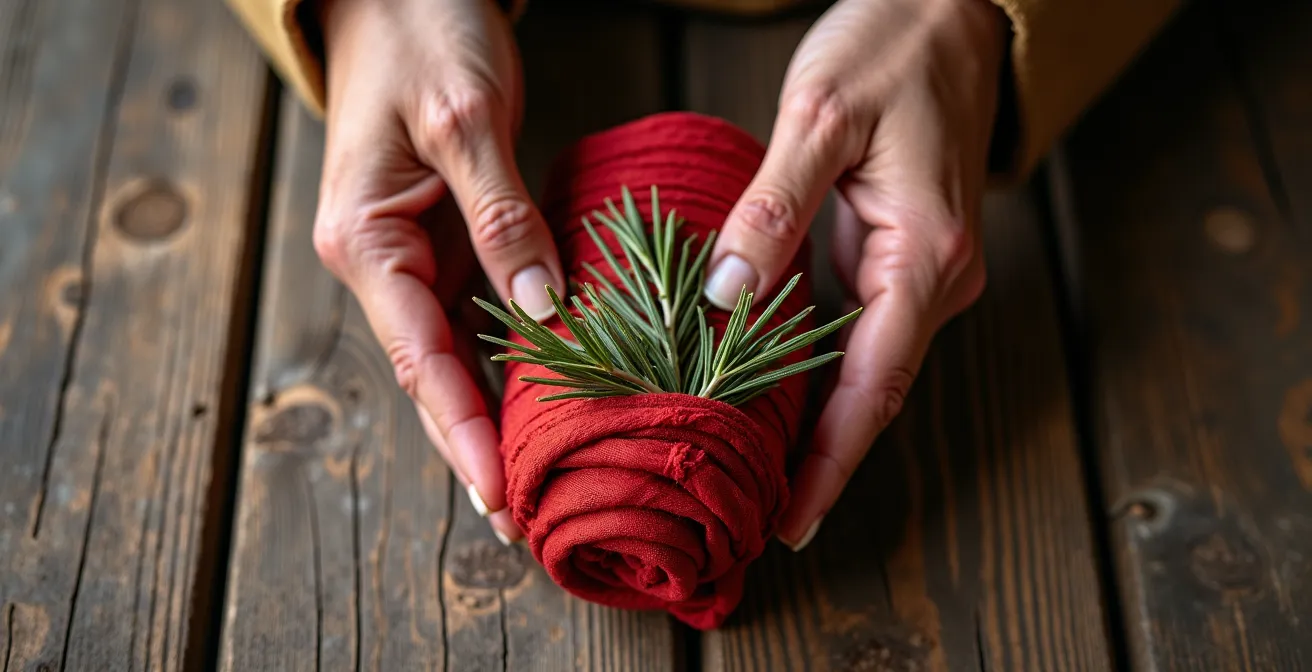
This protocol is a foundational element of relationality. It demonstrates that you understand the exchange is not a simple transaction. You are asking for a piece of someone’s spirit, their time, and their lived experience. Carrying tobacco and knowing how to offer it correctly is perhaps one of the most important first steps in demonstrating your commitment to respectful engagement. It signals that you have done your homework and are serious about building a good relationship.
How to Find Indigenous-Owned Businesses to Support During Your Road Trip?
One of the most direct ways to practice reciprocity during your travels is to ensure your money supports Indigenous communities directly. This goes beyond simply buying a piece of art; it involves consciously seeking out Indigenous-owned hotels, restaurants, tour operators, and galleries. This is not just an act of ethical consumerism; it is an act of economic reconciliation that contributes to the cultural revitalization and self-determination of a Nation. The demand is significant; research confirms that one in four visitors to BC actively seek authentic Indigenous experiences.
The most reliable way to identify these businesses is to look for certifications from reputable organizations. In British Columbia, Indigenous Tourism BC (ITBC) is the leading body. ITBC provides two key designations to look for: “Authentic Indigenous” and “Indigenous-owned.” These marks are a guarantee that the business is at least 51% Indigenous-owned and that the experience is community-supported and culturally appropriate. Their website is an invaluable resource for trip planning, listing certified businesses across the province.
Examples of certified businesses showcase the incredible diversity of experiences available. You might stay at the Klahoose Wilderness Resort in Desolation Sound for an all-inclusive journey into their traditional territory, visit the Squamish Lil’wat Cultural Centre in Whistler to learn about the distinct cultures of two Nations, or explore the Nk’Mip Desert Cultural Centre in Osoyoos, part of North America’s first Indigenous-owned and -operated winery. By choosing these certified businesses, you ensure that your tourism dollars are empowering communities, preserving culture, and supporting a narrative that is controlled by Indigenous people themselves.
What You Need to Know About Alcohol Bans Before Entering a Dry Community?
Many Indigenous Nations in British Columbia and across Canada have established themselves as “dry” or “damp” communities, meaning the possession and consumption of alcohol and other substances are strictly prohibited by their laws. It is imperative for any visitor to understand and respect these rules without question. These are not suggestions; they are sovereign bylaws of self-governing Nations with legal consequences for violations under that Nation’s laws, which operate separately from provincial or federal legislation.
More importantly, visitors must understand the profound ‘why’ behind these bylaws. For many communities, declaring themselves “dry” is a powerful tool for healing from the intergenerational trauma of colonialism, where alcohol was historically weaponized to devastate families and cultures. These bans are an act of reclamation, strength, and commitment to the well-being and health of future generations. Viewing this rule as a personal inconvenience is a fundamental misunderstanding of its purpose. It is a vital expression of community sovereignty and resilience.
Before you even consider visiting a community, it is your responsibility to research its specific protocols. The first and best place to look is the Nation’s official website, where bylaws are often posted. If you cannot find the information online, you can call the Nation’s administrative office (often called the Band Office). When in doubt, the default assumption must always be that alcohol and non-medicinal drugs are prohibited. Entering a community with alcohol, even if it remains unopened in your vehicle, can be seen as a grave sign of disrespect and may have immediate consequences, including being asked to leave.
How to Learn the Correct Pronunciation of Indigenous Place Names Before You Arrive?
The names of the lands, waters, and communities you visit carry deep history and meaning. For generations, colonial governments and settlers replaced Indigenous place names with their own, an act of erasure that disconnected places from their true history. Making a genuine effort to learn and use the correct Indigenous pronunciation is a fundamental act of respect. It is a small but powerful step in reconciliation, acknowledging the Indigenous presence on the land since time immemorial.
Showing up and mispronouncing the name of your host’s Nation can be an awkward and disrespectful start to a visit. Fortunately, resources are available to help you learn beforehand. The process should be approached with humility and patience. Here are the key steps to take:
- Use Online Audio Archives: Websites like FirstVoices.com are invaluable digital resources containing audio archives of words, phrases, and place names in many of the 30+ distinct Indigenous languages of BC. Search for the Nation you plan to visit and listen to a native speaker pronounce the name.
- Practice Key Place Names: Focus on the territories you will be in. For example, practice Sḵwx̱wú7mesh (Squamish), xʷməθkʷəy̓əm (Musqueam), and Tla-o-qui-aht (Clayoquot) if you are visiting their respective territories.
- Listen to Official Sources: A useful technique is to call the Nation’s band office after hours and listen to the pronunciation of the Nation’s name on their answering machine message.
- Ask Respectfully: If you are still unsure, it is appropriate to ask for help. A respectful way to phrase this is: “I want to be sure I am saying the name of your territory correctly. Would you be willing to help me?” This shows you care enough to get it right.
Do not be afraid of making a mistake if your effort is genuine. The attempt itself is what matters. It communicates that you see and honour the people and their language, and that you are an active participant in the revitalization of Indigenous linguistic heritage.
Why US-Based Training Data Fails to Represent Canadian Indigenous Populations?
Travelers, particularly those from the United States, often make the mistake of assuming that protocols for visiting Indigenous lands are universal. They may have experience with the US reservation system and expect a similar framework in Canada. This assumption is a critical error, especially in British Columbia. The legal and historical context is so fundamentally different that US-based knowledge is not only irrelevant but can lead to significant cultural and legal missteps.
The primary distinction lies in the concept of treaties. While the US federal government signed treaties (however unjust and often broken) with many tribal nations, a staggering 95% of the land in British Columbia is unceded, non-surrendered Indigenous territory. This means most First Nations in BC have never signed away their rights or title to their lands. Consequently, they are not “reservations” granted by a federal government; they are the sovereign homelands of self-determining peoples. This reality is the foundation for all protocol.
Understanding this legal difference is crucial for any visitor. The following table highlights the key distinctions a traveler must recognize:
| Aspect | US Reservation System | BC Unceded Territories |
|---|---|---|
| Legal Status | Federal reservations with defined boundaries | Non-surrendered lands without treaties |
| Land Rights | Limited sovereignty within reservation | Ongoing Aboriginal title claims |
| Permission Protocol | Federal/tribal permit systems | Nation-specific protocols vary widely |
| Tourism Approach | Often centralized tribal tourism offices | Community-based, relationship-focused |
This distinction means that in BC, there is no centralized “Bureau of Indian Affairs” or single permit system. Each of the 204 First Nations in BC has its own unique governance, laws, and protocols for welcoming visitors. Permission is granted not by a government agency, but by the Nation itself. The approach is not transactional, but relational and community-focused. This is why learning the specific protocols of the individual Nation you wish to visit is not just a courtesy—it is a legal and political necessity.
What Does the ‘Transformation’ Motif Mean in West Coast Indigenous Art?
As you travel through British Columbia, you will encounter the powerful and distinct art of the Northwest Coast. From towering totem poles in Stanley Park to intricate carvings in galleries, a recurring and central theme is that of transformation. You will see figures that are part human, part animal—a bear with human features, or a human face revealed within a raven’s head. To an outside observer, these may seem like mythological fantasies. In reality, they are profound expressions of a worldview where the boundaries between the human, natural, and spiritual realms are fluid and interconnected.
Case Study: The Legacy of Bill Reid’s Transformation Art
The Bill Reid Gallery in Vancouver, Canada’s only public gallery dedicated to contemporary Indigenous Northwest Coast art, is a crucial place for understanding this concept. The gallery showcases many famous transformation pieces by the legendary Haida artist Bill Reid, including sculptures depicting the metamorphosis of a human into a raven. These masks and motifs are not merely decorative. They represent the inextricable link between humans, animals, and the spiritual world, all rooted in the land itself. When visitors view Reid’s iconic bear transformation sculptures or the totem poles he carved, they learn that these figures represent a person’s lineage, spiritual power, and ancestral rights to specific territories. This moves appreciation beyond a superficial “I like this art” to a deeper understanding of art as a visual record of law, history, and spirituality.
Transformation masks, often with moving parts that allow a dancer to reveal one being within another, are central to this concept. They are used in ceremonies like the potlatch to make ancestral stories and spiritual encounters tangible. As a visitor, understanding the transformation motif is key to looking at Northwest Coast art with the respect it deserves.
Transformation masks are not just myths; they represent the inextricable link between humans, animals, and the spiritual world that is rooted in the land itself.
– Bill Reid Gallery, Northwest Coast Art Exhibition Guide
When you see a transformation figure, you are not looking at a fairytale character. You are looking at a visual representation of lineage, spiritual power, and connection to the land. It is a statement about one’s identity and one’s place in the cosmos. Recognizing this depth is another form of protocol—the protocol of seeing and appreciating a culture on its own terms.
Key Takeaways
- British Columbia’s context is unique: over 95% of the province is unceded Indigenous territory, not government-owned land.
- Protocols are not suggestions but the living laws of sovereign Nations; respecting them is a legal and ethical obligation.
- Authentic engagement and tourism are about reciprocity, ensuring that communities have narrative control and receive direct economic benefits.
How to Identify Authentic Indigenous Tourism Experiences vs. Tourist Traps?
In a region where Indigenous culture is a significant draw, the line between authentic representation and exploitative “tourist traps” can sometimes be blurry. An authentic experience is one that is Indigenous-led, community-driven, and contributes to cultural revitalization. A tourist trap, often called “Indigenous-themed,” is typically an enterprise owned by non-Indigenous people who use cultural motifs for profit without benefit or consent from the community. Supporting authentic experiences is a critical part of being a respectful visitor, as it ensures that the narrative and the economic benefits remain within the community. The Indigenous tourism sector is a vital part of BC’s economy, which sees over $22.1 billion in annual tourism revenue, with Indigenous tourism being the fastest-growing part.
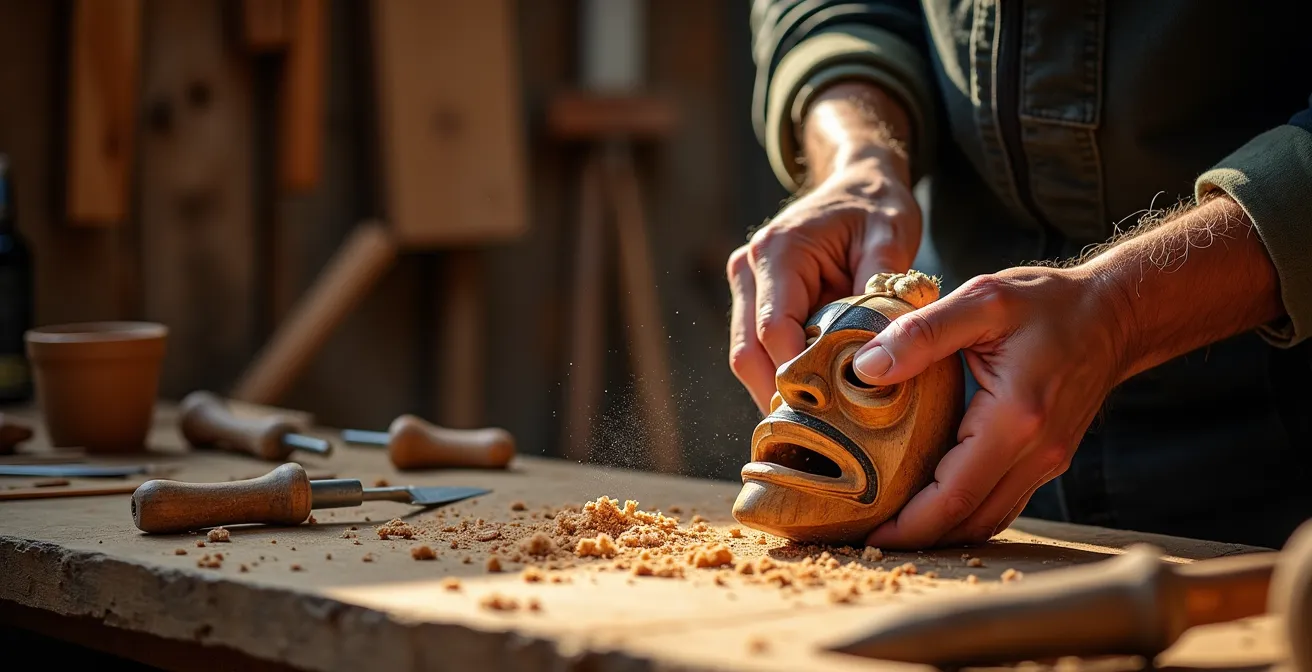
The key to distinguishing the two is to ask critical questions about ownership, control, and impact. An authentic business will be proud to state that it is Indigenous-owned and will often feature the stories and participation of community members and Elders. It will feel educational rather than purely entertaining, and its focus will be on sharing culture respectfully. A tourist trap, on the other hand, may use generic pan-Indigenous symbols, sell mass-produced “souvenirs” made overseas, and lack any direct connection or benefit to the local First Nation whose territory it operates on.
Your responsibility as a visitor is to do your research before you spend your money. This simple act of due diligence makes you an ally for Indigenous cultural sovereignty and economic self-determination. By making informed choices, you help ensure that tourism is a force for good, supporting the people whose culture you have come to learn about.
Your Action Plan: Authenticity Verification Checklist
- Check for Certification: Look for Indigenous Tourism BC’s “Authentic Indigenous” or “Indigenous-owned” certification marks online or onsite.
- Verify Ownership: Investigate if the business is genuinely Indigenous-owned and operated, not just “Indigenous-themed” by a non-Indigenous company.
- Assess Community Benefit: Determine if economic benefits and narrative control clearly stay with the local Indigenous community.
- Evaluate Cultural Impact: Ask yourself: Does this experience contribute positively to cultural preservation and revitalization?
- Look for Elder Involvement: Authentic experiences often respectfully include the guidance and knowledge of community Elders.
Your journey begins long before you arrive. Start now by researching the specific protocols and histories of the Nations whose territories you wish to visit, and commit to being a traveler who gives as much as they receive.