
Securing a coveted Parks Canada spot isn’t about being the fastest clicker; it’s a strategic game of mastering the entire park ecosystem.
- Success comes from leveraging off-peak timing, understanding park-specific rules, and choosing the right gear for the real conditions on the ground.
- True value lies in optimizing your passes and accommodation choices, not just winning a single booking.
Recommendation: Shift your focus from the reservation launch day to a year-round strategy of gathering intelligence on park dynamics, safety protocols, and lesser-known alternatives.
You’ve done everything right. You created your Parks Canada account weeks in advance. You logged in at 7:55 AM MST, your credit card information is pre-filled, and your finger is hovering over the mouse. At 8:00:01 AM, you click “Book,” and you’re met with the soul-crushing, pixelated red banner: SOLD OUT. For a frustrated camper who just wants to experience the sublime beauty of Lake O’Hara or a prime campsite in Banff, this feeling is all too familiar. The common advice—be faster, have multiple tabs open, pray to the internet gods—clearly isn’t working.
But what if the entire approach is wrong? What if the key to unlocking Canada’s most popular national parks isn’t a battle of milliseconds, but a game of strategic intelligence? The real “hack” isn’t about cheating the system but about understanding its hidden patterns, its financial incentives, and its operational logic so well that you can bypass the competition entirely. It’s about mastering the park ecosystem as a whole, from the value of a Discovery Pass and the nuances of wildlife seasons to the granular details of trail safety and accommodation certifications.
This guide abandons the “fastest click” fallacy. Instead, it provides a strategist’s playbook. We will deconstruct the full park experience to give you leverage, showing you how to find value where others see none, how to identify opportunities in the off-season, and ultimately, how to find the solitude you crave, even when the parks are at their busiest.
To navigate this complex landscape, we will explore a series of tactical decisions that savvy park-goers make. This guide breaks down everything from the financial calculus of park passes to the on-the-ground realities of driving and hiking, giving you a complete framework for your next adventure.
Summary: A Strategist’s Guide to Mastering Parks Canada
- Discovery Pass vs. Daily Fees: When Do You Break Even?
- Why Visiting Jasper in October Is Better Than July for Wildlife Viewing?
- The $250 Fine You Risk by Walking Your Dog Off-Leash in National Parks?
- Gros Morne vs. Cape Breton: Which Park Offers Better Hiking for Beginners?
- How to Drive the Icefields Parkway Without Overheating Your Brakes?
- Green Key vs. LEED: Which Hotel Certification Actually Saves Energy?
- How to Plan a 3-Day Rockies Meditation Retreat for Under $600 CAD?
- Where to Find Solitude in Banff National Park During the Peak July Season?
Discovery Pass vs. Daily Fees: When Do You Break Even?
Before you even think about booking a campsite, your first strategic decision involves the entry fee. Many visitors default to paying the daily rate, seeing it as a simple, one-time cost. This is a tactical error. The Parks Canada Discovery Pass is not just a pass; it’s a key piece of your overall value optimization strategy. The math is simpler than you think: the tipping point at which a pass becomes more economical than daily fees is remarkably low. For a solo adult, the break-even point is just seven days of visits per year. For a family or group, it’s also about a week.
But a simple day count is a rookie calculation. A strategist looks at the entire ecosystem. The Discovery Pass covers over 80 national parks and national historic sites. That means a drive down the Icefields Parkway, a stop at the Cave and Basin Historic Site in Banff, and a weekend trip to a different park months later all count towards its value. Furthermore, a family pass covers everyone in a single vehicle, making the annual price of $151.25 CAD an incredibly efficient investment for road trips. Another insider tactic is timing your purchase: buy the pass at the beginning of a month, and it remains valid until the end of that same month the following year, giving you nearly 13 months of access.
This comparative analysis shows that for anyone planning more than a single, short trip, the Discovery Pass is the clear winner. It’s not just about saving money; it’s about removing a psychological barrier to entry for future, spontaneous trips and bypassing ticket lines at busy gates.
| Pass Type | Cost | Break-even Point | Best For |
|---|---|---|---|
| Daily Adult Pass | $11 per day | N/A | Single park visits under 7 days |
| Family Daily Pass | $22 per vehicle | N/A | Weekend trips (1-3 days) |
| Adult Discovery Pass | $75.25 | 7 days of visits | Multiple park visits per year |
| Family Discovery Pass | $151.25 | 7 days for 2+ adults | Family road trips, multiple parks |
Why Visiting Jasper in October Is Better Than July for Wildlife Viewing?
The common wisdom is to visit the Rockies in July or August for perfect weather. This is precisely why those months are a strategic dead-end for anyone seeking solitude or authentic wildlife encounters. The real magic happens in the shoulder season, particularly October in Jasper. While summer crowds disperse, the park’s wildlife becomes more active and visible than at any other time of year. The primary driver of this activity is the annual elk rut, which peaks from late September into early October.
During the rut, the park’s massive elk population—numbering over 1,300 animals—is on full display. Bull elk bugle to establish dominance and defend their harems, often congregating in open valleys along the Athabasca River. This natural spectacle is far more dramatic and reliable than hoping for a chance sighting of a bear in July. The crisp autumn air, golden aspen leaves, and morning mist create a stunning photographic backdrop, turning a simple drive into an unforgettable safari. Recent wildfires have also created more open sightlines, paradoxically making wildlife easier to spot.
This seasonal shift isn’t just about better viewing; it’s about a better experience. Accommodation rates drop, trails are quieter, and the frantic energy of peak season is replaced by a serene, almost primal atmosphere. It requires a mindset shift: trading guaranteed warm weather for guaranteed awe. Of course, this period demands respect and caution. Parks Canada advises maintaining a 30-meter distance from elk and carrying deterrents like pepper spray, as bull elk can be extremely aggressive.

As you can see, the combination of fewer people and more active wildlife makes October a superior choice for the strategic visitor. It’s a calculated trade-off that pays dividends in experience, demonstrating that the best time to visit is often when everyone else has gone home.
The $250 Fine You Risk by Walking Your Dog Off-Leash in National Parks?
Understanding park regulations is not bureaucratic box-ticking; it’s a critical part of your strategic intelligence. The rules reveal how Parks Canada manages pressure on its ecosystems, and no rule is more telling—or more frequently violated—than the mandatory on-leash policy for dogs. The immediate consequence of a violation is a fine that can start at $250 CAD, but the underlying reasons for the rule are what matter to a strategist. A dog off-leash is not seen as a pet by wildlife; it’s perceived as a predator, like a wolf or coyote.
This perception can trigger disastrous outcomes. An off-leash dog can provoke a defensive attack from a mother bear with cubs or a bull elk during the rut. It can cause immense stress to wildlife during sensitive periods like calving season, forcing animals to expend precious energy. Furthermore, dogs can disturb ground-nesting birds or transmit diseases to and from wild animal populations. The leash law, therefore, is a core pillar of the park’s wildlife management strategy. Your compliance is a non-negotiable part of the visitor contract.
For the dog owner, ignoring this rule is a high-risk, low-reward gamble. Beyond the initial fine, repeated offenses can escalate significantly, potentially leading to court appearances and even a permanent ban from all national parks in Canada. It’s important to note that even certified service animals are subject to strict control regulations. The message is clear: the park is the animals’ home, and your pet is a guest who must behave accordingly. Adhering to this rule doesn’t just keep you out of trouble; it demonstrates a higher level of understanding and respect for the environment you’ve come to enjoy.
Gros Morne vs. Cape Breton: Which Park Offers Better Hiking for Beginners?
A key part of bypassing crowds is strategic park selection. Instead of fighting for a spot in Banff, a savvy visitor analyzes alternatives that offer world-class scenery with a fraction of the traffic. For those in Eastern Canada, the choice often comes down to two titans: Gros Morne National Park in Newfoundland and Cape Breton Highlands National Park in Nova Scotia. While both are stunning, they offer fundamentally different experiences for beginner hikers.
Gros Morne is arguably the superior choice for a true beginner. Its defining feature is variety in flat, accessible terrain. The iconic Tablelands offer a bizarre, Mars-like landscape that you can explore on relatively level trails. Other areas feature extensive, well-maintained boardwalks across bogs and coastal plains. This means a novice hiker can experience dramatic, otherworldly scenery without tackling significant elevation gain. Bail-out options are also plentiful, as many trails are located near the main park road.
Cape Breton, while magnificent, presents a tougher challenge. The famous Cabot Trail traces a coastline of dramatic headlands, and many of its signature hikes, like the Skyline Trail, involve more significant and sustained climbs. While the views are a spectacular reward, the rolling hills and coastal ascents require a higher base level of fitness. Cell service is generally better along the Cabot Trail, which can be a comfort, but the trails themselves can feel more remote. The choice comes down to your primary goal: for accessible, unique geology with cultural rewards like Newfoundland pub nights, Gros Morne is ideal. For breathtaking coastal vistas that demand a bit more effort, rewarded with Acadian and Celtic culture, Cape Breton is your destination.
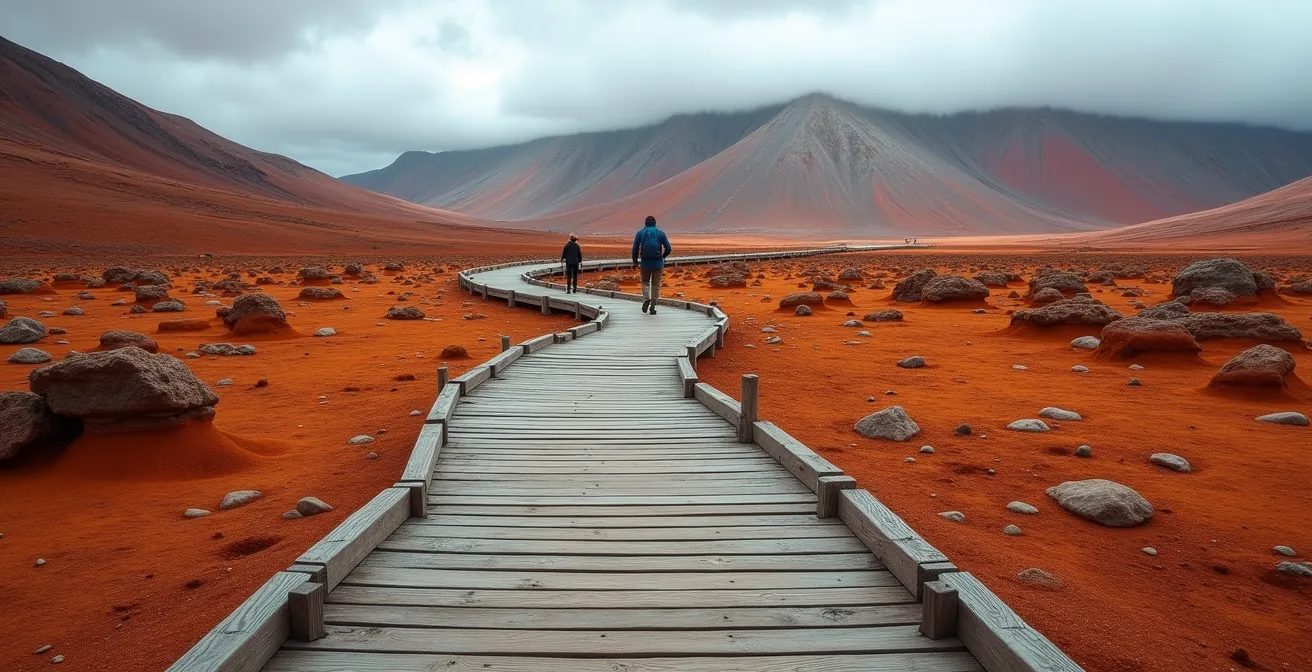
The following table breaks down the key differences for a beginner-focused comparison, helping you make an informed decision based on your comfort level and desired experience.
| Feature | Gros Morne | Cape Breton Highlands |
|---|---|---|
| Terrain Type | Bog & Boardwalks, flat coastal plains | Coastal Climbs & Headlands, rolling hills |
| Trail Difficulty | Many flat, boardwalk trails | More elevation gain on coastal trails |
| Bail-Out Options | Good – trails near main road | Moderate – some remote sections |
| Cell Service | Limited in backcountry | Better coverage on Cabot Trail |
| Cultural Rewards | Newfoundland pub nights, screech-in ceremonies | Acadian kitchen parties, Celtic music |
| Weather | Tablelands create microclimates | Frequent coastal fog and wind |
How to Drive the Icefields Parkway Without Overheating Your Brakes?
Mastering the park ecosystem extends to the mechanics of your vehicle. The Icefields Parkway is not just a scenic drive; it’s a 230-kilometer mountain route with serious logistical and safety considerations. One of the most common and dangerous mistakes tourists make is overheating their brakes on long descents. The grades near Sunwapta Pass and the Columbia Icefield exceed 8%, which is more than enough to cause brake fade or complete failure if you simply “ride the brakes.”
The correct technique is to use engine braking. This involves downshifting your vehicle to a lower gear, forcing the engine to control the car’s speed and saving your brakes for when you truly need them. In an automatic transmission, this means shifting to ‘L’ (Low), ‘2’, or using paddle shifters to select a low gear *before* you begin the descent. In a manual, this means shifting down to 3rd or even 2nd gear. This isn’t an optional tip; it’s a fundamental mountain driving protocol.
Case Study: Icefields Parkway Emergency Preparedness
The parkway is notorious for its “dead zones” with absolutely no cell service, especially between Saskatchewan Crossing and the Columbia Icefield. A full tank of gas is mandatory before starting, as the only station at the Icefield Centre charges exorbitant prices. Your preparation checklist must include a basic emergency kit, paper maps (as GPS is unreliable), and checking your tire pressure. This preparation is not about “if” you’ll need it, but “when.”
Beyond brake management, a strategic approach to the Parkway involves planning for self-sufficiency. Use the designated pull-outs not just for photos, but as tactical cool-down points for your brakes on long descents. If you smell a burning scent from your wheels, it’s an immediate signal to pull over safely and let them cool for at least 15-20 minutes. The following plan outlines the essential steps for a safe journey.
Your Action Plan: Driving the Icefields Parkway Safely
- For Automatic Transmissions: Shift to ‘L’ or ‘2’ before starting descent at Sunwapta Pass. Watch for yellow grade warning signs as a visual cue.
- For Manual Transmissions: Downshift to 3rd gear for 6-8% grades, 2nd gear for steeper sections approaching the Columbia Icefield.
- Identify Cool-Down Points: Use designated pull-outs at Tangle Falls (before descent) and Stutfield Glacier viewpoint for 15-minute brake cooling.
- Monitor Brake Temperature: If you smell burning, immediately pull over at the next safe spot. Never ride the brakes continuously.
- Pre-Trip Vehicle Check: For rentals, specifically request vehicles with good brake condition and ask about mountain driving performance.
Green Key vs. LEED: Which Hotel Certification Actually Saves Energy?
Your strategic park plan should extend to your accommodation choices. Many hotels market themselves as “eco-friendly,” but the certifications they hold are not created equal, especially in a Canadian context. The two most common are Green Key Global and LEED (Leadership in Energy and Environmental Design). While both aim for sustainability, they focus on different areas and have different implications for actual energy savings.
LEED is an internationally recognized standard that primarily focuses on building design, construction, and systems. It’s a robust, data-driven certification, with studies showing that LEED-certified hotels can reduce energy use by up to 25% and water use by up to 11%. However, its origins are in the US, and its criteria are broad. Green Key Global, on the other hand, was developed specifically by the Hotel Association of Canada. This gives it a distinct advantage in addressing local challenges.
As the Hotel Association of Canada highlights, Green Key is more attuned to the operational realities of Canadian hospitality. The following citation provides key insight:
Green Key Global was developed by the Hotel Association of Canada and better understands the specific challenges of Canadian climates, such as heating costs versus US-centric AC costs.
– Hotel Association of Canada, HAC Green Key Global Program Overview
This focus on operations—like staff training, guest engagement, and Canadian heating priorities—makes Green Key a highly relevant indicator of a hotel’s day-to-day environmental impact. LEED is about the building’s bones; Green Key is about its daily life. For a traveler, a high Green Key rating (4 or 5 Keys) is a strong signal that the hotel is actively managing its energy and water consumption in a way that is directly relevant to the Canadian climate.
| Criteria | Green Key Global | LEED |
|---|---|---|
| Origin | Canada (HAC) | USA (USGBC) |
| Rating System | 1-5 Keys graduated | Certified/Silver/Gold/Platinum |
| Focus Areas | Operations, staff training, guest engagement | Building design, construction, systems |
| Climate Consideration | Canadian heating priorities | Broader international standards |
| Audit Frequency | Annual verification | Recertification every 3 years |
| Cost | More affordable entry point | Higher certification costs |
How to Plan a 3-Day Rockies Meditation Retreat for Under $600 CAD?
Applying the strategic principles of ecosystem mastery can lead to profound experiences for a surprisingly low cost. A 3-day meditation and digital detox retreat in the Rockies seems like a luxury, but by leveraging shoulder seasons, alternative accommodations, and free activities, it’s achievable for under $600 CAD per person.
The cornerstone of this budget strategy is accommodation. Forget expensive hotels in Banff. The solution is wilderness hostels like HI Mosquito Creek. Booking a dorm bed in the shoulder season (late September or early June) can cost as little as $35 per night. This not only slashes your biggest expense but also places you directly in a serene, natural environment far from townsite distractions. The second key is self-catering. A stop at a grocery store in Canmore or Calgary before heading into the park allows you to control food costs, bringing your daily spend down to around $30.
Case Study: The Shoulder Season Savings Strategy
Planning a retreat in late September or early June is the ultimate strategic move. Accommodation prices at wilderness hostels can drop by 30-40% compared to July. More importantly, tourist traffic plummets by as much as 70%, guaranteeing the solitude essential for a retreat. Areas like the Skoki Valley offer a complete digital detox with no cell service, and the stunning backdrops of the autumn larch season or spring wildflowers are provided for free. The weather is more variable, but the serenity and cost savings are unparalleled.
Transportation can be managed with shuttle services or ride-shares from Calgary, and activities can be sourced for free or by donation. The Banff Centre for Arts and Creativity often hosts free meditation sessions, and yoga studios in Canmore offer donation-based classes. The goal is to disconnect, and areas like the Skoki Valley or Egypt Lake backcountry guarantee this with zero cell service. This budget breakdown shows a clear path to an affordable and deeply rewarding experience.
Your budget breakdown for this trip could look something like this:
- Accommodation: HI Mosquito Creek Wilderness Hostel – $35/night x 3 nights = $105
- Food: Self-catered from Canmore – $30/day x 3 days = $90
- Transportation: Shuttle or ride-share from Calgary – $180 round trip
- Activities: Donation-based yoga, free meditation, and hiking = $25
- Contingency: Extra funds for permits or snacks = $100
This brings the total well under the $600 target, proving that a mindful retreat is accessible to almost anyone with a smart plan.
Key Takeaways
- Strategic timing is your greatest asset; visiting in a shoulder season like October often provides a better experience with less competition than peak summer months.
- True park mastery involves understanding and respecting the entire ecosystem, including wildlife behavior, safety protocols, and local regulations.
- Solitude is not a matter of luck but of strategy. It can be found by leveraging adjacent, less-crowded parks and visiting popular spots during non-peak hours.
Where to Find Solitude in Banff National Park During the Peak July Season?
This is the ultimate strategic challenge: finding peace in one of the world’s busiest parks during its most crowded month. The novice visitor joins the masses at Lake Louise and Moraine Lake, accepting crowds as inevitable. The strategist, however, knows that solitude is a resource that can be located with the right intelligence. The key is to think laterally and temporally: go where others don’t, and go when others aren’t there.
The most effective lateral move is the Yoho National Park escape strategy. A mere 25-minute drive from the chaos of Lake Louise, Yoho offers scenery of the same calibre with a tiny fraction of the visitors. Emerald Lake sees approximately 60% fewer people than Lake Louise in July. The Iceline Trail provides jaw-dropping glacier views that rival anything in Banff, but without the human traffic jams. Even the limited-access Lake O’Hara, while requiring a reservation lottery, guarantees a pristine, crowd-free experience if you succeed. Using the quiet village of Field as a basecamp instead of Banff townsite is another pro move.
Temporal strategies are just as powerful. The “Embrace the Night” tactic involves visiting hyper-popular spots when day-trippers and tour buses are gone. Vermilion Lakes after 10 p.m. offers incredible stargazing, while a pre-5 a.m. arrival at Moraine Lake lets you witness sunrise in relative peace. Another hack is to time your visits for the 6-8 p.m. dinner window, when most tourists have retreated to restaurants. Finally, if your schedule allows, a visit on a Tuesday or Wednesday can see up to 40% fewer visitors than a peak Saturday. Solitude isn’t gone; it’s just hiding in plain sight for those willing to adjust their plans.
Stop playing the reservation lottery and start playing chess. The next Parks Canada launch is your opportunity to apply these principles. Begin now by mapping out your ideal off-peak dates, researching alternative parks, and building a plan that prioritizes strategy over speed.
Frequently Asked Questions About Park Rules and Safety
Why must dogs be on leash in national parks?
Dogs are viewed as predators by wildlife like elk, bears, and caribou. Off-leash dogs can trigger aggressive defensive behavior, stress wildlife during critical periods like calving season, and disturb ground-nesting birds.
What happens if I receive multiple off-leash violations?
Repeated offenses can escalate beyond the $250 fine to include court appearances, potential permanent bans from all national parks, and in severe cases, seizure of the pet.
Are service dogs exempt from leash laws?
Certified assistance animals have different regulations than emotional support animals. Service dogs must still be under control, though specific accommodations may apply. Contact Parks Canada for clarification on your specific situation.