
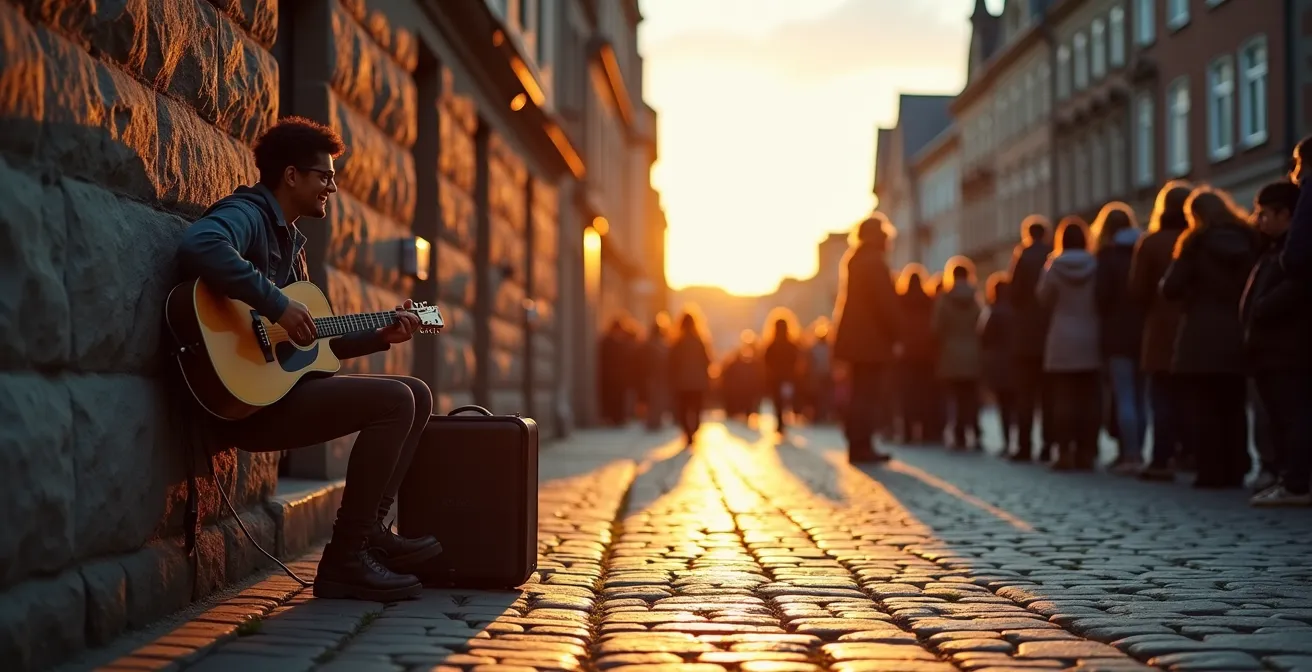
The secret to experiencing Quebec City’s festival season isn’t the expensive main stage pass, but mastering the art of the “off-grid” experience.
- Strategic use of park-and-ride shuttles beats the stress and cost of downtown parking.
- The most memorable performances are often free, found in places like the Port of Quebec or the vibrant St-Roch district.
Recommendation: Ditch the official schedule. Instead, use this guide to seek out the city’s “atmospheric currency”—the spontaneous, authentic moments that truly define its summer magic.
The air in Quebec City thrums with music. Every July, the city transforms into a sprawling stage, and the common wisdom says you need a pricey festival pass to be part of the magic. You’re here, a tourist ready to soak it all in, but maybe the headliners aren’t your main draw. You’re chasing a different kind of buzz: the spontaneous energy of a street performer, the discovery of a hidden gem, the feeling of being a local in the know. Most guides will point you toward the main gates of the Festival d’été de Québec (FEQ), telling you to check the official program for the handful of free events.
But what if the most authentic festival experience lies entirely outside those gates? The real secret isn’t about finding a loophole to see a big concert for free. It’s about a complete shift in perspective. It’s about embracing what I call “atmospheric currency”—the priceless value of ambiance, discovery, and spontaneous joy that thrives in the city’s streets, far from the ticketed chaos. This is about curating your own festival, one built on chance encounters and local secrets, where the entertainment is raw, the access is free, and the memories are entirely your own.
This guide is your curator’s map. We’ll bypass the main-stage mindset entirely. Instead, we’ll navigate the logistical hurdles that trip up most visitors, uncover the tranquil spots for a necessary sensory reset, and dive into the neighbourhoods where the city’s true creative heart beats the loudest. Forget the pass; your only ticket is your curiosity.
To help you navigate this alternative festival experience, we’ve broken down the essential strategies. This summary outlines the key pillars of a pass-free approach, from practical logistics to discovering the city’s hidden cultural treasures.
Summary: Your Guide to a Pass-Free Festival Experience in Quebec City
- The Park-and-Ride Secret That Saves You from Downtown Gridlock?
- Where to Escape the Noise in Old Quebec During a Major Festival?
- The “Off-Festival” Gigs in St-Roch That Locals Prefer to the Main Stage?
- Why You Still Need a Sweater for a July Night in Quebec City?
- Which Grande Allée Restaurants Accept Walk-Ins During Festival Week?
- Why the Fringe Festival Offers Better Entertainment Than Mainstream Theater?
- Funicular vs. The Stairs: Is the Ride Worth $5 for the View?
- How to Plan a Romantic Winter Weekend in Old Quebec for Under $1,000?
The Park-and-Ride Secret That Saves You from Downtown Gridlock?
Before you can enjoy the free-flowing vibe of the city, you have to get there. For many visitors, the first—and most frustrating—act of festival season is the battle for downtown parking. Circling packed streets and paying exorbitant fees can drain your energy and budget before you’ve even heard a single note. This is where the locals have a distinct advantage: they know the main event isn’t worth the gridlock. The real first step to a stress-free festival experience is to avoid driving into the historic centre altogether.
The city’s transit authority, RTC, offers a brilliant solution that feels like a well-kept secret. The park-and-ride shuttle system, or FestiBUS, is specifically designed for major events. Instead of fighting for a spot that costs upwards of $25 for an evening, you can park for free at designated lots in the suburbs and ride directly into the action. It’s not just about saving money; it’s about reclaiming your time and starting your evening on a relaxed note. The official RTC festival shuttle pricing often includes options like an unlimited pass for the duration of the event for less than the cost of two nights of parking.
To use this system like a seasoned local, a little preparation is key. The service is efficient, but showing up uninformed can lead to confusion. The most important first step is downloading the RTC Nomade Paiement app, as tickets are not sold on-site. From there, it’s a matter of choosing your lot and timing your arrival. The shuttles run frequently during peak hours, ensuring you’re not left waiting. This strategic move is your first investment in “curated serendipity”—by handling the logistics smoothly, you free up your mental and financial resources to enjoy the spontaneous moments the city has to offer.
Where to Escape the Noise in Old Quebec During a Major Festival?
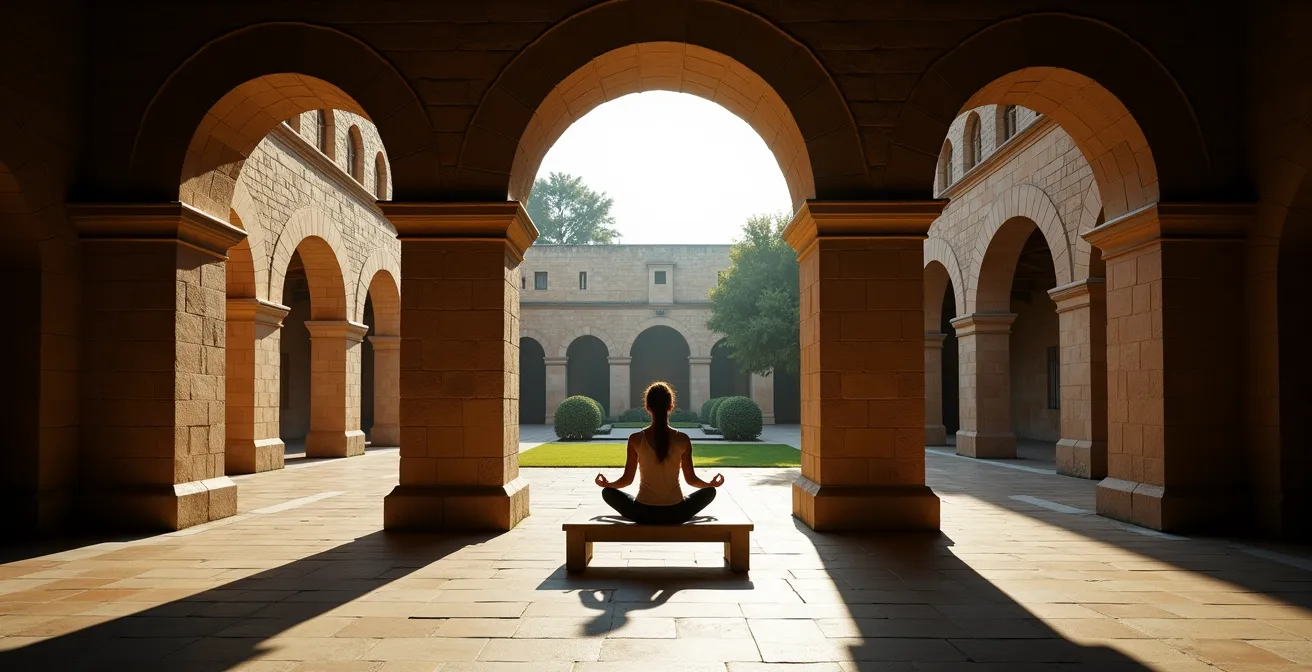
The exhilarating energy of festival crowds is a powerful draw, but it can also be overwhelming. The constant sound, movement, and density of people can lead to sensory burnout, making you crave a moment of peace. Many visitors believe they have to leave the historic district entirely to find it. The real curator’s skill lies in knowing where to find pockets of tranquility hidden in plain sight, allowing for essential “sensory decompression” without straying far from the action. These oases are crucial for recharging your batteries so you can dive back into the vibrant atmosphere with renewed enthusiasm.
One of the city’s most profound escapes is the garden of the Monastère des Augustines. Stepping through its doors is like entering another world. The thick stone walls that have stood for centuries mute the distant throb of bass and cheers, replacing it with a palpable sense of calm. This isn’t just a quiet place; it’s a site steeped in history and healing, offering a deep, restorative peace that no park bench can match. Finding a spot in its serene courtyard allows you to recharge your spirit, not just rest your feet.
This same principle of “nearby escape” applies to finding entertainment. Instead of battling the crowds on Grande Allée, head down towards the Saint-Lawrence River. According to Destination Canada, the Agora du Port de Québec often hosts free outdoor circus shows at dusk. These Cirque du Soleil-style performances create their own magical, mysterious atmosphere against the twilight sky, offering a world-class artistic experience without the crush of a stadium crowd. It’s a prime example of trading the loud and obvious for the unique and enchanting.
Your Checklist for Finding “Atmospheric Currency”
- Points of Contact: List all the places you might find free ambiance—public squares, church steps, waterfront promenades, and the “vibrational radius” of main stages.
- Collect Experiences: Inventory the types of free art available. Is it a lone guitarist, a multi-person acrobatic troupe, a living statue, or a chalk artist?
- Check for Coherence: Does the performance feel authentic to the space? A historical reenactor on a 400-year-old street has more value than a generic cover band.
- Gauge Memorability: Is this a unique, “only in Quebec City” moment, or something you could see anywhere? Prioritize the unique.
- Plan Your Contribution: If an artist moves you, be ready to contribute. Having small bills ready is part of the exchange for this priceless entertainment.
The “Off-Festival” Gigs in St-Roch That Locals Prefer to the Main Stage?
While tourists flock to the historic Upper Town, Quebec City’s locals know that the city’s creative soul often beats strongest in the revitalized lower town district of St-Roch. During major festival periods, this neighbourhood offers what many consider a superior alternative: an “off-grid experience”. It’s a dynamic scene of smaller, more intimate performances where the focus is on discovery and raw talent, not just established headliners. Choosing St-Roch isn’t a compromise; it’s a deliberate choice for a more authentic and exciting musical journey.
Events like the St-Roch XP festival, held in September but philosophically aligned with the summer’s off-grid vibe, perfectly embody this spirit. This festival transforms the neighbourhood into a sprawling stage. As Nicolas Racine, CEO of the organizing body BLEUFEU, highlighted, the goal is to reflect “the vibrant personality of its neighbourhood” by showcasing emerging talent. It’s here you’ll find the next big thing playing in a packed bar or on a temporary street-corner stage, creating an electric atmosphere of shared discovery. You’re not just a spectator; you’re part of the buzz.
St-Roch XP marks an important step in the growth of a festival with a unique DNA, one that reflects both our commitment to showcasing emerging talent and the vibrant personality of its neighbourhood.
– Nicolas Racine, CEO of BLEUFEU
The sheer scale of these alternative offerings is staggering. An event like St-Roch XP can bring together over 62 emerging artists across 20 venues, many of which are free performances. This isn’t a single free stage; it’s an entire ecosystem of music. You can wander down Rue Saint-Joseph, following the sound that catches your ear, and stumble upon a life-altering performance in a place you’d least expect it. This is the essence of “curated serendipity”: you go to the right neighbourhood and let the magic find you. It’s an experience far more personal and memorable than being one of 80,000 people on the Plains of Abraham.
Why You Still Need a Sweater for a July Night in Quebec City?
You’ve planned the perfect summer trip. You’ve packed shorts, t-shirts, and sandals, envisioning warm, sun-drenched days and balmy evenings. This is the classic mistake many first-time visitors make in Quebec City. While the daytime in July can be beautifully warm, the city’s geography—perched on a cliff overlooking the massive St. Lawrence River—creates a dramatic microclimate. As soon as the sun goes down, the temperature can plummet, catching unprepared tourists in a shiver.
This isn’t just a mild chill; the temperature swing is significant. It’s common for Quebec City to experience significant cooling in July evenings, with daytime highs around 25°C (77°F) dropping to a brisk 14°C (57°F) or even lower after dark. That cool breeze coming off the river, so refreshing in the afternoon, becomes biting once you’re standing still watching a two-hour street performance. Being cold is the fastest way to ruin a magical evening. The smartest festival-goers are the ones who look prepared, not the ones who look the most stylish for a hot day.
The solution is simple and is the uniform of any local: layering. A packable windbreaker or a simple sweater tied around your waist during the day becomes your best friend at night. It’s the most practical piece of travel advice for this city. This isn’t just about comfort; it’s about endurance. Being properly dressed means you can stay out longer, enjoy that extra encore from a brilliant busker, and wander the charming, lamp-lit streets late into the night without your teeth chattering. It’s a small bit of preparation that pays huge dividends in “atmospheric currency,” allowing you to fully immerse yourself in the city’s nocturnal magic.
Which Grande Allée Restaurants Accept Walk-Ins During Festival Week?
The Grande Allée is the epicentre of Quebec City’s festival nightlife, a dazzling strip of restaurants and bars buzzing with energy. The conventional wisdom is that getting a table here during festival week without a reservation made weeks in advance is impossible. The sidewalks are jammed, the patios are overflowing, and the “fully booked” signs are everywhere. This leads many to give up and grab a quick, uninspired bite far from the action. However, the savvy visitor knows that spontaneity is still possible, it just requires a strategic approach to timing.
The key is to think outside the conventional 7:00 PM dinner rush. During this peak period, your chances of walking into a restaurant are indeed slim to none. However, the rhythm of the festival creates unique windows of opportunity for those who are flexible. The real game isn’t about which restaurant to choose, but *when* to go. A well-timed arrival can mean the difference between a frustrating search and a delightful, spontaneous meal right in the heart of the excitement.
This dining strategy, confirmed by local guides, hinges on avoiding the pre-show rush. An early dinner around 5:00 PM or a late-night bite after 9:30 PM dramatically increases your chances. As an analysis of festival dining patterns shows, wait times can drop from over 45 minutes at peak to under 15 minutes during these shoulder periods. Another pro tip is to aim for bar seating, which is often first-come, first-served and turns over more quickly. The table below breaks down this timing strategy.
| Time Slot | Wait Time | Best Option | Success Rate |
|---|---|---|---|
| 5:00 PM (Early) | 0-15 mins | Restaurant walk-ins | High |
| 7:00 PM (Peak) | 45+ mins | Food trucks at Place George-V | Medium |
| 9:30 PM (Late) | 10-20 mins | Bar seating at restaurants | High |
Why the Fringe Festival Offers Better Entertainment Than Mainstream Theater?
The idea that the best entertainment comes with the highest price tag is a myth, especially in a city as culturally rich as Quebec. While large, mainstream festivals dominate the marketing landscape, smaller, more agile events like the Fringe Festival often provide a far more compelling and memorable experience. The Fringe operates on a philosophy of artistic freedom and accessibility, offering a raw, unfiltered, and often brilliant alternative to polished, high-budget productions. It’s the embodiment of the “off-grid experience” in the world of performing arts.
What makes Fringe-style events so special is their unpredictability and intimacy. The Saint-Joseph Street area, a hub for this kind of creative energy, comes alive with a mix of ticketed indoor shows and dozens of free performances in unexpected places. As noted by the city’s tourism board, the atmosphere is inherently festive and creative. You might find a one-person play in a tiny cafe, a comedy troupe on a street corner, or an avant-garde dance piece in a public square. The barrier between performer and audience dissolves, creating a powerful, shared experience.
This philosophy extends even to the city’s largest events. While the Festival d’été de Québec is known for its ticketed headliners, it also hosts a number of free outdoor stages, particularly on the Plains of Abraham and at Place George-V. These stages often feature incredible national and international talent that you can enjoy simply by showing up. You get the high-quality production value and electric atmosphere of a major festival, but with the freedom and spontaneity of a free event. This proves that even during paid festival periods, the most valuable currency is often just being in the right place at the right time, ready to be amazed.
Funicular vs. The Stairs: Is the Ride Worth $5 for the View?
Quebec City’s geography is dramatic and vertical. The journey between the Dufferin Terrace in the Upper Town and the charming Petit Champlain district in the Lower Town presents a choice: the historic Funicular or the Breakneck Stairs (Escalier Casse-Cou). For many tourists, the Funicular seems like an obvious, charming choice. But for the savvy traveler curating their experience, that $5 ticket represents a missed opportunity. The real question isn’t about saving a small amount of money, but about what you *gain* by choosing the stairs.
Choosing the stairs is a vote for immersion. It connects you physically to the city’s layout and history. Each step offers a new, slightly different perspective of the rooftops, the river, and the bustling streets below. It’s a mini-adventure that rewards you with incredible photo opportunities and a sense of accomplishment. The Funicular offers one view; the stairs offer dozens. It’s a classic case of the journey being as rewarding as the destination. Walking the city, including its vertical challenges, is how you truly discover its secrets.
More importantly, in the context of a pass-free festival experience, that $5 has a higher purpose. The street performers, buskers, and musicians who provide the city with its incredible free soundtrack rely on the generosity of their audience. The best way to support this vibrant ecosystem is to tip the artists who move you. Think of it this way: you can give $5 to a machine for a 60-second ride, or you can give it to a violinist whose music made your evening magical. The latter is a direct investment in the “atmospheric currency” that makes your trip memorable. Here are some of the best spots where that saved money can be well-spent enjoying free views and performances:
- Place des Canotiers: This waterfront park offers fantastic ground-level views, especially for fireworks, if you arrive early.
- Terrasse Dufferin: The iconic boardwalk behind the Château Frontenac provides an elevated vantage point for any performances happening below.
- Quai Paquet in Lévis: A short, inexpensive ferry ride across the river gives you a breathtaking panoramic view of the entire Quebec City skyline, with far fewer crowds.
- Plains of Abraham: During the FEQ, this massive park has multiple free outdoor stages where you can wander and discover new music.
Key Takeaways
- The most authentic festival experience in Quebec City is often found by avoiding the main stages and embracing the free, spontaneous street culture.
- Strategic planning for logistics like parking (using park-and-ride) and dining (avoiding peak hours) is crucial for a stress-free experience.
- Always be prepared for the significant evening temperature drop by bringing layers; being comfortable is key to enjoying the city’s nightlife.
How to Plan a Romantic Winter Weekend in Old Quebec for Under $1,000?
While this guide has focused on the vibrant energy of summer, the philosophy of finding magical, pass-free experiences holds true year-round. In fact, it might be even more potent during the winter, when Quebec City transforms into a fairytale snow globe. A romantic winter weekend here doesn’t need to be defined by expensive, ticketed events. The city’s true winter romance lies in its atmosphere, which is entirely free to access.
The cornerstone of winter is the Quebec Winter Carnival. While some activities require an “effigy” (the pass), a huge portion of the fun is completely free. The streets of Old Quebec become an open-air museum of dazzling ice sculptures, and public spaces like Place d’Youville host free activities, including exhilarating snow slides. Simply wandering through this winter wonderland, hot chocolate in hand, and spotting the famous Bonhomme Carnaval mascot is an experience in itself. It proves that the best moments are often unplanned and accessible to all.
This mindset—of seeking out the inherent magic of the season rather than a pre-packaged event—is the key to an affordable and deeply romantic getaway. A weekend built around strolling through the snow-covered streets of Petit Champlain, enjoying the views from the city walls, and soaking in the cozy ambiance of a fireside drink in a historic pub can be far more memorable than any scheduled activity. The city itself is the main attraction, and access to its charm and beauty is always free. Whether it’s the buzz of a summer festival like the FEQ, scheduled for July 3-13, 2025, or the quiet sparkle of a February snowfall, the principle remains: the greatest value lies in the atmosphere, not the admission price.
Start exploring with this new perspective. Leave room in your schedule for the unexpected, follow the sound of distant music down a side alley, and invest your time and attention in the raw, brilliant talent that fills the streets. That is how you truly experience the festival.