
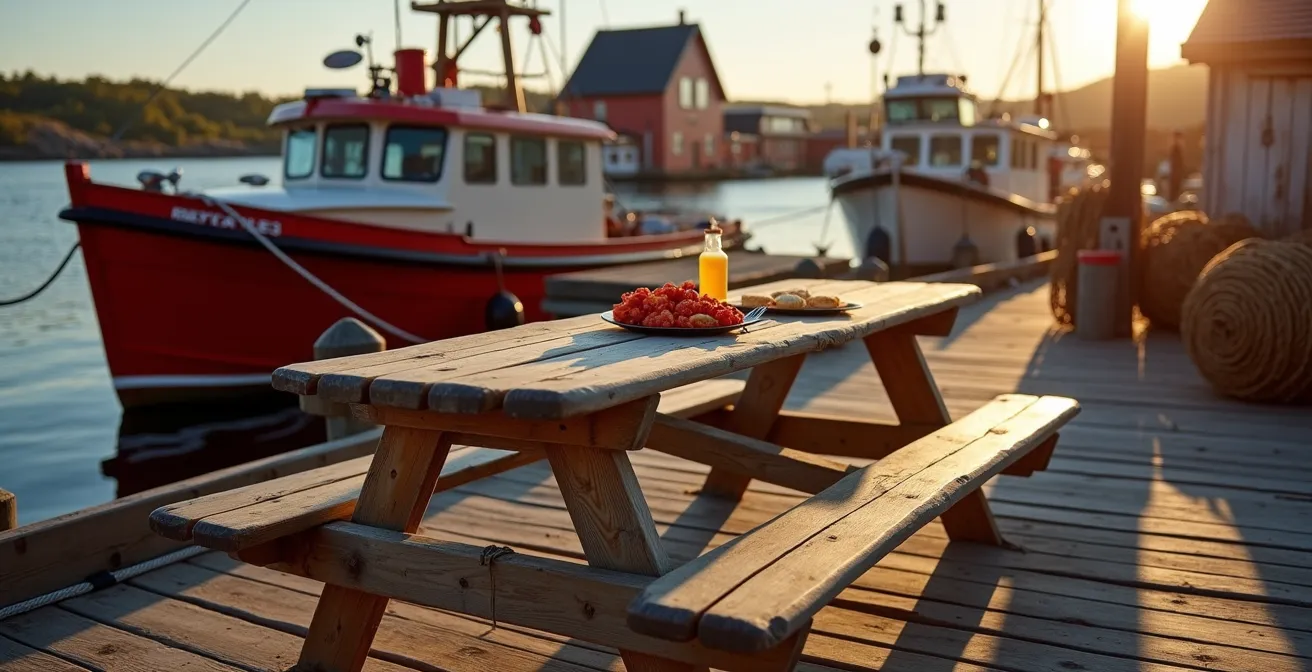
Savoring the East Coast isn’t about ticking off landmarks; it’s about understanding its rhythm. This guide goes beyond generic advice to reveal the local secrets for an authentic maritime adventure. You’ll learn the difference between a tourist-priced lobster and the real deal, how to tackle the Cabot Trail’s steepest descents safely, and how to choose the perfect landscape for your family’s memories, from PEI’s warm sands to Newfoundland’s dramatic cliffs.
There’s a version of an East Coast vacation that exists on postcards: a bright red lobster on a checkered tablecloth, a lighthouse perched on a dramatic cliff, a scenic drive under a perfect blue sky. But for the foodie tourist craving a genuine taste of the Maritimes, this picture is often incomplete and expensive. You arrive wondering if the lobster roll you just paid $40 for is a local delicacy or a tourist trap, or if the stunning view is worth the white-knuckle drive to get there.
Most guides will give you a list of “top ten” spots, but these often lead to crowded restaurants and generic experiences. They tell you *what* to see, but not *how* to see it, or more importantly, *why* it matters to the people who live there. They might mention the famous tides of the Bay of Fundy, but not the very real danger of getting trapped if you don’t understand their timing. They’ll celebrate maple syrup, but miss the entire pantry of emerging Canadian ingredients that truly define modern terroir.
But what if the key to an authentic maritime trip wasn’t about finding the best-rated restaurant, but understanding the local fishing seasons? What if navigating the Cabot Trail wasn’t about the destination, but about mastering the descent like a local trucker? This guide adopts a different perspective. We’re trading the tourist map for a local’s field notes, focusing on the practical wisdom that transforms a simple trip into a deep, flavorful, and budget-savvy experience. It’s about connecting with the place, not just consuming it.
Throughout this journey, we will explore the nuances that locals know by heart. From telling a fresh lobster from a tired one in Nova Scotia to legally finding fossils at Joggins, and from planning an accessible trip through historic Halifax to knowing what to do when the ferry to Grand Manan gets cancelled, you’ll gain the confidence to explore the East Coast on your own terms.
Summary: Your Insider’s Guide to the Canadian Maritimes
- Lobster or Scallops: Which Is Fresher in Nova Scotia in September?
- The Cabot Trail Brake Check: How to Descend North Mountain Safely?
- Where to Look for Fossils at Joggins Cliffs Without Breaking the Law?
- How to Walk on the Ocean Floor at Hopewell Rocks Without Getting Trapped?
- PEI Beaches vs. Newfoundland Cliffs: Which Landscape Suits Your Family?
- Which Historic Districts in Halifax Are Actually Wheelchair Accessible?
- How to Shop for Groceries on Grand Manan When the Ferry Is Cancelled?
- Beyond Maple Syrup: What Are the Emerging Canadian Ingredients Chefs Are Exporting?
Lobster or Scallops: Which Is Fresher in Nova Scotia in September?
Here’s the inside scoop: the answer depends less on the month and more on the seasonal terroir of the ocean. In September, you’re catching the tail end of the summer lobster season. This is when a savvy local asks a crucial question that most tourists don’t: “Which LFA is this from?” An LFA, or Lobster Fishing Area, has its own specific season. A lobster from a zone that just closed might not be as fresh as one from an area still actively fishing. The island is a hub of this activity; today, more than 1,200 fishers operate out of 45 ports, ensuring a steady supply, but the timing is everything.
The real pro move is to look for hard-shell lobster. By late season, lobsters have grown into their shells, making the meat denser and more flavourful compared to the watery soft-shell “shedders” found earlier in the summer. When you buy, your best bet is always direct from the wharf between August and October. If you can’t, a live tank at a dedicated fish market is your next best option. A “market price” lobster special at an inland restaurant in late September should be viewed with healthy skepticism.
As for scallops, Digby scallops are world-famous and their season is often in full swing in the fall, making them an exceptionally fresh and reliable choice. Captain Mark Jenkins, whose family has fished these waters for four generations, emphasizes connecting with the source. His Top Notch Lobster Tours offer an authentic glimpse into this world. Guests get to haul in traps fisher-style, learning firsthand how to gauge a catch’s quality. This experience transforms a meal into a story, connecting you directly to the maritime heritage.
The Cabot Trail Brake Check: How to Descend North Mountain Safely?
The Cabot Trail is one of Canada’s most breathtaking drives, but the dramatic ascents and descents, particularly on North Mountain and Cape Smokey, can be terrifying for the unprepared. The stunning vistas can quickly turn to white-knuckle anxiety if you don’t know how to handle your vehicle. The biggest mistake tourists make is “riding the brakes”—keeping constant pressure on the pedal. This can overheat your brake fluid, leading to a “soft” pedal and a dangerous loss of stopping power, a phenomenon known as brake fade.
The local secret isn’t about having better brakes; it’s about not using them. You need to use your engine to control your speed. Before you even start the descent, shift your automatic transmission from ‘D’ (Drive) to a lower gear, like ‘L’, ‘2’, or ‘3’. This forces the engine to turn faster, creating a natural braking effect without ever touching the pedal. This technique, known as engine braking, keeps your brakes cool and ready for when you actually need them. If you start to smell a burning scent, it might not be your car—it could be the one ahead of you. This is a clear signal of an amateur driver and a good reason to keep your distance.
The government of Nova Scotia has installed designated “Brake Check Points” for a reason. Use them. If your brakes feel spongy or you’re unsure about the descent, pull over and let them cool for 15-20 minutes. Different vehicles require slightly different approaches, from RVs that need to gear down early to Electric Vehicles that can use regenerative braking to their advantage.
Your Safety Checklist for Descending North Mountain
- Gear Down First: Engage a lower gear (L, 2, or 3) *before* the descent begins, not halfway down.
- Pump, Don’t Ride: Apply brakes in firm, short pumps to slow down, then release to let them cool. Avoid continuous pressure.
- Monitor Your Senses: Pay attention to the smell of burning brakes (from your car or others) and any “spongy” feeling in the pedal. These are urgent warning signs.
- Use Pull-Offs: Proactively use the designated “Brake Check Points” to let your brakes cool if you have any doubts. It’s a sign of a smart driver, not a timid one.
- Maximize Regeneration (EVs): If you’re in an electric vehicle, lift your foot off the accelerator early to allow the regenerative braking system to do most of the work, recharging your battery as you descend.
Where to Look for Fossils at Joggins Cliffs Without Breaking the Law?
The Joggins Fossil Cliffs, a UNESCO World Heritage Site, are a time capsule of the Carboniferous Period. It’s tempting to want to take a piece of this 300-million-year-old history home, but it’s crucial to know the rules. The most important one is this: you can only collect fossils that you find on the beach, which have already fallen naturally from the cliffs. It is strictly illegal to use any tools—no hammers, no chisels—to dig into or strike the cliff face itself. This is protected under Nova Scotia’s Special Places Protection Act to preserve the site’s integrity for scientists and future visitors.
The secret to a successful (and legal) fossil hunt is all about timing and observation. You must plan your visit around the tides. The best time to search is as the tide is going out, on a receding tide. This exposes fresh sections of the beach and newly fallen rocks that haven’t been picked over by other visitors. Always check the official tide charts from the Canadian Hydrographic Service before you go; arriving at high tide means you won’t be able to access the beach at all.
While everyone hopes to find a large fossilized tree trunk, the most rewarding discoveries are often more subtle. Train your eyes to look for patterns and textures on the surface of fallen rocks. Look for the diamond-shaped patterns of ancient lycopsid tree bark, the ribbed texture of Calamites (ancient horsetails), or the root-like impressions of Stigmaria. Incredibly, you can even find fossilized raindrops or the tracks of giant prehistoric arthropods. These “invisible” fossils are often overlooked but offer a profound connection to this ancient world. Your best tool isn’t a hammer; it’s a keen eye and a sense of curiosity.
How to Walk on the Ocean Floor at Hopewell Rocks Without Getting Trapped?
Walking on the ocean floor at Hopewell Rocks is an otherworldly experience. Twice a day, 100 billion tonnes of water recede, allowing you to stroll where a few hours earlier, the water level was as high as a five-story building. The sheer scale is staggering; the Bay of Fundy experiences the world’s highest tides, with a range that can exceed 16 meters (52 feet). But this natural wonder comes with a serious, non-negotiable safety risk: the tide comes back in with astonishing speed. Getting trapped is a real and present danger.
The park staff are experts, and their number one rule is the “Rule of Threes”: you should only be on the ocean floor for the three hours before and the three hours after low tide. This gives you a generous six-hour window. Venture out beyond this, and you risk the water cutting off your return path to the stairs. Park rangers patrol the area and sound a loud horn to signal that it’s time to head back. Do not ignore this signal. It’s not a suggestion; it’s an evacuation notice.
Beyond timing, pay attention to the ground beneath your feet. While much of the floor is firm sand and rock, there are patches of deep, thick mud called “pluff-mud” that can trap you up to your waist. Always test uncertain ground with a stick before stepping. Stick to the main walking areas around the famous “flowerpot” rocks and be extra cautious if you venture towards the less-visited Demoiselle Beach, as the tide can move faster in different coves. The water doesn’t rise like a bathtub; it flows in through channels, and knowing where those are is key to not getting stranded on a temporary island.
PEI Beaches vs. Newfoundland Cliffs: Which Landscape Suits Your Family?
Choosing between Prince Edward Island and Newfoundland for a family trip is about more than just geography; it’s about defining your vacation’s “landscape palate.” Are you seeking gentle relaxation or dramatic adventure? The answer will determine which iconic coastline is right for you. PEI is the undisputed champion of the classic beach day. Its famous red sand beaches, warmed by the Gulf of St. Lawrence, offer gentle slopes and shallow, swimmable water. It’s an ideal playground for families with toddlers and young children who can spend hours building sandcastles and splashing safely at the water’s edge at places like Cavendish or Basin Head.

Newfoundland, by contrast, offers a raw, powerful beauty that appeals to families with teenagers and a taste for adventure. The experience here isn’t about lounging; it’s about hiking, exploring, and being humbled by nature. The dramatic, windswept cliffs of the Skerwink Trail or Signal Hill provide epic photo opportunities and a sense of accomplishment. The trade-off is accessibility. Many of these stunning vistas are reached by challenging trails that are not stroller-friendly and require sturdy footwear. While PEI’s beaches often have accessible boardwalks and facilities, Newfoundland’s rugged nature is its main attraction.
Your budget and activity style also play a huge role. A day on a PEI beach can be nearly free, fueled by a picnic basket. A Newfoundland adventure often involves more costs, from gas for long drives between scattered communities to park fees for Gros Morne National Park and the cost of boat tours to see icebergs or whales. The choice is a matter of travel philosophy.
This comparative table helps break down the decision based on your family’s specific needs and desires. It’s a practical tool for matching your vacation dreams to the right maritime landscape.
| Family Type | PEI Beaches | Newfoundland Cliffs |
|---|---|---|
| Families with Toddlers | Gentle slopes at Cavendish, warm shallow water, sandcastle-friendly | Limited accessibility, steep trails not stroller-friendly |
| Families with Teens | Beach volleyball, surfing lessons, social atmosphere | Dramatic photo ops at Signal Hill, challenging Skerwink Trail hikes |
| Accessibility Needs | Most beaches wheelchair accessible at entry points | Most cliff trails not accessible |
| Budget per Day | Nearly free beach days | Gas for drives, Gros Morne park fees, boat tours add up |
Which Historic Districts in Halifax Are Actually Wheelchair Accessible?
Halifax is a city steeped in history, but its charming cobblestone streets and historic buildings can present significant challenges for visitors with mobility issues. While areas like the “Historic Properties” are visually appealing, their uneven stone surfaces are nearly impossible to navigate in a wheelchair. A truly accessible tour requires a different route, one that prioritizes modern infrastructure over historical accuracy underfoot. The key is to stick to the Halifax Waterfront boardwalk, which is fully paved, flat, and offers stunning harbour views without the bumpy ride.
A great accessible itinerary starts with the designated parking on Lower Water Street and follows the boardwalk. This path provides smooth access to several key attractions. A standout example of blending history with accessibility is the Maritime Museum of the Atlantic. It has become a model for inclusive heritage in the city.
Case Study: The Maritime Museum’s Accessibility Success
The Maritime Museum of the Atlantic proves that history doesn’t have to be inaccessible. Recognizing the barriers of its historic location, the museum worked with disability advocates to implement comprehensive accessibility features. It offers street-level access, elevators to all exhibit floors, and fully accessible washrooms. This means visitors using wheelchairs can fully explore the powerful exhibits on the Titanic and the Halifax Explosion, ensuring that the city’s most important stories are available to everyone, regardless of their mobility.
From the museum, you can continue along the waterfront to accessible restaurants like Murphy’s Cable Wharf. For venturing further into the city, Spring Garden Road is a much better option than the historic district, as it has consistent curb cuts and smoother sidewalks. For the most current information or to rent equipment, contacting a local organization like Independent Living Nova Scotia (ILNS) is a smart move, as they can provide up-to-the-minute details on which places are truly accessible.
How to Shop for Groceries on Grand Manan When the Ferry Is Cancelled?
Life on an island like Grand Manan, New Brunswick, is dictated by the rhythm of the ferry. When fog rolls in or a storm kicks up, that vital link to the mainland can be severed for days, leaving visitors and locals alike to rely on what’s already on the island. For a tourist caught in this situation, the initial panic of dwindling grocery supplies is real. But what happens next is a beautiful lesson in the island’s unique community fabric and resilience.
The first thing to know is that formal institutions are only part of the solution. The real support system is an informal, grassroots network built on generations of “neighbours helping neighbours.” When the ferry was cancelled for three days in January 2024, this network sprang into action. Instead of hoarding, residents with pantries full of extras began posting what they could share on the “Grand Manan Virtual Flea Market” Facebook group. It became a digital community bulletin board for everything from a cup of sugar to a carton of milk.
This spirit of mutual support extends offline as well. The local bakery was known to extend credit to visitors stranded without enough cash, and fishers with deep freezers full of seafood would share their catch with those in need. This isn’t a formal policy; it’s simply the culture of the island. The lesson for a visitor is to not be afraid to ask. A polite inquiry at the local coffee shop or a post on the community Facebook page will almost always be met with generosity and a solution. What begins as a potential crisis often transforms into an experience of genuine island hospitality, something you’d never find if the ferry always ran on time.
Key Takeaways
- Authenticity is in the details: Understanding fishing seasons, tide schedules, and local safety practices is more valuable than any tourist brochure.
- Think like a local: Use engine braking on steep descents, check community Facebook pages during ferry cancellations, and know the laws before collecting natural souvenirs.
- Match the landscape to your travel style: Choose PEI’s gentle beaches for relaxation and young families, or Newfoundland’s dramatic cliffs for adventure and teens.
Beyond Maple Syrup: What Are the Emerging Canadian Ingredients Chefs Are Exporting?
While maple syrup is Canada’s most famous culinary export, a new generation of chefs and foragers is championing a diverse pantry of ingredients that tell a deeper story of the country’s vast and varied terroir. These emerging products, sourced from the boreal forest to the Pacific coast, are capturing the attention of the global culinary world. They offer a taste of Canada that is wild, specific, and deeply connected to the land. The focus is shifting from a single, sweet icon to a complex flavour atlas of the nation.
In the boreal forests of Quebec and Ontario, chefs are looking beyond maples to birches. Birch syrup, with its complex, savoury-sweet flavour, is gaining traction. The forest floor also yields treasures like chaga mushrooms, prized for their health benefits, and Labrador tea. Along the coasts, the ocean is providing a new kind of harvest. Dulse seaweed from the Atlantic and sea asparagus from the Pacific offer a salty, umami-rich taste of the maritime environment. From the prairies, haskap and Saskatoon berries are providing a tart, antioxidant-rich counterpoint to traditional fruits.
This movement is about more than just novel flavours; it’s a celebration of regional ecosystems and Indigenous knowledge. Many of these ingredients, like wild rice (manoomin) and foraged mushrooms, have been staples for Indigenous communities for centuries. Top chefs are now working to honour these traditions on their menus. As Chef John Horne of Canoe in Toronto notes, this shift is changing how the world sees Canadian food.
We’re seeing incredible interest in haskap berries from Japan and birch syrup from Nordic countries. These ingredients tell Canada’s terroir story in a way maple syrup alone never could.
– Chef John Horne, Canoe Restaurant Toronto, Canada’s 100 Best 2024
This growing appetite for unique, place-based ingredients is putting Canada on the map not just for one product, but for a whole ecosystem of flavours, from vitamin-C-rich cloudberries in the Arctic to cold-pressed canola oil from the Prairies.
Frequently Asked Questions About Visiting Joggins Fossil Cliffs
What can I legally collect at Joggins?
You are welcome to pick up and take any fossils you find lying on the beach, as they have naturally eroded from the cliffs. However, using tools like hammers or chisels to dig into the cliff face is strictly illegal under Nova Scotia’s Special Places Protection Act to preserve the site’s scientific value.
When is the best time to search for fossils?
The absolute best time to hunt for fossils is as the tide is going out. A receding tide exposes fresh sections of the beach and newly fallen rocks that haven’t been seen by other visitors. Always consult the Canadian Hydrographic Service tide charts to plan your visit for this optimal window and to ensure you can safely access the beach.
What subtle fossil signs should I look for beyond obvious tree trunks?
While large tree fossils are impressive, train your eye to spot more subtle treasures. Look for the distinct textures of Stigmaria (fossilized root systems), the ribbed patterns of Calamites (ancient horsetail plants), and even the faint impressions of raindrops on fallen rocks. These often-overlooked finds provide a deeper connection to the 300-million-year-old environment.