
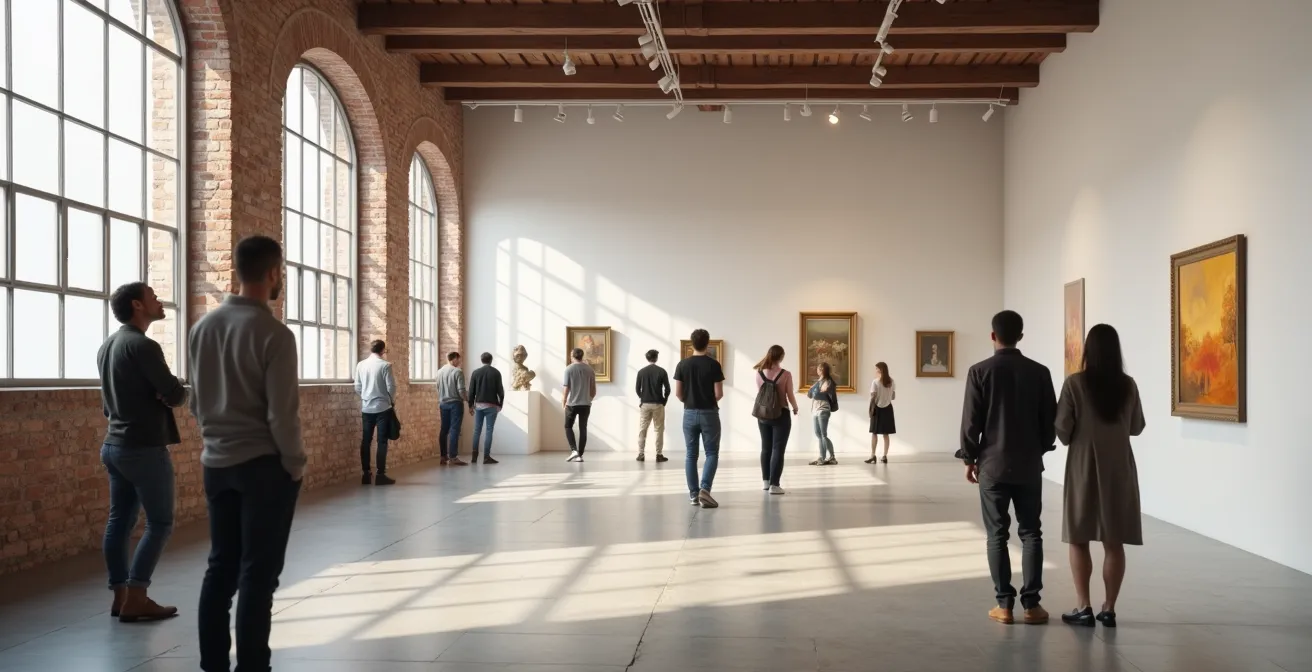
You’re ready to graduate from mass-produced prints to meaningful, original art, but the art world feels intimidating and expensive. The secret isn’t about finding a hidden bargain; it’s about becoming a savvy and ethical collector. This guide provides the insider’s playbook for navigating the Canadian art scene, from renting masterpieces and spotting rising stars to understanding authentic sourcing, empowering you to invest in culture and artists—not just decorate your walls—for under $500.
That blank wall in your condo is starting to feel less like a minimalist statement and more like a missed opportunity. You’ve browsed the big-box stores and scrolled through endless generic prints, but nothing feels quite right. You want something with a story, something original that reflects your taste and supports a real, living artist. You want to buy your first piece of Canadian art, but the idea feels daunting. Where do you even start? The art world can seem like an exclusive club with unwritten rules and intimidating price tags.
The common advice—”visit art fairs,” “follow artists on Instagram”—is a starting point, but it doesn’t demystify the process. It doesn’t tell you how to talk to a gallerist without feeling pressured, how to tell if you’re getting fair value, or how to ensure your purchase actually supports the artist. It’s easy to feel like you need a massive budget and a formal art education to even participate.
But what if the key to collecting wasn’t about having deep pockets, but about having the right knowledge? What if you could confidently navigate the art world by understanding its ecosystem? This guide is your entry point. We’re moving beyond the obvious to give you the insider strategies. We’ll explore how you can “try before you buy,” decode the etiquette of gallery openings, learn to spot emerging talent, and make ethically sound choices. It’s time to stop just decorating and start building a collection with meaning and cultural capital.
This article will walk you through the essential, often-overlooked aspects of starting your collection. Consider this your personal consultation on becoming a savvy, budget-aware art buyer in Canada.
Summary: Your Guide to Buying Original Canadian Art Under $500
- Did You Know You Can Rent Group of Seven Style Art from Local Libraries?
- The Etiquette of Drinking Free Wine at Gallery Openings: Do You Have to Buy?
- How to Identify Rising Stars at the OCAD Grad Exhibition?
- Why Cheap Michael’s Frames Ruin Your Fine Art Prints Over Time?
- How to Ensure the Indigenous Art You Buy Is Authentically Sourced?
- Gallery vs. Co-op: Which Sales Model Returns More Money to the Artist?
- Kitchen or Bathroom: Which Renovation Returns More Cash at Sale in Montreal?
- How to Distinguish Between Authentic Inuit Soapstone Carvings and Mass-Produced Fakes?
Did You Know You Can Rent Group of Seven Style Art from Local Libraries?
The biggest barrier to entry for many aspiring collectors is commitment. What if you invest in a piece and your taste changes? Or what if the art doesn’t feel right in your space? This is where one of the Canadian art world’s best-kept secrets comes into play: art rental programs. While you might not be able to rent an original Tom Thomson from your local library, many public institutions and major art bodies offer incredible rental services that let you live with high-quality Canadian art for a fraction of the cost of buying.
These programs are a brilliant way to dip your toes into collecting. They allow you to experience a variety of styles and artists in your own home, helping you refine your personal taste without the financial pressure of a permanent purchase. It’s a chance to learn what you truly love, whether it’s bold abstract paintings, serene landscapes reminiscent of the Group of Seven, or challenging contemporary photography. It’s a form of collecting based on experience, not just acquisition.
A prime example is the Canada Council Art Bank, which offers a “try-before-you-buy” model for a vast collection of Canadian art. While primarily geared towards organizations, their model highlights the power of this approach. According to their program details, organizations can explore Canadian art investments with rental contracts that allow for refreshing collections every two years. For individuals, many city-level galleries, like the Art Gallery of Ontario and the Art Gallery of Alberta, run similar rental programs. These services transform your home into a personal, rotating gallery and build your collecting confidence over time.
The Etiquette of Drinking Free Wine at Gallery Openings: Do You Have to Buy?
Art gallery openings, or vernissages, can be intimidating. There’s an energy in the air, a crowd of people who all seem to know each other, and of course, the free wine. It’s easy to feel like an outsider and wonder about the unspoken rules. The biggest question on every newcomer’s mind is often: if I enjoy the hospitality, am I obligated to buy something? The short answer is a resounding no. A gallery opening is a social and cultural event, not just a transactional one. The gallery and artist want to create buzz, foster community, and introduce the work to a wider audience.

Your presence alone is a contribution. However, if you want to move from a passive observer to a savvy participant, your goal should be to build social and cultural capital, not just to sip Chardonnay. This is your chance to engage with the art ecosystem. Instead of feeling pressure to purchase, focus on showing genuine interest. Engage with the gallerist about the artist’s process, ask informed questions, and listen to the conversations around you. This is how you develop your eye and your understanding of the local art scene.
You can show support in many valuable, non-monetary ways. Follow the artist and the gallery on social media before and after the event. If you genuinely love the work, share it on your own social networks with a thoughtful comment. Sign up for the gallery’s newsletter to stay informed about future exhibitions. These actions signal to the gallery that you are an engaged and interested member of the community—a potential future collector. Taking a business card and sending a brief follow-up email expressing your appreciation for a specific piece can make a lasting impression. In the art world, informed enthusiasm is a currency all its own.
How to Identify Rising Stars at the OCAD Grad Exhibition?
One of the most exciting and affordable ways to start collecting is by acquiring work from emerging artists, and there’s no better place to find them than at graduate exhibitions of Canada’s top art schools. These shows are a vibrant cross-section of the future of Canadian art, where you can often purchase significant works for under $500 before the artists gain gallery representation and their prices climb. The key is knowing what to look for and where to go.
Major art and design universities across the country host these exhibitions, turning their campuses into massive galleries. Spotting a “rising star” isn’t about guesswork; it’s about informed observation. Look for artists with a cohesive and confident body of work, a clear point of view, and technical skill. Don’t just look at the art; read the artist statements. Is their concept well-articulated and compelling? This is your chance to acquire a piece with a powerful story right from the beginning of an artist’s career.
To plan your talent-scouting, it helps to know when and where these key events happen. Schools like OCAD University in Toronto and Emily Carr University of Art + Design in Vancouver are major hubs, but talent is nurtured nationwide.
This table gives you a starting point for the major grad shows across Canada, as noted in a review of top art colleges in the country.
| School | Location | Typical Show Period | Notable Programs |
|---|---|---|---|
| OCAD University | Toronto | May | Drawing & Painting, Sculpture |
| Emily Carr | Vancouver | May | Foundation Year, Animation |
| NSCAD | Halifax | April-May | Interdisciplinary Design |
| Concordia | Montreal | May | Studio Arts, Design |
| AUArts | Calgary | April-May | Visual Arts, Craft |
Another powerful indicator of emerging talent is industry recognition. For instance, the BMO 1st ART! competition is a prestigious award that has become a key signal for collectors. A case study of the event highlights that past winners from schools like OCAD and NSCAD have seen their careers accelerate, making this award a reliable marker for those seeking investment-worthy artists. As an aspiring collector, paying attention to the long lists and winners of these awards is like getting an expert tip on who to watch.
Your 5-Step Audit for Spotting an Artist with Potential
- Points of Contact: List all channels where the artist is visible. Check for a professional website, active social media presence, and inclusion on a gallery or co-op roster.
- Collecte: Inventory their body of work. Look for recurring themes, consistent use of materials, and a clear artistic voice. Note any evolution in their style or pricing.
- Coherence: Compare their artist statement to their artwork. Does the narrative match the visual execution? A strong connection between concept and craft is a sign of maturity.
- Mémorabilité/Émotion: Gauge your personal reaction beyond simple aesthetics. Does the work stick with you? Does it spark a unique thought or emotion that other art doesn’t?
- Plan d’intégration: Define your next step. If you’re intrigued, plan to follow their career, sign up for their newsletter, or inquire about a studio visit to deepen your understanding before purchasing.
Why Cheap Michael’s Frames Ruin Your Fine Art Prints Over Time?
You’ve finally done it. You’ve purchased your first piece of original art—a beautiful print on paper. Now, you need to frame it. It’s tempting to head to a big-box craft store like Michael’s and grab an affordable, stylish frame off the shelf. But this is one of the most common and damaging mistakes a new collector can make. Standard, off-the-shelf frames are designed for posters and snapshots, not for fine art. They are, in essence, a ticking time bomb for your investment.
The problem lies in the materials. Cheap frames use backing and mat boards that are full of acid. Over time, this acid leaches into your artwork, causing the paper to yellow, become brittle, and deteriorate—a process known as acid burn. Furthermore, the glass or acrylic used in these frames typically offers no protection from ultraviolet (UV) light. Sunlight, and even some indoor lighting, will cause the colours in your print to fade dramatically, permanently losing their vibrancy. You might save $100 on framing today only to devalue your $500 artwork over the next few years.
Investing in archival framing is non-negotiable for protecting your art. This means using materials that are 100% acid-free, from the mat board that touches the print to the foam core backing. A professional framer will also use UV-protective glass or acrylic, which blocks up to 99% of harmful rays. While custom archival framing costs more upfront, it is the only way to ensure the longevity and preserve the value of your piece. Think of it not as an extra expense, but as the final, crucial step of your art purchase.
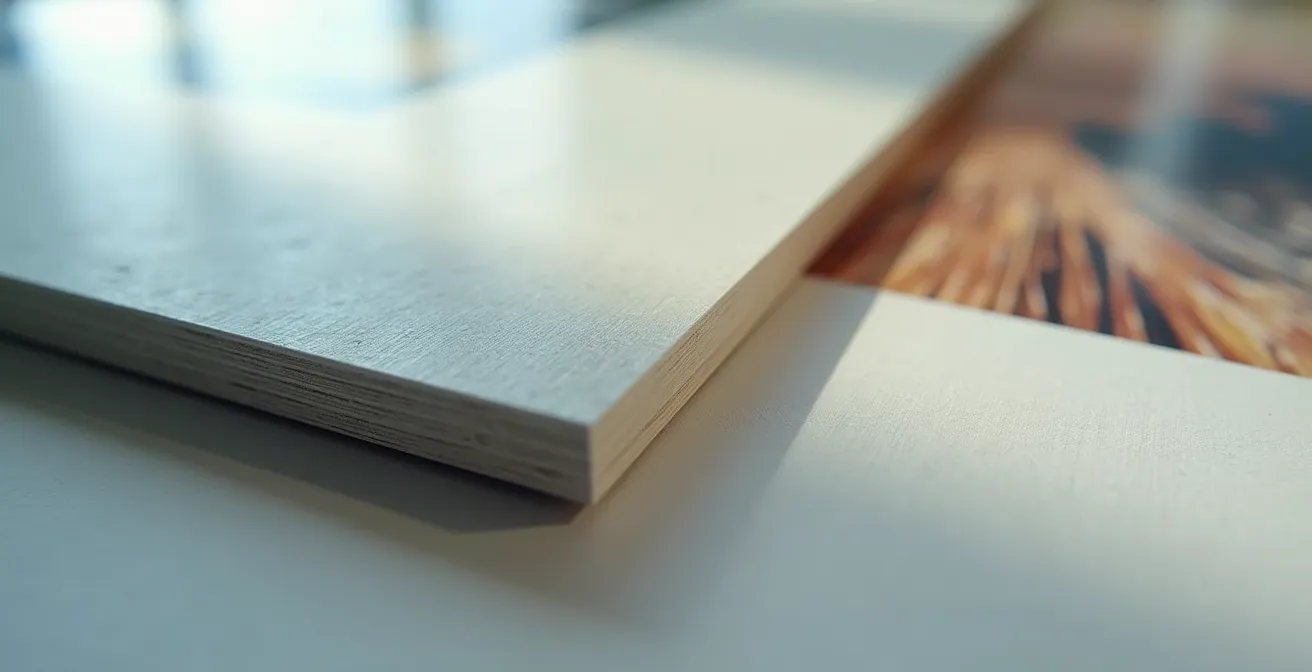
When you look at archival materials up close, you can see the difference. The textures of the acid-free cotton rag mat and the clarity of the protective glazing speak to a level of quality designed for preservation. Choosing the right frame is an act of stewardship for the art you love and the artist you supported.
How to Ensure the Indigenous Art You Buy Is Authentically Sourced?
Collecting Indigenous art, from First Nations paintings to Inuit carvings, is a way to engage with the deepest roots of Canadian culture. However, this area of the market is unfortunately rife with fakes and unethical reproductions. Buying inauthentic work not only means you acquire a worthless object, but it also directly harms Indigenous artists and communities by fueling a market of cultural appropriation and fraud. Ensuring authenticity is therefore your most important responsibility as a collector.
The first rule is to buy from reputable sources. This means purchasing directly from the artist, from a community-run arts co-operative, or from a well-established gallery that specializes in Indigenous art and can provide clear provenance (the history of the piece’s ownership). Avoid tourist shops, online marketplaces with anonymous sellers, and any vendor who cannot tell you the artist’s name, community, and story. If the price seems too good to be true, it almost certainly is.
For Inuit art specifically, the Igloo Tag is your gold standard of authenticity. This trademark, now managed by the Inuit Art Foundation, certifies that the piece was made by an Inuit artist in Canada. The economic impact of this certification is significant; an impact study confirmed that consumers are willing to pay $117 more on average for certified pieces, adding millions to the Inuit arts economy annually. As a case in point, the West Baffin Eskimo Co-operative in Kinngait (formerly Cape Dorset) has been a licensed distributor since 1958. Each licensed distributor has a unique number on their tags, allowing buyers to trace the artwork directly to the community where the artist receives fair compensation. This system is a powerful tool for ethical patronage.
Gallery vs. Co-op: Which Sales Model Returns More Money to the Artist?
As a conscious collector, you’re not just buying an object; you’re entering into a relationship with an artist’s career. Understanding how artists get paid is a crucial part of making an ethical choice. The two most common sales models for emerging artists are the traditional commercial gallery and the artist-run co-operative, and they distribute money very differently. Knowing the difference empowers you to support artists in the way that aligns best with your values.
A commercial gallery typically works on a 50/50 commission split. The gallery takes 50% of the sale price, and in return, they provide significant services: marketing and promotion, a physical exhibition space, client relationship management, and handling of sales and shipping. This model can give an artist immense exposure and connect them with established collectors, but it comes at a significant cost to their revenue per piece.
An artist co-operative, on the other hand, is run by the artists themselves. In this model, the artist retains a much higher percentage of the sale, often 70-90%. However, this comes with its own costs. The artist must pay membership fees to belong to the co-op and often contributes “sweat equity” by working shifts to staff the gallery space. While the revenue share is higher, the marketing reach might be smaller than that of a commercial gallery. Buying from a co-op often means more of your money goes directly into the artist’s pocket for that specific sale.
Neither model is inherently “better”—they simply serve different needs for artists at different career stages. To make an informed decision, it’s helpful to see the breakdown side-by-side, as shown in an analysis of different art sales models.
| Sales Model | Artist Revenue Share | Additional Costs | Services Provided |
|---|---|---|---|
| Commercial Gallery | 50% | None to artist | Marketing, space, client relations, shipping |
| Artist Co-op | 70-90% | Membership fees, work shifts | Shared space, peer support, collective marketing |
| Direct Studio Sale | 100% | All marketing/overhead | None – artist handles everything |
| Online Platform | 60-80% | Platform fees | Digital marketing, payment processing |
Kitchen or Bathroom: Which Renovation Returns More Cash at Sale in Montreal?
This question might seem out of place in a guide to buying art. In Montreal real estate, the debate over whether a kitchen or bathroom renovation yields a higher return on investment (ROI) is a constant one. It’s a practical, numbers-driven decision. But it provides a perfect, if unexpected, analogy for the choice you make when you decide to buy art instead of another consumer good. You’re choosing a different kind of value.
A kitchen renovation has a measurable ROI. You can calculate the cost of cabinets, countertops, and labour and weigh it against the potential increase in your home’s sale price. It is an investment in your property’s functional and financial value. Buying art, however, is not an investment in ROI, but in what we could call “ROE”: Return on Emotion or Return on Experience. It’s an investment in your daily life and your personal culture.
The original artwork on your wall will not make your morning coffee faster or increase your property assessment. Instead, it will offer something less tangible but arguably more valuable. It will make you think, spark conversations, and connect you to a creator’s vision. It becomes part of your story and the character of your home. While a new bathroom is eventually just a bathroom, a piece of art that you love grows with you, accruing personal significance over time.
So, while the pragmatic choice for your extra $500 might be new backsplash tile, choosing to buy a piece of original Canadian art is a deliberate pivot from the purely functional to the deeply personal. It’s a declaration that the value of your home lies not just in its market price, but in the richness of the experiences you have within its walls.
Key Takeaways
- Art collecting is accessible: Non-traditional paths like art rentals and co-op galleries lower the financial barrier to entry for new collectors in Canada.
- Ethical patronage is paramount: Prioritize authentic sourcing, especially for Indigenous art, and understand artist compensation models to ensure your purchase is responsible.
- Knowledge is your best tool: Learning to identify emerging talent at grad shows and understanding the importance of archival framing protects and enhances your investment.
How to Distinguish Between Authentic Inuit Soapstone Carvings and Mass-Produced Fakes?
Inuit soapstone carvings are one of Canada’s most iconic and powerful art forms. The smooth lines and weighty presence of an authentic piece connect you to the artist and the traditions of the North. Unfortunately, the market is flooded with mass-produced resin fakes, often made overseas and sold to unsuspecting tourists and new collectors. Learning to spot an authentic piece is an essential skill for anyone wanting to invest in this incredible art form.
As the Inuit Art Foundation emphasizes, certification is a collector’s best defence against fraud. In their overview of the Igloo Tag program, they state:
For over six decades, this iconic mark has been administered by way of authorized Inuit art distributors and dealers, protecting artists from cultural appropriation, fraud and theft and allowing collectors to buy with peace of mind
– Inuit Art Foundation, Igloo Tag Trademark Program Overview
Beyond looking for the official Igloo Tag, you can use your own senses to perform a physical authentication. Real soapstone has distinct properties that molded resin simply cannot replicate. Developing a feel for these characteristics is key. The weight, temperature, and texture of a piece can tell you almost everything you need to know. Authentic carvings carry the spirit of their material and the touch of their creator.
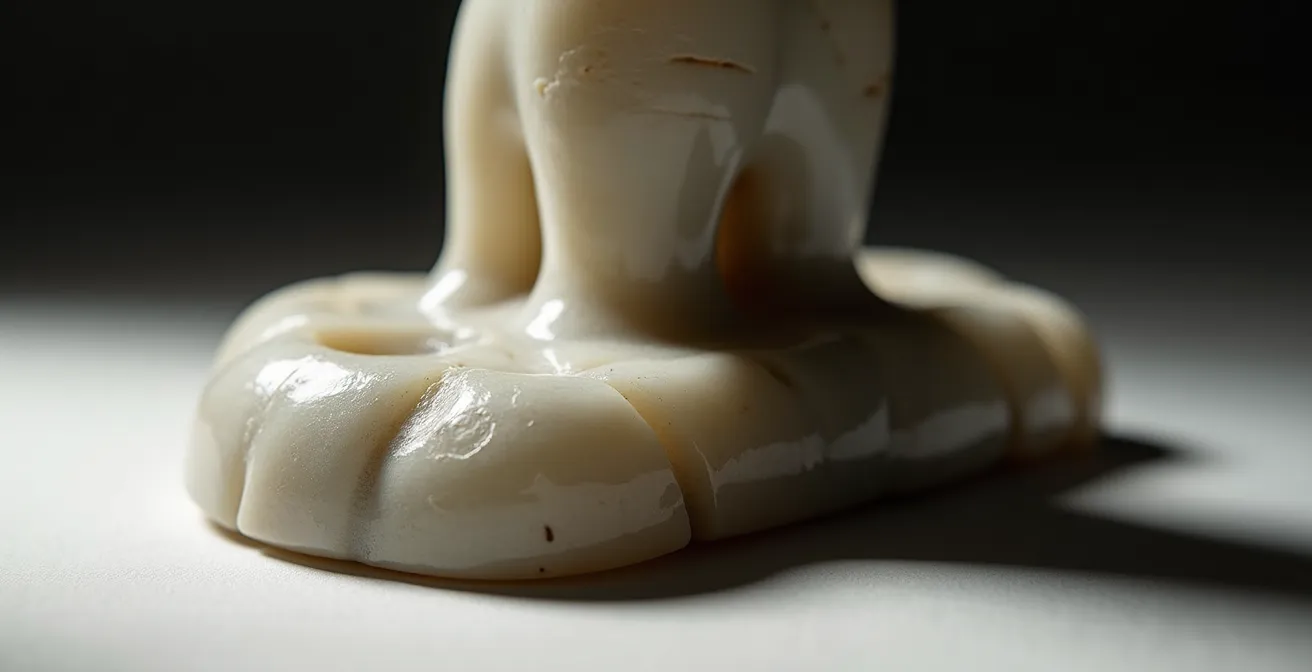
Here is a practical checklist to guide you when examining a potential purchase. These physical tests are used by experienced dealers and collectors to verify a piece’s authenticity on the spot.
- Test Temperature: Authentic soapstone is a dense rock and will feel cool to the touch, even in a warm room. Resin fakes will quickly adapt to the ambient temperature.
- Check Weight: Genuine soapstone is surprisingly heavy for its size. A fake will feel light and unsubstantial in comparison.
- Look for Tool Marks: Hand-carved pieces will show subtle, non-uniform marks from files and chisels. Mass-produced fakes are too perfect and may have a visible seam line from the mold.
- Examine the Base: Look for the artist’s signature, often in Inuktitut syllabics, and sometimes a disc number. These are typically etched into the stone, not printed on a sticker.
- Search for the Igloo Tag: Always ask to see the official certification tag that accompanies the artwork.
Your journey as a collector starts not with a big budget, but with a curious mind and a confident first step. Start exploring the galleries, student shows, and artist co-ops in your city this weekend. The perfect piece is out there waiting for you.