
In summary:
- Building a smart home “ecosystem” is more effective than relying on single gadgets to protect your Canadian cottage.
- Focus on intelligent redundancy, using Z-Wave devices and battery backups to counter rural internet and power outages.
- Combine environmental sensors (temperature, humidity, water leak) with active prevention tools (smart water valve) for total protection.
- Use smart lighting and privacy solutions not just for security, but to maintain your property’s integrity and value.
- Leverage smart-grid tools to manage costs, ensuring your peace of mind isn’t paid for with sky-high hydro bills.
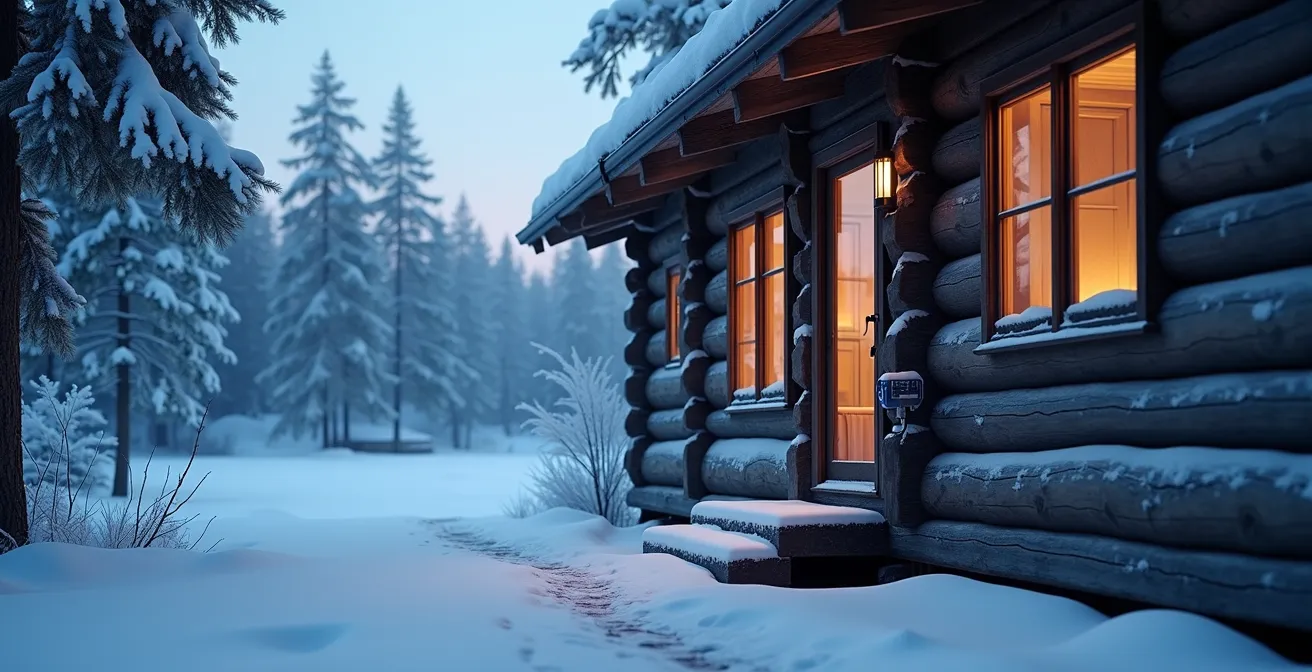
There’s a specific anxiety known to every Canadian cottage owner. It hits when you’re warm in your city home, but the weather forecast shows a polar vortex descending on cottage country. You picture your plumbing, silent and vulnerable, facing the deep freeze alone. The traditional advice is to drain the pipes, a tedious chore that renders the cottage unusable for spontaneous winter trips. Others simply leave the heat on and hope for the best, a costly and inefficient gamble against Mother Nature. In early 2024, this gamble failed for many, as the Insurance Bureau of Canada reported over $180 million in insured damage from a single extreme cold event, a significant portion from burst pipes.
The rise of smart home technology promises a better way, but many owners get stuck buying individual gadgets—a smart thermostat here, a camera there—without a cohesive strategy. They create a collection of devices, not a system. But what if the key wasn’t a single device, but a complete, automated ecosystem of surveillance designed specifically for the challenges of a remote Canadian property? This isn’t about just keeping the heat on; it’s about creating an intelligent network that actively monitors for anomalies, provides redundant layers of security, and gives you true, actionable peace of mind, whether you’re in Toronto or Florida.
This guide will walk you through building that ecosystem, layer by layer. We’ll move beyond simple thermostats to explore how integrated locks, lights, sensors, and even smart blinds work together. We will show you how to build a resilient system that not only prevents disasters like frozen pipes but also enhances your security, protects your investment from humidity damage, and even helps manage your hydro bills. It’s time to trade winter anxiety for digital peace of mind.
To help you navigate this comprehensive approach, we’ve broken down the key components of a fully automated and secure cottage. This structure will guide you from securing the perimeter to optimizing your energy consumption, creating a holistic strategy for remote property management.
Summary: A Complete Guide to Securing Your Remote Canadian Cottage
- Video Doorbell or Smart Lock: Which Stops Package Theft More Effectively?
- How to Program Smart Lights to Mimic Human Activity When You’re in Florida?
- The Smart Humidistat Setting That Saves Your Hardwood Floors in Winter?
- How to Set Up Alexa to Call for Help for an Elderly Parent Living Alone?
- Why Your Smart Bulbs Keep Disconnecting in Your High-Rise Condo?
- The Security Flaw in Older Smart Meters That Hackers Could Exploit?
- How to Have Floor-to-Ceiling Windows Without Living in a Fishbowl?
- How Smart-Grid Technologies Help You Save on Hydro Bills During Peak Hours?
Video Doorbell or Smart Lock: Which Stops Package Theft More Effectively?
Securing your cottage starts at the front door. While a video doorbell is great for seeing who’s there, a smart lock provides true access control, a critical first layer in your remote security ecosystem. For a Canadian cottage, the primary concern isn’t just connectivity; it’s whether the device can survive a -30°C night. Many Wi-Fi-based locks suffer significant battery drain in the cold and rely on a stable internet connection that can be a luxury in rural areas. This is where Z-Wave or Zigbee-based locks, which run on a local hub, offer superior reliability. They aren’t dependent on your spotty rural internet to function.
A high-quality smart lock is an investment in both security and durability. For instance, many modern devices are built for harsh climates, with some models offering a -35°C to 65°C operating range, ensuring they won’t fail when you need them most. You can grant temporary access to a plumber or a neighbour checking on the property, receive alerts on your phone when the door is used, and, most importantly, know for certain that your cottage is locked. The lock becomes the gatekeeper of your entire automated system.
To choose the right technology for a remote Canadian property, it’s essential to compare how different lock types handle the unique challenges of cold and connectivity. This analysis shows why hub-based systems often have the edge.
| Feature | Wi-Fi Locks | Z-Wave Locks |
|---|---|---|
| Cold Weather Performance | Battery drains 2-3 months | 6-8 months battery life |
| Internet Dependency | Requires stable rural connection | Works offline via hub |
| Temperature Rating | -20°C to 50°C typical | -35°C to 65°C typical |
| Remote Access | Direct app control | Requires Z-Wave hub |
Ultimately, for maximum effectiveness, the two devices should work together. The doorbell alerts you to a person’s presence, and the smart lock gives you the power to control what happens next. This synergy is the first building block of your intelligent security ecosystem.
How to Program Smart Lights to Mimic Human Activity When You’re in Florida?
An empty cottage is a target. The most effective deterrent is creating a believable illusion of occupancy, and smart lighting is your primary tool. A simple timer turning a light on at 7 PM every night is easily spotted by a patient observer. A truly smart system, however, mimics the random, natural patterns of human life. This is a crucial layer of psychological deterrence in your security ecosystem, making your cottage appear active and unpredictable.
The key is creating complex, multi-room “scenes” rather than single-light schedules. Think about how you move through your home: a light goes on in the living room, then later in the bedroom, perhaps a brief flash from the bathroom. Modern smart home platforms allow you to program these sequences. By integrating with local sunrise and sunset times for your cottage’s specific location, the system adapts automatically to the changing Canadian seasons, a feature simple timers lack. You can even use shifts in colour temperature to increase realism, from a warm, cozy evening light to the cool, flickering blue glow of a simulated television.
The most advanced setups integrate lighting with other sensors. For example, a motion sensor on your deck can trigger an internal light sequence, creating the impression that someone inside has noticed the movement and is investigating. This active response transforms your lighting from a passive timer into a dynamic part of your security system. This principle is already being applied effectively in Canadian cottage country to deter break-ins.
Muskoka Cottage Security Through Smart Lighting
RSVP Chalets implemented automated lighting systems across their rental properties in cottage country. By using Piper security systems integrated with Z-Wave lighting controls, they reduced break-in attempts by simulating occupancy. The system automatically adjusts lighting based on seasonal daylight variations and can trigger complex scenes when motion is detected, creating the illusion of active response from inside the cottage.
By investing a little time in programming these nuanced patterns, you create a powerful, energy-efficient security feature that works tirelessly to protect your property while you’re away.
The Smart Humidistat Setting That Saves Your Hardwood Floors in Winter?
The battle against frozen pipes often focuses solely on temperature, but there’s a silent threat to your cottage’s structural integrity: humidity. Cold, dry winter air can wreak havoc on hardwood floors, custom cabinetry, and wooden furniture, causing boards to shrink, crack, and gap. Conversely, too much humidity in a tightly sealed winter home can lead to condensation on windows, promoting mould growth. A smart humidistat, integrated into your central HVAC system, is the key to navigating this delicate balance, forming a critical part of your property’s internal environmental monitoring.
The ideal humidity level isn’t static; it’s a dynamic target that changes with the outdoor temperature. As the temperature plummets, the “dew point”—the temperature at which moisture condenses on surfaces like windows—drops. To prevent window sweat and potential mould, you must lower the indoor humidity accordingly. As a guideline, Canadian hardwood manufacturers recommend you maintain indoor relative humidity between 30-35% when the outdoor temperature reaches -20°C. A smart humidistat automates this adjustment, protecting both your windows and your wood.
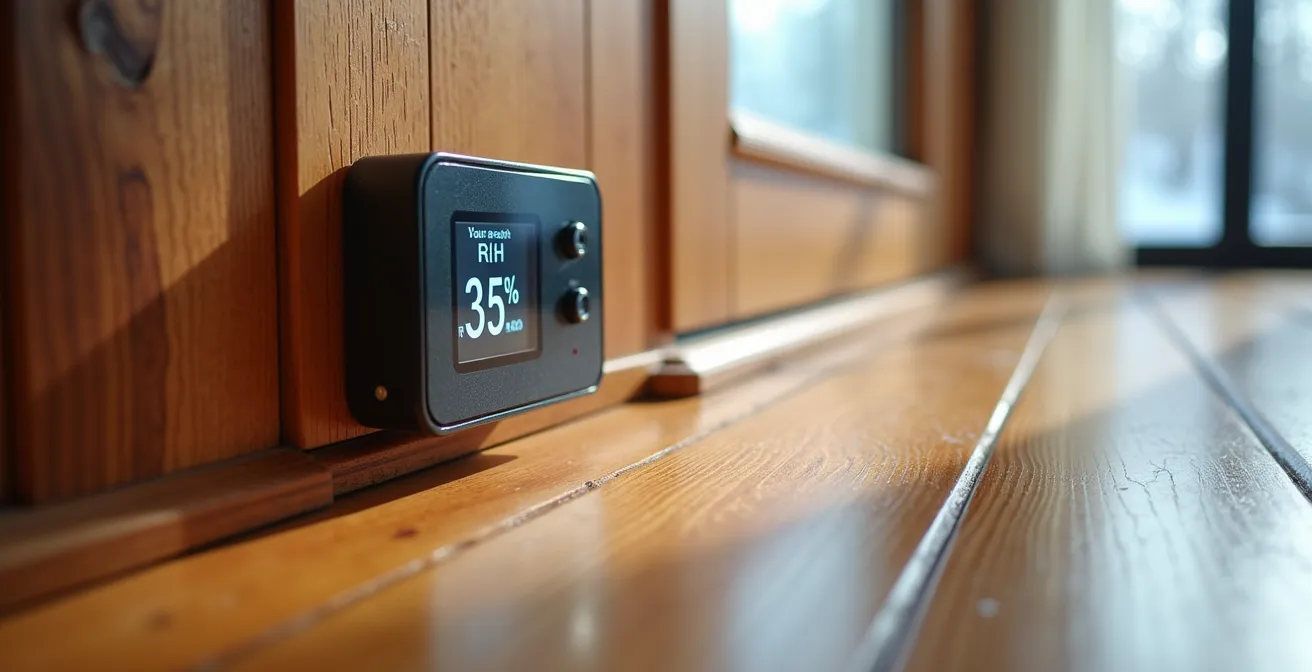
Unlike a basic thermostat, a smart humidistat provides a complete picture of your cottage’s indoor climate. It allows you to set a target range and will automatically control your furnace-mounted humidifier or dehumidifier to maintain it. This prevents the costly damage caused by air that’s too dry or too moist, preserving the value and beauty of your cottage’s interior. It is an essential, often overlooked, component of a truly comprehensive remote management system.
By automating humidity control, you’re not just preventing cosmetic issues; you’re engaging in active preservation of your property, ensuring it remains as beautiful as you left it, no matter how harsh the winter.
How to Set Up Alexa to Call for Help for an Elderly Parent Living Alone?
For many, a cottage is also a multi-generational space, sometimes serving as a quiet retreat for elderly parents. In this context, the smart home ecosystem evolves from property protection to personal safety. While smart speakers like Amazon’s Alexa offer incredible convenience, it’s vital to understand their limitations in a true emergency, especially in Canada. This is a situation where an expert’s clarification is non-negotiable.
As leading home automation experts point out, there’s a common and dangerous misconception about these devices. In their guide to winter safety, CEDIA Home Automation Specialists clarify the system’s core limitation:
Alexa cannot directly call 911 in Canada. The only viable workarounds are third-party skills like ‘Ask My Buddy’ and the Alexa Emergency Contact feature.
– CEDIA Home Automation Specialists, Smart Home Improvements for Winter Safety
Understanding this is the first step. The second is to build a robust system around this limitation. The “Alexa Emergency Contact” feature allows a user to say, “Alexa, call for help,” which will then call and text a single, designated contact. Third-party skills like “Ask My Buddy” expand this by alerting a list of contacts. Setting these up correctly is critical. However, these systems rely on a stable internet and power connection, both of which can be precarious during a Canadian winter storm. Therefore, creating a truly reliable emergency plan requires several layers of redundancy.
Your Emergency Setup Checklist for Canadian Seniors
- Install a UPS (Uninterruptible Power Supply) battery backup for your modem, router, and the primary Echo device to ensure functionality during common winter storm outages.
- Configure the “Ask My Buddy” skill with a list of up to 5 emergency contacts, including nearby neighbours who can respond quickly and family members.
- Set up the native Alexa “Drop In” feature on approved devices, allowing authorized family members to instantly establish two-way audio communication to check in.
- Test the entire system monthly, including a simulated power and internet outage, to ensure the UPS and contact system work as expected.
- For individuals with critical medical conditions, consider a dedicated Personal Emergency Response System (PERS) like Telus LivingWell, which offers professional monitoring and cellular backup.
By combining Alexa’s capabilities with backup power and dedicated services, you transform a convenience device into a more dependable lifeline, adding a vital human safety layer to your cottage’s smart ecosystem.
Why Your Smart Bulbs Keep Disconnecting in Your High-Rise Condo?
The foundation of any smart cottage ecosystem is not the gadgets themselves, but the network that connects them. You can have the best smart lock and sensors, but if they can’t communicate reliably, your entire system is useless. This issue is often misunderstood as a problem with the devices, when it’s almost always a problem of network coverage and technology choice. In a large or structurally complex building like a log cottage or even a sprawling condo, the single router provided by your internet service provider (like Bell or Rogers) is often inadequate.
Wi-Fi signals struggle to penetrate dense materials like log walls, stone fireplaces, or concrete, creating dead zones where your devices constantly drop connection. Furthermore, many simple Wi-Fi smart devices operate on the crowded 2.4GHz band, competing for bandwidth with countless other devices. The solution is twofold: a mesh Wi-Fi system and a strategic use of more robust communication protocols like Z-Wave or Zigbee. A mesh system uses multiple nodes placed around the property to create a single, seamless, and powerful Wi-Fi network, eliminating dead zones.
For critical systems like locks, thermostats, and water sensors, relying on a Z-Wave or Zigbee network is even better. These protocols create their own dedicated mesh network, separate from your Wi-Fi. Each device acts as a repeater, strengthening the network as you add more devices. This creates an incredibly resilient and reliable system that isn’t affected by your Wi-Fi going down or someone streaming a movie. The practical difference in a real-world cottage setting is dramatic, ensuring your most important security and prevention devices are always online.
By investing in a robust network backbone first, you ensure that every other component of your smart ecosystem can perform its job without interruption, providing the reliable, always-on peace of mind you need.
The Security Flaw in Older Smart Meters That Hackers Could Exploit?
As our homes become more connected, concerns about digital security are valid. The idea of a hacker accessing your home through a smart hydro meter is a common fear, but in the Canadian context, it’s largely unfounded. Smart meters deployed by major utilities like BC Hydro and Hydro-Québec use highly secure, separate networks that are certified by Measurement Canada. The risk of an external breach through the meter itself is extremely low. The real, and far more practical, risk for a remote cottage owner isn’t hacking—it’s anomaly detection.
Your smart meter is a powerful diagnostic tool. A sudden, unexplained spike in electricity usage during an off-peak winter night could be your first and only clue that your electric heating system has failed and your backup heaters have kicked in, or worse, that a pipe has burst and the well pump is running continuously. Most utility providers offer online portals where you can set up high-usage alerts. This is a simple, free, and incredibly effective part of your monitoring ecosystem. It turns your hydro meter from a simple billing device into a frontline sensor for catastrophic failures. The financial stakes are high, with a recent report noting a 191% increase in frozen pipe claims, with the average cost hitting $16,000.
The single most important device this alert should trigger you to use is a smart water shut-off valve. This device is installed on your main water line and allows you to turn off the water to the entire cottage remotely from your phone. Paired with a few inexpensive water leak sensors placed near the water heater, pump, and in bathrooms, this creates a nearly foolproof system. If a leak is detected or your hydro bill shows a worrying anomaly, you can shut off the water supply in seconds, turning a potential $16,000 disaster into a minor plumbing repair. This is the definition of active prevention.
This proactive use of utility data, combined with a smart water valve, is arguably the most critical component in preventing the single most costly type of damage to a remote cottage.
How to Have Floor-to-Ceiling Windows Without Living in a Fishbowl?
Floor-to-ceiling windows are a hallmark of modern cottage design, blurring the line between your cozy interior and the stunning Canadian landscape. However, they also present a dual challenge: privacy and energy efficiency. While you want to enjoy the view, you don’t want to feel exposed or pay a fortune to heat a space that’s losing warmth through vast panes of glass. The solution lies in a layered approach, combining smart technology with smart landscaping.
The ultimate high-tech solution is switchable smart glass, which can turn from clear to opaque with the flick of a switch. While impressive, it comes at a significant cost. A more practical and popular option is installing automated smart blinds, such as those from Lutron or Hunter Douglas. These can be programmed to close at sunset for privacy and open at sunrise to let in the morning light and passive solar heat. In winter, a high-quality cellular blind also adds a crucial layer of insulation, trapping air and reducing heat loss. The initial investment can be offset by significant energy savings over time.
When considering these technologies, a cost-benefit analysis is essential for any cottage owner. The right choice depends on your budget, privacy needs, and energy-saving goals.
| Solution | Initial Cost (CAD) | Annual Energy Savings | Privacy Control | Winter Performance |
|---|---|---|---|---|
| Switchable Smart Glass | $100-150/sq ft | 15-20% | Instant opacity change | No moving parts in cold |
| Lutron Smart Blinds | $300-600/window | 10-15% | Scheduled automation | Adds insulation layer |
| Low-E Coating Only | $20-40/sq ft | 20-25% | None | Permanent thermal barrier |
Technology alone isn’t the whole story. A truly “smart” approach integrates technology with the natural environment. Planting native evergreen trees like white spruce or balsam fir at a strategic distance from your windows provides a year-round, natural privacy screen that doesn’t completely block the view. This layered strategy—combining automated blinds for immediate control with landscaping for permanent, soft screening—provides the best of both worlds: privacy on demand and an uninterrupted connection to nature.
This thoughtful integration ensures your stunning windows remain an asset, enhancing both your lifestyle and your property’s energy performance, rather than becoming a liability.
Key Takeaways
- True cottage protection comes from an integrated “ecosystem” of devices, not standalone gadgets.
- Prioritize network reliability with mesh Wi-Fi and Z-Wave to overcome rural connectivity challenges.
- Combine passive monitoring (usage alerts from your smart meter) with active prevention (a remote water shut-off valve) to mitigate the costliest disasters.
How Smart-Grid Technologies Help You Save on Hydro Bills During Peak Hours?
Once your cottage is secure and automated for safety, the final layer of your smart ecosystem is financial optimization. Running heaters, a well pump, and a hot water tank to keep a cottage safe all winter can lead to staggering hydro bills, especially if that energy is consumed during peak hours. Smart-grid technologies, combined with your own smart devices, give you the power to shift your energy consumption to off-peak periods when electricity is dramatically cheaper, saving you hundreds of dollars over a winter season.
In provinces like Ontario, time-of-use billing creates huge price differences between on-peak (weekday afternoons) and ultra-low-peak (overnight) rates. An automated system can leverage this to your advantage. For example, you can program your electric hot water heater—one of the most energy-intensive appliances—to run only between 11 PM and 7 AM. You can set electric baseboard heaters to “pre-heat” the cottage during the cheapest overnight hours, then lower the temperature during the expensive afternoon peak. Even your well pump can be put on a smart timer to ensure it only fills your pressure tank when rates are lowest.
To do this effectively, you first need to understand what’s using power and when. A smart energy monitor like the Emporia Vue, installed in your electrical panel, gives you a real-time, circuit-by-circuit breakdown of your energy usage right on your phone. It allows you to identify “vampire loads”—devices consuming power even when off—and pinpoint the biggest energy hogs. With this data, you can build an intelligent “peak shaving” schedule for your entire cottage, ensuring you’re only paying top dollar for electricity when absolutely necessary. It’s the final step in creating a system that is not only secure but also economically sustainable.
This intelligent energy management transforms your smart cottage from a financial drain into a smartly managed asset, providing the ultimate peace of mind for both your property and your wallet. To begin building this ecosystem, the next logical step is to assess your property’s specific needs and start with the foundational layer: a robust network and a smart water-control system.
Frequently Asked Questions About How to Automate Your Cottage Water System to Prevent Frozen Pipes?
Can hackers access my home through smart meters in Canada?
Smart meters deployed by Canadian utilities like BC Hydro and Hydro-Québec use secure Smart Grid networks certified by Measurement Canada, making remote hacking extremely unlikely.
What’s the real risk for remote cottage owners?
Billing anomalies from malfunctioning meters are more likely than hacking. Set up high-usage alerts through your utility’s online portal to detect issues remotely.
How can I secure my Home Area Network?
Keep your HAN separate from your smart meter’s utility network. Use WPA3 encryption and change default passwords on any devices connecting to the meter.