
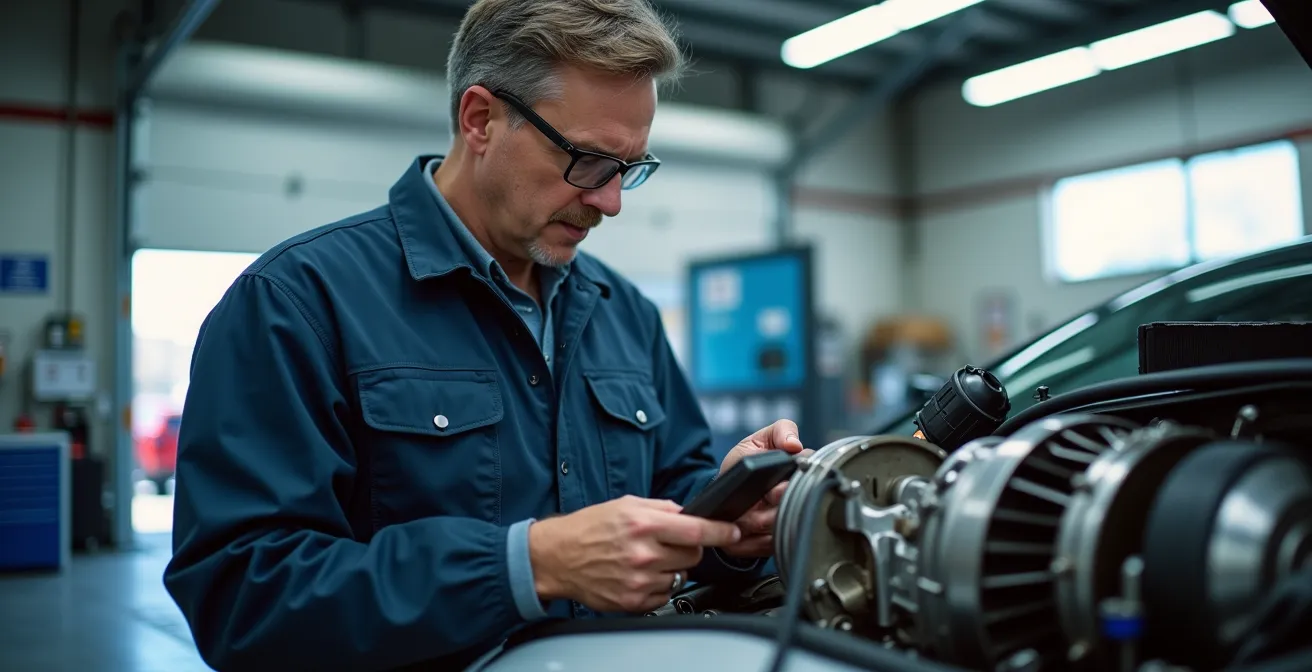
The shift to EVs requires Canadian mechanics to master the surrounding business ecosystem, not just the vehicle’s technology.
- Provincial regulations and technician availability directly impact repair costs and insurance premiums, creating regional opportunities.
- The most valuable new skills involve diagnostics for batteries, charging systems, and integrated thermal management.
Recommendation: Focus on certifications that blend technical knowledge with systemic understanding (e.g., battery health analysis, multi-standard charger diagnostics) to build a future-proof career.
The hum of an electric vehicle pulling into a service bay is becoming more common across Canada, and for many seasoned mechanics, it’s a sound that brings a mix of curiosity and concern. The familiar rhythm of oil changes, exhaust repairs, and transmission work is giving way to a new world of high-voltage batteries, software diagnostics, and thermal management systems. The common advice is simple: get trained on high-voltage systems and learn to use new diagnostic software. But this only scratches the surface of a much deeper transformation.
This transition isn’t just about swapping a wrench for a laptop. The fundamental business of automotive repair is being reshaped by a complex web of new economic, regulatory, and environmental factors. A mechanic’s future prosperity no longer depends solely on their technical proficiency with the vehicle itself, but on their ability to understand the entire ecosystem it operates within. True career security lies in developing what can be called ecosystem competency—a holistic grasp of the forces shaping the industry.
But what if the key to thriving in the EV era isn’t found in a generic “EV 101” course, but by understanding the answers to the specific, practical questions that define this new landscape? Instead of just learning what a battery management system is, the forward-thinking technician asks why insurance for the same EV is higher in Alberta than Ontario, or what their legal role is in the battery recycling chain. This article will explore these critical questions, revealing how mastering these new systemic realities is the true path to becoming an indispensable professional in Canada’s electric future.
text
This guide breaks down the essential, market-driven questions that reveal the new skill set for Canadian mechanics. The following sections will provide the insights needed to navigate this industry shift strategically.
Summary: The New Skill Set for Canadian Mechanics in the EV Era
- When Will Gas Car Resale Values Plummet in Canada?
- Why EV Insurance Premiums Are Higher in Alberta Than Ontario?
- Is Converting a Classic Car to Electric Legal in Your Province?
- The 8-Year/160,000km Warranty: What Does It Actually Cover on Your Battery?
- What Happens to Your Tesla Battery When It Dies in Canada?
- Tesla Superchargers vs. Ivy Network: Which Card Do You Need for Ontario to Quebec?
- How Federal Grants Impact the Stock Value of Clean Tech Firms?
- Heat Pump or Resistive Heater: Which EV Feature Matters Most in Winter?
When Will Gas Car Resale Values Plummet in Canada?
For decades, a mechanic’s workflow has been tied to the lifecycle of the internal combustion engine (ICE) vehicle. Understanding when the resale value of these cars will decline is not just for salespeople; it’s a direct indicator of when your core business will fundamentally shift. The transition is not a distant event; it’s a scheduled reality. The federal government has mandated that an increasing percentage of vehicle sales must be zero-emission. For instance, an analysis of federal policy shows that 45% of new vehicle sales in BC and Quebec must be zero-emission by 2030.
This isn’t just a number—it’s a deadline that accelerates the obsolescence of traditional ICE-specific skills. As the market floods with ZEVs to meet these targets, the demand for used ICE vehicles will inevitably soften, followed by their resale values. For a mechanic, this signals two critical strategic imperatives. First, the timeline for acquiring EV skills is no longer ambiguous; it is directly tied to these regulatory milestones. Second, it highlights the need for value-chain thinking. Shops that can service both aging ICE vehicles and the growing fleet of EVs will capture the entire market during this transition.
The proactive response is already visible in the industry. Training institutions in provinces with aggressive ZEV mandates, like British Columbia, are seeing a dramatic increase in enrollment from working mechanics. These technicians aren’t just waiting for the future to arrive; they are actively investing in their skills now, understanding that the value of their expertise is directly linked to the evolving value of the vehicles on the road. The plummeting value of gas cars is a market signal that your own professional value needs an upgrade.
Why EV Insurance Premiums Are Higher in Alberta Than Ontario?
A customer complaining about their insurance bill might seem like a front-desk issue, but for an EV mechanic, it’s a critical piece of market intelligence. The significant difference in EV insurance premiums between provinces like Alberta and Ontario reveals a core principle of the new automotive economy: repair cost and complexity are now dictated by technician availability. Insurers set premiums based on risk, and a primary risk for EVs is the cost and time required for repair. When there’s a scarcity of certified technicians in a region, repair times lengthen, costs rise, and premiums follow suit.
This disparity creates a clear opportunity for mechanics who develop what can be called systemic literacy—the ability to see how their skills impact the broader financial ecosystem. The shortage of qualified EV technicians is not uniform across Canada, a fact that directly influences a shop’s potential profitability and a technician’s earning power.
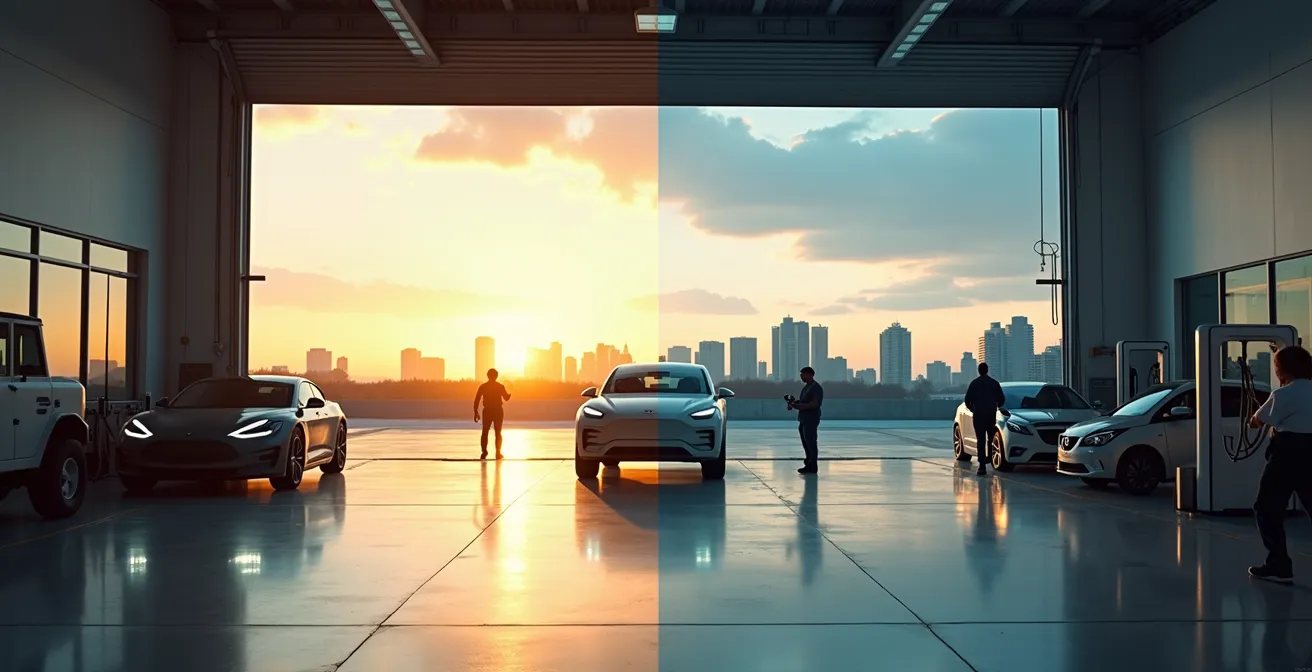
As the image above contrasts, the service environments can differ greatly. An analysis of workforce data highlights this gap. Mechanics in provinces with fewer certified professionals can command higher labour rates and are in greater demand, not just by customers, but by insurers looking to build a reliable network of repair partners.
This table clearly shows how a lower density of skilled labour in Alberta leads to longer wait times, directly impacting insurance risk models. For a mechanic in Alberta, getting EV certified is not just about a new skill; it’s about filling a crucial economic gap that makes them a high-value asset in the provincial market. Understanding this dynamic is key to strategic career positioning.
| Province | Certified EV Technicians | Training Programs Available | Average Repair Wait Time |
|---|---|---|---|
| Ontario | 2,400+ (2024) | 12 institutions | 3-5 days |
| Alberta | 850+ (2024) | 4 institutions | 7-10 days |
Is Converting a Classic Car to Electric Legal in Your Province?
The rise of electric vehicles isn’t just about new cars rolling off the assembly line; it’s also creating a passionate and high-value niche market: EV conversions. Transforming a classic Mustang or a vintage Beetle into a clean, powerful electric car is a burgeoning field that moves a mechanic from a repair technician to a bespoke builder. However, navigating this space requires more than just technical skill; it demands a deep understanding of provincial regulations and safety standards. Legality is the first and most important hurdle.
Each province in Canada has its own set of rules for modified vehicles, and an EV conversion is one of the most significant modifications possible. Success in this field requires a new form of regulatory expertise. This includes securing high-voltage safety certifications, passing specific provincial inspections for modified vehicles, meticulously documenting components to meet Transport Canada standards, and navigating the emissions-exempt registration process. Furthermore, obtaining specialized insurance is a critical final step that relies on the quality and compliance of the build.
This specialized work represents a significant step up from standard OEM servicing. As Nicholas Zhang of the BCIT Automotive Department notes, the skills required go far beyond standard training.
The skills for servicing custom EV conversions require component integration expertise that goes beyond OEM training.
– Nicholas Zhang, BCIT Automotive Department
This insight highlights a key opportunity. Mechanics who master component integration, custom battery pack fabrication, and the associated provincial legal frameworks can tap into a premium market. They are no longer just fixing cars; they are creating unique, high-performance vehicles, a service for which clients are willing to pay a premium. This is a shift from technician to artisan, made possible by mastering both the technology and the bureaucracy.
The 8-Year/160,000km Warranty: What Does It Actually Cover on Your Battery?
The federally mandated 8-year/160,000 km battery warranty is one of the biggest selling points for new EVs, but for a mechanic, it’s a complex battleground of diagnostics and documentation. Customers often assume any battery issue is a simple warranty claim, but the reality is far more nuanced. The key to the warranty is not failure, but degradation. A battery doesn’t just “die”; its ability to hold a charge diminishes over time. The warranty is typically only triggered when the battery’s capacity drops below a specific percentage of its original state.
Understanding this threshold is the first step in a new, critical skill set: battery health diagnostics. According to the curriculum at leading technical colleges, a battery must fall below a 70% capacity retention threshold for a warranty claim to be considered valid by most manufacturers. Proving this requires more than a simple code reader. It demands a rigorous, documented process that can stand up to manufacturer scrutiny. An independent mechanic who can accurately diagnose battery health and validate a warranty claim becomes an invaluable advocate for their customer and opens a new revenue stream for their shop.
This service requires specialized tools and a methodical approach. It involves performing State of Health (SoH) tests, documenting voltage variations between individual cells, inspecting the thermal management system for related faults, and analyzing charging performance data. The ability to generate a comprehensive, evidence-based report is what separates a parts-changer from a true techno-commercial expert. Mastering battery warranty validation is not just a technical skill; it’s a business strategy.
Your Action Plan: Independent Mechanic’s Battery Health Diagnostic Protocol
- Perform State of Health (SoH) test using an OBD-II scanner with EV-specific capabilities to get the baseline capacity reading.
- Document individual cell voltage variations using specialized software to identify imbalances that precede failure.
- Check the thermal management system for coolant leaks or pump failures, as overheating can void a battery warranty.
- Test DC fast charging performance and log degradation patterns, comparing them to manufacturer specifications for the vehicle’s age.
- Generate a comprehensive report with all data logs, error codes, and thermal images to validate the warranty claim for the customer.
What Happens to Your Tesla Battery When It Dies in Canada?
In the old automotive world, a dead engine was the end of the line. In the new EV ecosystem, a “dead” battery is the beginning of a new value chain. For Canadian mechanics, understanding the end-of-life options for an EV battery is a critical component of value-chain thinking. The battery pack, even when it can no longer effectively power a car, retains significant value. The skills required to safely remove, handle, and direct these batteries to their next life are becoming a new and profitable specialty.
The Canadian landscape for battery afterlife is rapidly developing. Independent shops are forming strategic partnerships that create new revenue streams. For example, some are working with BC-based companies like Moment Energy to repurpose degraded batteries for stationary energy storage (a “second life”). Others are partnering with Quebec-based firms like Lithion Recycling for material recovery, where valuable elements like lithium, cobalt, and nickel are extracted. A mechanic certified in safe battery removal and handling becomes the crucial first link in this lucrative circular economy.
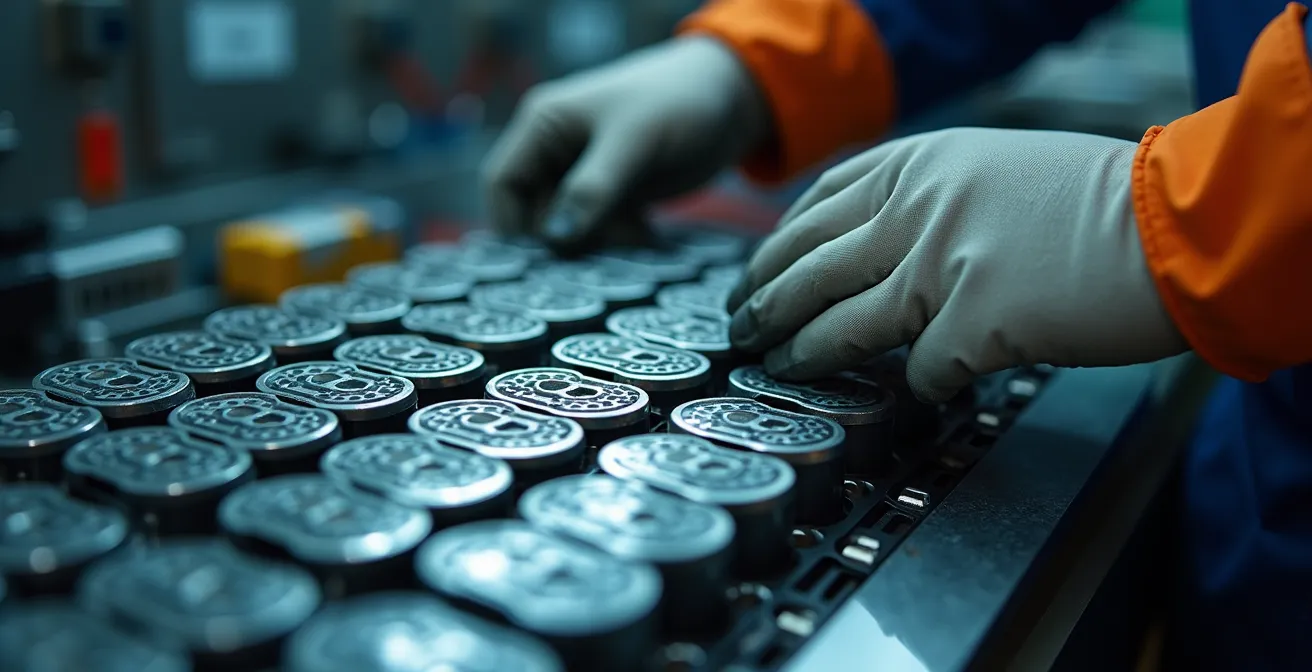
This process, however, is governed by strict safety and transportation regulations. An EV battery is classified as dangerous goods. As taught in specialized courses, mechanics must have the proper certification, like the Class 9 TDG (Transportation of Dangerous Goods) certification, to legally transport a high-voltage battery pack. This certification is not just a piece of paper; it’s a license to participate in the battery afterlife market. Mastering these procedures—from safe depowering and removal to compliant packaging and shipping—positions a mechanic as a key player in a sustainable and profitable new sector of the automotive industry.
Tesla Superchargers vs. Ivy Network: Which Card Do You Need for Ontario to Quebec?
While a customer might ask which charging card they need for a road trip, the professional mechanic must ask a different question: which charging *standard* do I need to be able to diagnose? The fragmentation of Canada’s charging infrastructure, particularly along high-traffic corridors like the one between Ontario and Quebec, presents a major diagnostic challenge. A vehicle that fails to charge could have an issue with its own onboard systems or an incompatibility with the charging station itself. A mechanic’s value is determined by their ability to tell the difference.
The two dominant standards, NACS (used by Tesla and now being adopted by others) and CCS (used by networks like Ivy, Electrify Canada, and Petro-Canada), are not interchangeable. They use different physical connectors, communication protocols, and software handshakes. A technician equipped to service the growing EV fleet must possess multi-standard diagnostic capability. This means investing in different tools, protocol analyzers, and, most importantly, the specific training for each system.
The diagnostic requirements and common failure points differ significantly between the standards, as outlined in advanced training curricula. This is not just a matter of owning the right adapter; it’s about understanding the deep technical nuances of each system.
As this table from an industry training program illustrates, the diagnostic pathways are distinct. For a mechanic, being able to service only one type of standard is a significant business limitation. To be a full-service provider, one must become fluent in the language of both NACS and CCS, a skill that is increasingly in demand as more non-Tesla vehicles gain access to the Supercharger network.
| Charging Standard | Diagnostic Tools Required | Common Failure Points | Training Hours |
|---|---|---|---|
| NACS (Tesla) | Tesla-specific protocol analyzer | Charge port actuator, pilot signal | 16 hours |
| CCS (Ivy) | J1772/CCS combo tester | Communication module, lock mechanism | 20 hours |
How Federal Grants Impact the Stock Value of Clean Tech Firms?
For a mechanic on the shop floor, the stock performance of a clean tech company might seem irrelevant. However, in the new EV ecosystem, federal and provincial investment is a direct pipeline to job creation and skill demand. When a government invests in an EV manufacturer or a battery plant, it’s not just helping a corporation; it’s creating a localized demand for a highly specialized workforce. Tracking these investments is a way to predict where the next wave of high-paying, specialized mechanic jobs will appear.
Canada is seeing unprecedented government support for the EV sector. The industry is being driven by over $2.3 billion in federal EV manufacturing investments, which are fueling the construction of battery gigafactories and vehicle assembly lines across the country. These facilities don’t operate in a vacuum; they require a support network of skilled technicians to service the unique vehicles and components they produce. This is a clear example of how public policy directly shapes a mechanic’s career opportunities.
A prime example of this is the development of Quebec’s extensive 645-hour AEP Electric Vehicle Mechanics program. This highly specialized curriculum was created in direct response to the growth of companies like Lion Electric, a Quebec-based commercial EV manufacturer supported by government grants. Mechanics in this program learn the unique procedures for Lion’s proprietary battery management and vehicle systems. This is hyper-specialization driven by regional industrial policy. By following the flow of government grants, a mechanic can strategically choose training that aligns with the specific technologies being deployed in their region, making them an ideal candidate for the high-quality jobs that follow.
Key Takeaways
- The future mechanic is a systems thinker, not just a parts replacer, who understands the economic and regulatory landscape.
- Provincial differences in policy, technician availability, and infrastructure are creating distinct regional skill demands and opportunities.
- Mastering battery lifecycle management—from diagnostics and warranty validation to end-of-life handling—is the core new revenue stream for independent shops.
Heat Pump or Resistive Heater: Which EV Feature Matters Most in Winter?
In the harsh Canadian winter, an EV’s heating system isn’t a luxury; it’s a critical component that deeply impacts range and battery health. The debate between a heat pump and a traditional resistive heater is more than a technical curiosity; for a mechanic, it represents the pinnacle of the new required skill set: integrated systems diagnosis. Unlike an ICE vehicle where the engine provides abundant waste heat, an EV’s cabin and battery must be heated by a dedicated, high-voltage system that is deeply intertwined with the main powertrain.
A heat pump is far more efficient but also more complex, operating much like a reversible air conditioner. A resistive heater is simpler but draws a huge amount of power directly from the battery, significantly reducing winter range. Servicing these systems requires a convergence of different trade skills. It’s not enough to be an automotive technician; you must also understand principles of refrigeration and thermal dynamics. As experts from RRC Polytech’s automotive department point out, this is a whole new level of expertise.
Servicing an EV’s heat pump requires both high-voltage certification and provincial HVAC refrigerant handling license.
– RRC Polytech Automotive Department, Introduction to Electric Vehicle Technology Course
This single component demonstrates the future of the trade. Troubleshooting a “no heat” complaint in an EV is a complex task involving checking refrigerant levels, testing reversing valves under freezing conditions, verifying resistive element continuity, and diagnosing the software integration with the battery’s preconditioning system. The mechanic who can master this complex interplay of high-voltage electronics, refrigerant loops, and software logic becomes a highly valuable specialist. It proves that the most important “skill” is the ability to diagnose the vehicle as one complete, interconnected system, especially under the unique pressures of the Canadian climate.
The transition to electric vehicles is rewriting the definition of a master mechanic. The path forward is not about abandoning old skills but augmenting them with a new layer of systemic, economic, and diagnostic expertise. Start today by identifying which of these new competencies—from battery health validation to regulatory literacy—aligns with your career goals and local market opportunities.