
The automotive landscape in Canada is undergoing a profound transformation. From the widespread adoption of zero-emission vehicles to the integration of sophisticated driver assistance technologies, Canadian drivers face unique challenges and opportunities shaped by extreme climate variations, vast geographic distances, and evolving regulatory frameworks. Whether navigating winter roads with temperatures plunging below -30°C or planning inter-provincial journeys across thousands of kilometers, understanding modern vehicle capabilities has become essential for both safety and efficiency.
This comprehensive resource explores the critical aspects of car and motorcycle ownership and operation in the Canadian context. From selecting the right electric vehicle for harsh winters to mastering charging network compatibility, from understanding tire pictogram standards to calibrating advanced sensors after repairs, the topics covered here address the real-world concerns of drivers adapting to technological change while respecting environmental commitments and safety requirements specific to Canadian roads.
The transition to zero-emission vehicles (ZEVs) represents one of the most significant shifts in Canadian automotive history. Federal and provincial incentive programs have accelerated adoption, yet selecting and operating an EV in Canada requires understanding factors rarely discussed in manufacturer brochures designed for milder climates.
Not all electric vehicles perform equally in Canadian winters. Battery chemistry, thermal management systems, and heat pump efficiency vary dramatically between models. Vehicles equipped with active battery heating maintain optimal performance in cold weather, while those relying solely on passive systems may experience significant range degradation. Ground clearance becomes crucial in regions with heavy snowfall, and AWD configurations offer enhanced traction on icy roads. When evaluating models, Canadian buyers should prioritize cold-weather testing data over manufacturer estimates based on temperate climates.
Battery warranties typically guarantee a minimum capacity retention—often 70% to 80%—over eight to ten years. However, these warranties rarely account for the accelerated degradation caused by extreme temperature cycling common in Canadian climates. Cold weather reduces available capacity temporarily, while frequent charging to 100% during winter months to maximize range can accelerate long-term degradation. Understanding the distinction between temporary cold-weather range loss and permanent capacity reduction helps owners make informed decisions about charging habits and realistic expectations for battery longevity.
The economic transition involves more than purchasing an EV. Owners of gasoline vehicles face evolving resale markets as demand shifts toward electrification. Well-maintained conventional vehicles still hold value, particularly in rural areas where charging infrastructure remains limited. Some enthusiasts explore retrofitting vintage cars with electric drivetrains, preserving classic aesthetics while embracing modern efficiency. Federal and provincial rebate programs for used EVs have made electric mobility accessible to broader demographics, though eligibility criteria and application processes vary significantly between jurisdictions.
Successfully integrating an electric vehicle into daily life requires understanding the charging ecosystem—from home installations to public networks spanning provincial boundaries.
Installing a Level 2 home charger often requires electrical service upgrades, particularly in older homes with 100-amp panels. A 240-volt, 40-50 amp circuit provides overnight charging for most EVs, but coordinating installation with utility demand-response programs can reduce costs and grid stress. Time-of-use electricity rates in provinces like Ontario make overnight charging significantly cheaper than daytime sessions. Smart chargers enable scheduling to coincide with off-peak periods, and some utilities offer special EV rates that further reduce charging expenses.
Canada’s public charging landscape involves multiple networks with varying payment systems, connector types, and reliability levels. Network compatibility becomes crucial for long-distance travel, as not all charging stations accept all payment methods or vehicle types. Tesla’s proprietary Supercharger network offers extensive coverage but requires adapters for non-Tesla vehicles in most cases. Apps aggregating multiple networks help drivers locate available chargers, check real-time functionality, and plan routes accounting for charging stops. Understanding the difference between Level 2 (AC) and Level 3 (DC fast charging) capabilities prevents frustration when arriving at stations incompatible with your vehicle’s charging port.
Long-distance travel in an EV requires strategic planning. Charging infrastructure density varies dramatically between provinces—British Columbia and Quebec offer robust networks, while rural Saskatchewan and Manitoba present greater challenges. Calculating real winter range based on temperature, terrain, and highway speeds prevents range anxiety. Planning stops around charging station locations, accounting for phantom drain during parking, and identifying backup charging options creates reliable travel itineraries. Electric campervans have emerged as viable options for recreational travel, combining the benefits of electrification with lifestyle flexibility on coastal routes and national park adventures.
Canadian winters demand specialized knowledge extending far beyond simply mounting snow tires. Regulatory requirements, tire technology options, and vehicle-specific considerations converge to ensure safe winter operation.
The Three-Peak Mountain Snowflake (3PMSF) pictogram identifies tires meeting specific winter performance standards, exceeding the basic M+S (Mud and Snow) designation. Quebec legally requires winter tires between December and March, while other provinces strongly recommend them. Understanding these pictograms helps drivers distinguish between all-season tires marketed as “winter-capable” and genuine winter tires engineered for extreme cold. Studded versus non-studded tires present another choice—studded tires excel on ice but damage pavement and are restricted or prohibited in some jurisdictions and timeframes.
Electric vehicles experience significant range reduction in cold weather—often 30% to 50% loss compared to optimal conditions. Cabin heating consumes substantial energy, and battery chemistry performs less efficiently below freezing. Preconditioning the vehicle while connected to shore power warms both cabin and battery without consuming range. Downsizing wheels for winter installations reduces unsprung weight and allows taller tire sidewalls that better absorb winter road imperfections, improving both ride quality and traction. Understanding these trade-offs helps drivers maximize both safety and efficiency during Canada’s longest season.
Advanced driver assistance systems rely on cameras, radar, and ultrasonic sensors that winter conditions readily compromise. Salt spray, snow accumulation, and ice formation obstruct sensor visibility, triggering system warnings or disabling features entirely. Regular sensor cleaning becomes essential maintenance, particularly before highway driving where adaptive cruise control and lane-keeping systems prove most valuable. After collision repairs or windshield replacement, sensor calibration ensures systems function correctly—a process requiring specialized equipment and often overlooked in aftermarket repair facilities.
Modern vehicles incorporate increasingly sophisticated automation, raising questions about appropriate trust levels, system limitations, and customization options for Canadian driving conditions.
Driver assistance features like adaptive cruise control, lane-keeping assist, and automated emergency braking enhance safety when properly understood. However, these systems have limitations—particularly in adverse weather common across Canada. Lane-keeping systems may disengage when road markings are obscured by snow, and automatic emergency braking can trigger false positives when snow blows across roadways. Understanding that these technologies assist rather than replace driver attention prevents over-reliance while maximizing safety benefits. Some drivers find certain features intrusive and choose to disable them, though this requires understanding which systems can be deactivated and which remain mandatory for safety compliance.
Parking assist technologies prove particularly valuable in urban environments and during winter when snowbanks reduce visibility and narrow available space. Systems range from simple rear-view cameras to fully automated parking that controls steering, acceleration, and braking. During festivals and events in preserved urban areas where parking proves challenging, these technologies reduce stress and prevent costly damage. However, sensor accuracy degrades when covered by snow or ice, requiring manual cleaning before relying on automated parking features.
Beyond daily commuting, Canadian drivers pursue diverse activities requiring specialized vehicle capabilities and knowledge.
Electric vehicles are increasingly capable of towing, with some models offering impressive torque for trailer applications. However, towing dramatically reduces range—often by 50% or more—making trip planning essential. Understanding your EV’s towing capacity, calculating realistic range with trailer attached, and identifying charging stations with trailer-accessible parking prevents stranded situations. Some charging networks lack pull-through stations, forcing drivers to disconnect trailers before charging.
Canada’s spectacular landscapes attract drivers to coastal routes, national parks, and remote recreational areas. Driving safely in parks requires understanding wildlife migration patterns and seasonal road closures. Parking regulations in preserved urban areas and during wildlife-sensitive periods protect both ecosystems and visitors. Electric campervans enable extended exploration while minimizing environmental impact, though range limitations require careful route planning in regions with sparse charging infrastructure. Understanding these considerations ensures responsible enjoyment of Canada’s natural heritage.
The convergence of electrification, advanced technologies, and uniquely Canadian driving conditions creates both complexity and opportunity. Whether transitioning from gasoline to electric, optimizing winter performance, or exploring advanced driver assistance features, informed decisions enhance safety, efficiency, and enjoyment. Each topic introduced here deserves deeper exploration based on individual circumstances, vehicle choices, and regional considerations specific to your province and driving patterns.

Procrastinating on winter tires until the first snow is a dangerous and costly gamble based on a fundamental misunderstanding of tire engineering. Below 7°C, all-season tire compounds undergo a “glass transition,” hardening like a hockey puck and drastically reducing their…
Read more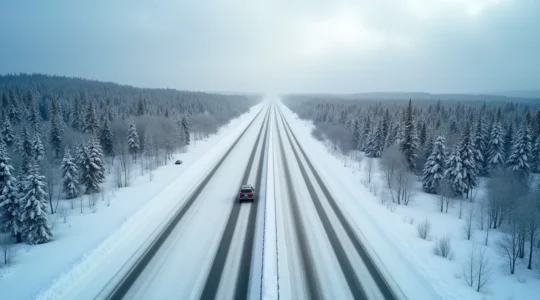
The harsh reality is your vehicle’s advanced driver-assistance systems (ADAS) are dangerously unreliable in a Canadian winter, and trusting them blindly is a setup for accidents and expensive repairs. Winter conditions like slush, ice, and salt spray effectively blind the…
Read more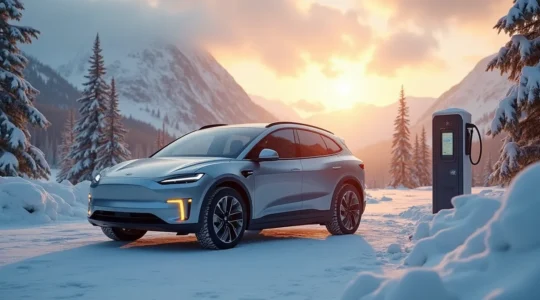
Your electric vehicle’s winter performance is defined by its thermal management system, not just its battery size or drivetrain. A heat pump is critical for efficiency in mild cold, but its advantage diminishes dramatically in deep freeze conditions below -15°C….
Read more
The shift to EVs requires Canadian mechanics to master the surrounding business ecosystem, not just the vehicle’s technology. Provincial regulations and technician availability directly impact repair costs and insurance premiums, creating regional opportunities. The most valuable new skills involve diagnostics…
Read more
Contrary to the belief that more chargers are the only solution, a seamless cross-Canada EV trip depends on untangling a complex web of provincial rules and infrastructure philosophies. Charging reliability varies drastically by province due to different investment models (e.g.,…
Read more