
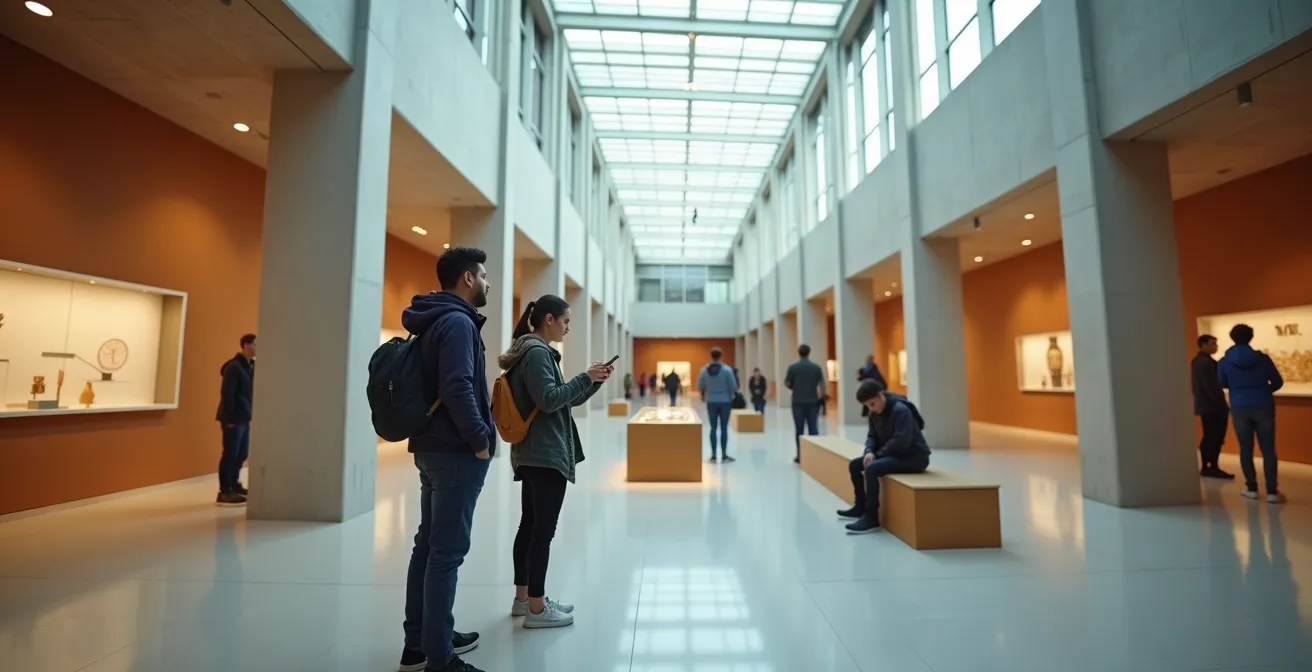
The key to engaging teens isn’t banning screens in museums, but transforming them into tools for active, embodied learning that give youth narrative agency over history.
- Interactive apps reframe “screen time” as physical and cognitive engagement, aligning with curriculum goals.
- From exploring Indigenous oral traditions to documenting personal family migration, this tech empowers users as co-creators of history.
Recommendation: Evaluate museum apps by asking one simple question: Does it make my child a passive viewer or an active participant in the story?
You know the scene: you’ve planned the perfect family trip to a Canadian museum, filled with incredible artifacts and stories of our nation’s past. Yet, your teenager is glued to their phone, scrolling through social media, completely disengaged. It’s a common frustration for parents and teachers, leading to the inevitable guilt and worry over “bad” screen time. For years, the solution seemed to be a battle against devices, using paper worksheets or guided tours to pry their attention away.
But what if the phone wasn’t the enemy? What if, instead of being a distraction, it could be a magic lens? The conversation around technology in educational spaces is shifting dramatically. We’re moving beyond simple gamification—the idea of just making things “cool” with points and badges. The real revolution lies in understanding the difference between passive screen consumption and active, meaningful engagement. It’s about using technology to foster what educators call embodied learning, where digital interaction is tied to physical movement and critical thought.
This is where interactive storytelling apps in Canadian museums are changing everything. They aren’t just another app; they are sophisticated tools of digital curation and narrative design. They invite young visitors not just to look at history, but to touch it, manipulate it, and even contribute to it. This guide will explore how this technology works, from the educational theory that makes it so effective to the powerful ways it’s revitalizing Indigenous oral traditions. We’ll show you how to evaluate these experiences, address valid concerns like data privacy, and even inspire you to use these tools to document your own family’s Canadian story.
For those who prefer a dynamic overview, the following video offers a fantastic look at how experts engage with historical representations, a perfect complement to the ideas we’ll explore in this guide.
To help you navigate this exciting new world, we’ve structured this article to answer your most pressing questions. From the “why” behind this educational shift to the “how” of using these tools at home and in our nation’s top institutions, this is your complete guide to unlocking a new passion for history in the Gen Z explorer.
Summary: Unlocking Canadian History with Interactive Museum Apps
- Active vs. Passive: Why Interactive History Apps Don’t Count as “Bad” Screen Time?
- How to Use StoryMaps to Document Your Family’s History in Canada?
- Is the Extra $10 for the AR Experience at the ROM Worth It?
- The Data Your Location-Based History App Collects While You Walk?
- How to Record and Digitize Your Grandparents’ Stories Before It’s Too Late?
- Why Immersive Storytelling Is Revitalizing Indigenous Oral Traditions?
- Do Employees Actually Remember Procedures Better After VR Training?
- How to Experience Canadian Museums from Home Using Immersive VR Tools?
Active vs. Passive: Why Interactive History Apps Don’t Count as “Bad” Screen Time?
The term “screen time” has become a catch-all for any activity involving a digital device, but this is a massive oversimplification. As an educator, I encourage parents to reframe the question from “How much screen time?” to “What *kind* of screen time?” Watching videos passively is fundamentally different from engaging in an activity that requires problem-solving, physical movement, and critical thinking. This is the crucial distinction that makes well-designed museum apps a powerful educational tool, not a mindless distraction.
The best interactive history apps are built on the principle of active engagement. They don’t just present information; they demand interaction. This might involve physically walking to a specific point in a gallery to unlock a clue, manipulating a 3D model of an artifact on-screen to view it from all angles, or making choices in a narrative that affect the outcome. This process transforms the user from a passive recipient of facts into an active participant in discovery. It’s the difference between reading about tectonic plates and actually reassembling the supercontinent of Gondwana with your own hands in an AR game.
The Royal Ontario Museum’s “Ultimate Dinosaurs” experience is a landmark Canadian example. Visitors use an app to scan dinosaur skeletons, which then magically appear on their screen fully fleshed out with skin and muscle. This is more than just a “cool” effect; it’s a form of cognitive scaffolding. It helps the brain bridge the gap between an abstract skeleton and the living, breathing creature it once was, making a complex scientific concept tangible and memorable. Research confirms this shift in perspective; a 2024 study from Carleton University found that while Gen Z values museums for education, they seek experiences that are also entertaining and participatory.
Action Plan: Evaluating a Museum App’s Educational Value
- Alignment: Check if the app’s content aligns with provincial curriculum outcomes, like Ontario’s Grade 7 history for a War of 1812 app.
- Engagement: Verify the app promotes active engagement through physical movement within the museum space.
- Inquiry: Assess whether the content encourages inquiry-based learning and the ability to consider different historical perspectives.
- Collaboration: Look for features that support cooperative family experiences rather than isolated screen time.
- Citizenship: Evaluate if the app helps develop digital citizenship skills for critically analyzing historical narratives.
Ultimately, these apps don’t replace the museum experience—they augment it. They use technology to foster curiosity and provide a new entry point into historical inquiry, turning a generation of digital natives into budding historians.
How to Use StoryMaps to Document Your Family’s History in Canada?
One of the most exciting aspects of interactive storytelling technology is that it isn’t just for large institutions. Tools like ArcGIS StoryMaps allow anyone, including your family, to become digital curators of their own history. Imagine plotting your grandparents’ journey from their home country to their first house in Canada on an interactive map, complete with old photos, scanned documents, and even audio clips of them telling the story in their own voice. This is no longer a complex technical project; it’s an accessible and deeply meaningful way to preserve your family’s legacy.
The process starts by gathering your raw materials. This is a wonderful opportunity for intergenerational connection, involving teens in the detective work of digging through old boxes, scanning photos, and interviewing relatives. You can then leverage incredible public resources. Library and Archives Canada has digitized thousands of immigration records, including arrival documents from iconic entry points like Pier 21. Statistics Canada offers historical census data that can help trace how your family settled and moved across provinces over the decades.
The magic happens when you combine these elements into a place-based storytelling format. A StoryMap allows you to pin media to specific geographic locations. A photo of your great-grandfather’s first farm can be pinned to its exact location in rural Saskatchewan. An audio clip of your grandmother describing her arrival in Montreal can be linked to the port where her ship docked. For families with Indigenous heritage, incorporating official treaty territory maps provides crucial context about the land and its history before settlement. This act of mapping creates a powerful visual narrative of migration, resilience, and belonging in the Canadian landscape.
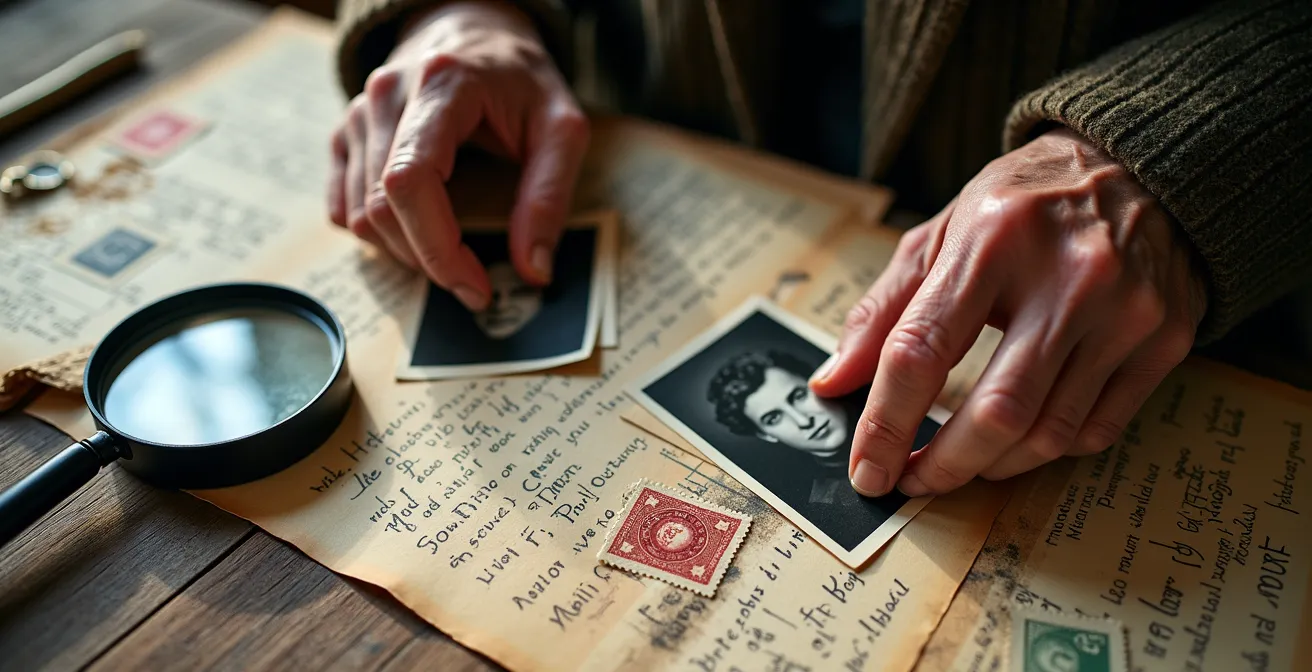
This hands-on process of digital curation transforms history from a dry subject into a personal, living narrative. It gives teens narrative agency, allowing them to construct and share their family’s story in a modern, compelling format. Here are some concrete steps to get you started:
- Start with Library and Archives Canada digitized records for immigration documents like Pier 21 arrivals.
- Access Statistics Canada historical census data to track family settlement patterns across the country.
- Incorporate treaty territory maps from official Indigenous government sources for essential land context.
- Use historic Canadian railway maps to trace migration routes across different provinces.
- For Métis families, search scrip records; for Vietnamese boat people, use dispersal settlement records to understand settlement patterns.
- Embed audio clips of family stories at specific map locations, following guidelines from the Canadian Oral History Association.
By engaging with these tools, your family isn’t just consuming history; you are actively preserving and contributing to the diverse tapestry of Canadian stories.
Is the Extra $10 for the AR Experience at the ROM Worth It?
It’s the question every parent asks at the ticket counter: you’ve already paid for general admission, so is that digital add-on *really* worth the extra money? When it comes to something like the Royal Ontario Museum’s Augmented Reality (AR) experiences, which can cost around $10 per device, it’s a valid concern. The answer, however, lies in evaluating it not as an expense, but as an investment in a different kind of educational experience.
Unlike a passive movie ticket, which is a one-time, individual cost, a museum AR experience is often shareable on a single device among a family. More importantly, it delivers a level of unique interaction that traditional exhibits can’t match. The ability to virtually hold an artifact in your hands, rotate it, and see it reconstructed is a fundamentally different and more memorable form of learning. These experiences are not developed in a vacuum; they are often the result of significant investment and are meticulously aligned with educational goals. For example, the Digital Museums Canada’s Community Stories program has invested in over 400 digital projects nationwide, showing the high value Canadian institutions place on these tools for visitor engagement.
When you break down the value proposition, the cost often appears much more reasonable. An AR experience provides 45-60 minutes of highly interactive, curriculum-aligned content that the whole family can participate in together. It fosters conversation, collaboration, and a deeper connection to the subject matter. Furthermore, many of these digital add-ons are not static; the ROM, for instance, updates its content quarterly, adding significant repeat visit value.
To put it in perspective, let’s compare the value of the ROM’s AR experience against other common family entertainment expenses in a city like Toronto.
| Criteria | ROM AR ($10) | Movie Ticket (Toronto) | Other Museum Digital Add-ons |
|---|---|---|---|
| Duration | 45-60 minutes | 90-120 minutes | 30-45 minutes avg |
| Shareable on one purchase | Yes (family device) | No (individual) | Varies |
| Unique interaction | 3D artifact manipulation | Passive viewing | Audio guides mainly |
| Educational value | High (curriculum-aligned) | Variable | High |
| Repeat visit value | Content updates quarterly | One-time | Static content |
So, is it worth it? If your goal is to transform a museum visit from a passive walk-through into an active, collaborative, and memorable learning adventure for your teen, then the answer is a resounding yes. It’s a small price for a big impact on their engagement with history.
The Data Your Location-Based History App Collects While You Walk?
In our digital age, convenience often comes with a hidden cost: our data. As a parent or teacher encouraging the use of a location-based history app, it’s natural and responsible to wonder what information is being collected, how it’s being used, and whether your child’s privacy is protected. The good news is that Canadian museums operate under some of the world’s most robust privacy legislation, providing a strong framework of protection for users.
First and foremost, any app developed by or for a Canadian public institution must comply with strict privacy laws. These are primarily governed by the Personal Information Protection and Electronic Documents Act (PIPEDA) at the federal level, along with provincial equivalents. This means they are legally required to be transparent about what data they collect and how they use it. Typically, location-based apps track two main types of data: your physical path through the museum (pathing) and how long you spend at certain exhibits (dwell time). This information is incredibly valuable for museums to improve exhibit design and visitor flow, but it must be handled responsibly.
The key here is anonymization. Reputable museum apps will anonymize this data, stripping it of any personally identifiable information before it’s analyzed. The goal is to understand visitor behaviour in aggregate, not to track individuals. However, the responsibility doesn’t end there. When apps engage with Indigenous content, there is an even higher standard to meet: the OCAP® principles (Ownership, Control, Access, and Possession), which assert that First Nations have complete control over their own data. Any app dealing with Indigenous knowledge must respect this framework of data sovereignty.
As a user, you have the power to be an informed consumer. Before downloading, take a few minutes to review the app’s privacy policy. It might seem like a chore, but it contains crucial information. Here’s a quick guide to what you should be looking for:
- Check if the app’s privacy policy specifies the server location, which should preferably be on Canadian soil.
- Verify how pathing and dwell time data is anonymized before it is stored for analysis.
- Look for clear statements about limitations on sharing data with any third parties.
- For apps engaging with Indigenous content, ensure they state their compliance with OCAP® principles.
- Review how the aggregated data is used for improving the visitor experience.
By taking these simple steps, you can confidently embrace the educational power of these apps, knowing that the experience is not only enriching but also respects your family’s privacy.
How to Record and Digitize Your Grandparents’ Stories Before It’s Too Late?
While museum apps offer incredible windows into our collective past, some of the most powerful histories are the ones sitting in our own living rooms. The stories of our grandparents and elders are priceless artifacts, but they are also ephemeral. The same digital tools that are transforming museums can be used for a deeply personal and urgent project: conducting oral history interviews to preserve your family’s narrative for generations to come. This is a project where a teen’s tech-savviness can be a huge asset.
The first step is preparation. This isn’t just about setting up a microphone; it’s about creating a comfortable and respectful space for storytelling. Contacting an organization like Historica Canada’s The Memory Project can provide excellent templates and question ideas. Frame your questions around key Canadian milestones your grandparents might have lived through—the excitement of the Confederation centennial in 1967, the tension of the October Crisis, or the national pride of the 1988 Calgary Winter Olympics. These shared reference points can unlock a wealth of personal memories.
The recording process itself should be approached with sensitivity. It’s better to schedule multiple short sessions to avoid tiring your interviewee. For many, recounting the past can be emotional, especially when touching on traumatic subjects like experiences in residential schools or during wartime. An empathetic approach is crucial. The goal is not an interrogation, but a conversation. The technology should be as unobtrusive as possible—a simple smartphone with a quality recording app or an external microphone is often all you need. After the stories are recorded, you can use Canadian digitization services that specialize in converting old media like 8mm films and photo slides to create a complete multimedia archive.
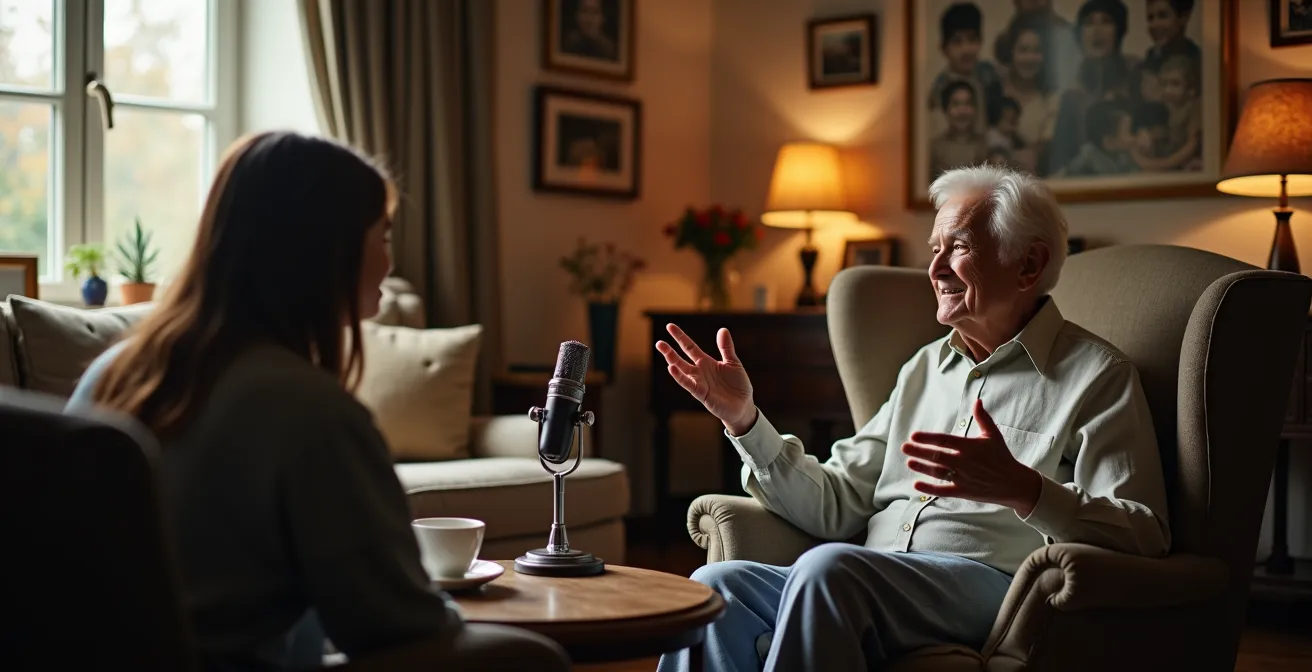
This act of listening and recording is a profound gift. Once you have these precious digital files, consider their future. You can create copies for all family members, and you might also consider donating a copy to a local archive or the Canadian Museum of Immigration at Pier 21, contributing your family’s unique story to the larger Canadian narrative. Here’s a quick guide for this meaningful project:
- Contact Historica Canada’s The Memory Project for recording templates and inspiration.
- Prepare questions about Canadian milestones: the October Crisis, the 1988 Winter Olympics, the confederation centennial.
- Use Canadian digitization services specializing in converting 8mm film and photographic slides.
- Schedule multiple short sessions to avoid fatigue, especially when discussing sensitive topics.
- Consider donating copies to local archives or the Canadian Museum of Immigration.
- Apply empathetic listening approaches for traumatic subjects like residential schools or wartime experiences.
By taking on this project, you and your teen are not just learning history; you are becoming the archivists of your own family’s priceless legacy.
Why Immersive Storytelling Is Revitalizing Indigenous Oral Traditions?
Perhaps the most profound and vital application of interactive storytelling technology in Canada is in the revitalization of Indigenous oral traditions. For millennia, history, law, and culture were passed down through spoken word, stories inextricably linked to specific places on the land. Colonialism attempted to sever these connections, but today, Indigenous communities are harnessing AR and VR to reclaim their narratives and reassert their presence on their ancestral territories in a powerful act of digital sovereignty.
This isn’t about outsiders telling Indigenous stories; it’s about communities building their own tools to share their knowledge on their own terms. As the Digital Museums Canada Initiative states in its Community Stories Program Guidelines, “Digital sovereignty allows Indigenous communities in Canada to take control of their narrative, preserving and sharing their traditions on their own terms, directly countering centuries of their stories being told by outsiders.” This shift is monumental. It moves the authority from the museum curator or historian to the Elder, the knowledge keeper, and the community itself.
Digital sovereignty allows Indigenous communities in Canada to take control of their narrative, preserving and sharing their traditions on their own terms, directly countering centuries of their stories being told by outsiders.
– Digital Museums Canada Initiative, Community Stories Program Guidelines
Imagine visiting Banff or Jasper National Park. With a custom-built app, you could point your phone at a mountain and not only see its English name but also its traditional Stoney Nakoda or Cree name. You could hear an Elder tell a creation story associated with that very peak, a story that has been told on that land for thousands of years. This is place-based storytelling at its most meaningful. These projects, often developed through close collaboration between Elders, youth, and tech developers, overlay a rich, digital layer of Indigenous knowledge onto the physical landscape.
Case Study: Digital Sovereignty in Canadian Indigenous Museums
Indigenous communities across Canada are using AR apps to overlay traditional place names and stories onto territories. Projects in Banff and Jasper allow visitors to experience Cree creation stories based on their location, with development involving collaboration between elders, youth, and tech developers. These tools empower communities to control their narratives on their own terms, ensuring authenticity and cultural continuity.
For young Indigenous people, it’s a powerful way to connect with their heritage and language. For non-Indigenous Canadians, it offers an unprecedented opportunity to experience and respect the deep history of the land we all share, directly from the knowledge keepers themselves.
Do Employees Actually Remember Procedures Better After VR Training?
The magic of an immersive museum experience doesn’t just happen on the visitor’s screen; it begins with well-prepared staff. As museums across Canada invest in complex AR and VR exhibits, a critical question arises: how do we train our teams to support these new technologies and engage with a tech-savvy Gen Z audience? The answer, increasingly, is to use the very same immersive tools for staff training, and the results are incredibly promising.
Traditional training often involves reading manuals or watching videos—passive activities that lead to low knowledge retention. Virtual Reality (VR) training, however, plunges employees into realistic, simulated environments where they can practice procedures and interactions safely. This is a form of embodied learning. Instead of reading about how to guide a visitor with cognitive needs through a busy exhibit, a staff member can experience a simulation from that visitor’s perspective, building a profound sense of empathy and practical understanding.
Canadian institutions are at the forefront of this innovation. Ingenium in Ottawa, for example, is exploring VR to help staff master accessibility training. The Canadian War Museum has proposed VR modules for its docents to practice navigating sensitive and emotional questions from visitors about difficult historical topics. This allows them to build confidence and develop effective communication strategies in a private, repeatable, and safe virtual space before they ever step onto the museum floor.
Case Study: VR Training Applications in Canadian Museums
Canadian museums like Ingenium in Ottawa are exploring VR for accessibility training, helping staff guide visitors with different physical or cognitive needs through complex exhibits. The Canadian War Museum has proposed VR modules for docents to practice handling sensitive visitor questions about difficult exhibits in safe, simulated environments.
The impact of this focused training is tangible. When staff are confident with the technology and trained in modern engagement strategies, the quality of the visitor experience soars. Data from the Made By Us network shows that museums see an average 25% increase in young adult engagement after staff receive dedicated training on Gen Z engagement strategies. Better-trained staff lead to better-guided visitors, creating a more welcoming and intellectually stimulating environment for everyone.
So when you have a wonderfully seamless and engaging AR experience at a museum, remember the unseen investment: the well-trained, confident staff member who is ready to help because they’ve already practiced it in the virtual world.
Key Takeaways
- The crucial distinction is not “screen time” but “active vs. passive” engagement; good apps promote embodied learning.
- Interactive tools empower users, turning them from consumers into creators of historical narratives, whether for personal family history or community-led Indigenous stories.
- Practical concerns like cost and data privacy are valid, but Canadian museums offer strong value and operate under robust privacy laws like PIPEDA.
How to Experience Canadian Museums from Home Using Immersive VR Tools?
One of the most significant barriers to accessing Canada’s incredible museums has always been geography. But what if you could explore the Royal BC Museum’s archives from your home in Halifax, or tour the Art Gallery of Ontario from a classroom in Calgary? The same immersive technologies transforming in-person visits are making our national treasures more accessible than ever before. These virtual experiences are not just pale imitations of the real thing; they are rich, curated deep dives that offer a new way to connect with Canadian culture and history.
This shift is more important than ever, given how younger audiences discover content. It’s a startling fact that over 60% of Gen Z now use TikTok as a search engine, often bypassing Google entirely. They are digital natives who expect content to be visual, engaging, and available on demand. Museums that embrace this reality by creating high-quality virtual tours, online collections, and video series are meeting this generation where they are. And you don’t always need a high-end VR headset; many of the best experiences are accessible through a simple web browser.
From art lovers to science enthusiasts, there is a virtual doorway open to everyone. You can take a virtual walk through the AGO’s exhibitions, watch scientists at Telus Spark demonstrate experiments, or browse the National Music Centre’s collection of iconic Canadian instruments. The Royal Ontario Museum offers online access to a staggering 13 million artifacts from its collection, allowing for a depth of exploration that would be impossible during a single physical visit. These digital archives are an invaluable resource for school projects, personal curiosity, and lifelong learning.
Ready to start your virtual journey? Here is a guide to some of the best Canadian museum experiences you can have from the comfort of your couch:
- For Art Lovers: Explore the AGO’s extensive online collection and curated virtual exhibitions.
- For History Buffs: Access the Canadian Museum of History’s deep-dive digital archives and online exhibits.
- For Science Enthusiasts: Watch Telus Spark’s ‘Spark Science from Home’ YouTube series for fun experiments.
- For Music Fans: View the National Music Centre’s top 150 Collection items online, celebrating Canadian music history.
- For Natural History: Explore the Royal BC Museum’s online archives and watch their ‘This Week in History’ video clips.
- Without a VR Headset: Access the ROM’s online collection of 13 million artifacts directly through their website.
So tonight, instead of defaulting to another streaming service, take your family on a trip. Visit a museum in a different province, explore an archive you’d never be able to see in person, and spark a new conversation about Canada’s rich and diverse heritage.