
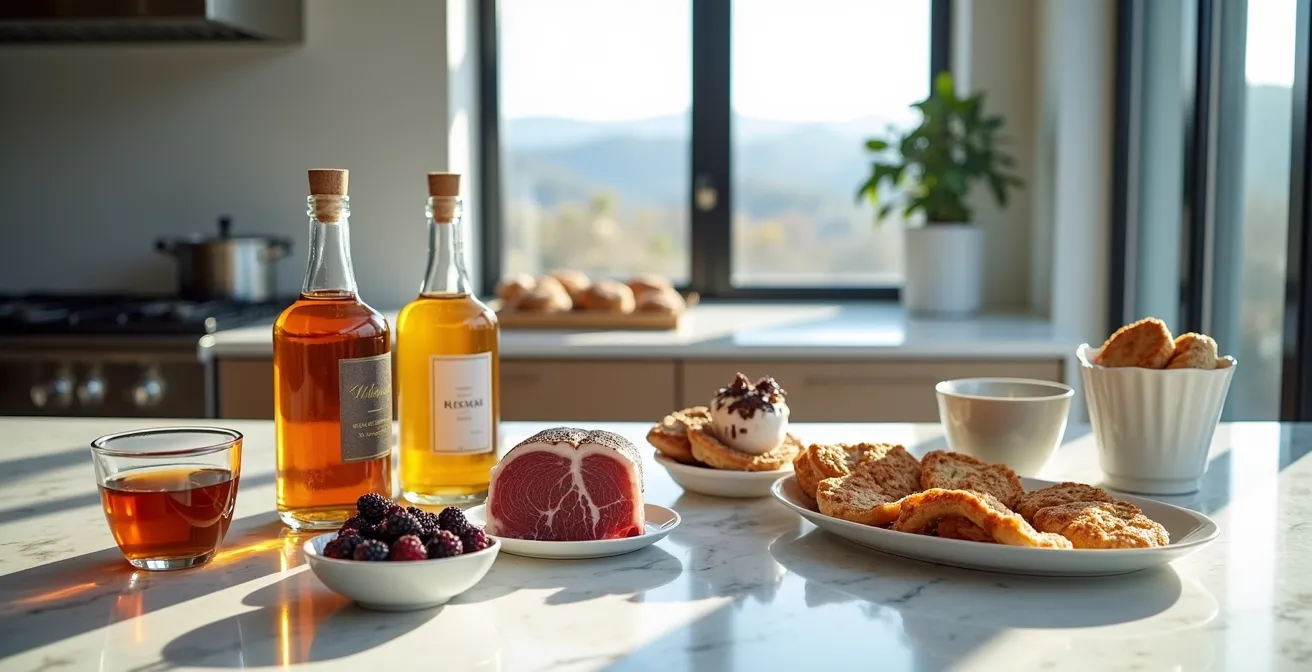
Canada’s global culinary reputation is moving beyond maple syrup, driven by strategic product narratives and market-specific innovation.
- Success lies in telling the story of terroir, from Niagara’s microclimate for icewine to the prairie ecosystems that nurture bison.
- Value-chain innovation is key, turning traditional desserts into export-ready kits and winter vegetables into high-value powders.
Recommendation: Focus on a product’s unique story and its targeted market application, not just its origin.
When international chefs and food enthusiasts think of Canadian cuisine, their minds often land on a few iconic staples: poutine’s comforting richness, the sweet chew of a butter tart, and of course, maple syrup. While these are cherished pillars of Canada’s culinary identity, they represent only the most visible layer of a much deeper, more dynamic food landscape. A new generation of ingredients is quietly emerging from Canada’s diverse terroirs, poised for the global stage.
The true story of Canada’s next culinary chapter isn’t just about the ingredients themselves, but about the sophisticated strategies transforming them from local treasures into premium global exports. It’s a story of culinary innovation, clever market positioning, and the powerful narratives that connect a product to its place. This is not simply about what Canada grows, but how it is being thoughtfully curated, packaged, and presented to the world.
This report decodes the culinary and commercial strategies behind some of Canada’s most promising food exports. We will explore how producers and exporters are leveraging unique characteristics, from the specific grade of maple syrup preferred in Japan to the eco-conscious story behind bison ranching, to carve out a new identity for Canadian food on the world’s most discerning plates.
Table of Contents: The New Canadian Pantry: 8 Emerging Ingredients Redefining Global Cuisine
- Golden vs. Amber: Which Maple Syrup Grade Is Best for Baking?
- Why Saskatoon Berries Are the “Superfood” You Haven’t Tried Yet?
- Cheese or Dessert: What Actually Pairs with Niagara Vidal Icewine?
- How to Cook Bison Steaks Without Making Them Tough?
- Nanaimo Bars vs. Butter Tarts: The Sweet Rivalry Explained
- The 5 Kensington Market Food Stalls That Locals Keep Secret from Tourists
- Lobster or Scallops: Which Is Fresher in Nova Scotia in September?
- How to Build a Weekly Meal Plan Around a CSA Box in Winter?
Golden vs. Amber: Which Maple Syrup Grade Is Best for Baking?
While maple syrup is Canada’s most famous export, its global strategy is becoming increasingly nuanced. The question is no longer just “Canadian maple syrup,” but “which grade for which market?” For exporters, understanding this distinction is crucial for premium positioning. The global market is significant, and while the U.S. remains the largest importer, sophisticated markets are emerging. In fact, 6.3% of exports go to Germany and 3.7% to Japan, markets where grade specificity is key.
The choice between Golden and Amber syrup for baking depends entirely on the desired outcome and target audience. Golden, with its delicate taste and light colour, is often positioned as a premium, high-end product. Amber, with its more robust and classic maple flavour, is marketed for its authenticity and is versatile for both sweet and savory applications. Understanding this strategic difference is vital, as supply can be volatile. The Federation of Quebec Maple Syrup Producers’ strategic reserve, which hit a 16-year low in 2023, directly influences global pricing, forcing exporters to be strategic about which grades they promote to which markets.
This table illustrates how different grades are positioned for distinct international markets, moving the conversation from a simple commodity to a targeted, high-value ingredient.
| Grade | Japan Market | EU Market | Premium Application |
|---|---|---|---|
| Golden | Preferred for delicate pastries | Premium positioning | High-end gastronomy, cocktails |
| Amber | Traditional culinary use | Authentic ‘Canadiana’ | Savory applications, marinades |
| Dark | Limited market | Niche artisanal | Baking, sauces |
Ultimately, “best” is subjective and market-dependent. For delicate French-style pastries destined for a premium Japanese retailer, Golden is superior. For a classic North American-style pecan pie mix targeting the EU, Amber provides the authentic flavour profile consumers expect. The successful exporter knows their end-user and makes a calculated choice.
Why Saskatoon Berries Are the “Superfood” You Haven’t Tried Yet?
Beyond the well-known blueberry and cranberry lies an emerging star of the Canadian prairies: the Saskatoon berry. With a complex, sweet, and slightly nutty flavour reminiscent of almonds and cherries, this fruit is more than just a regional delicacy. It represents a significant export opportunity, particularly as a unique alternative in the crowded global berry market. The province of Saskatchewan is the heartland of its production, with 28% of Canada’s orchards and 34% of commercial acreage dedicated to the fruit.
The “superfood” label isn’t just marketing hype. Saskatoon berries are rich in antioxidants, fibre, and vitamins, giving them a compelling health narrative for export markets. The challenge, and the opportunity, lies in education and positioning. As University of Saskatchewan researcher Jim Fang noted, the strategy is clear: “The saskatoon berry will be offered as an alternative to the blueberry.” This means highlighting its unique flavour profile and superior nutritional content to stand out.
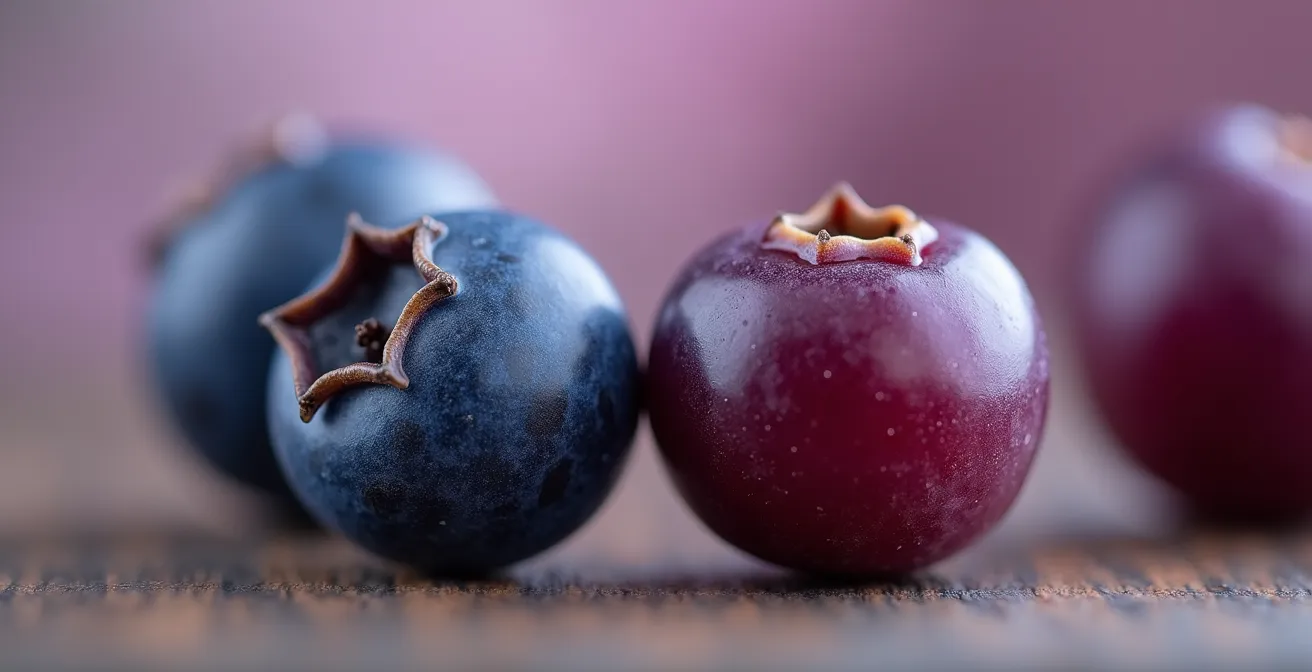
The visual appeal of the berry, with its deep purple-blue skin and natural waxy bloom, is a key part of its premium story. For exporters, the product’s narrative can be built around its wild prairie origins, its hardy nature, and its adoption by chefs in jams, pies, and even savory sauces. It’s a taste of the Canadian West, concentrated in a small, powerful berry that offers a novel experience for consumers tired of the usual options.
Cheese or Dessert: What Actually Pairs with Niagara Vidal Icewine?
Niagara’s Vidal Icewine is one of Canada’s most luxurious agricultural exports, a liquid gold concentrated by the region’s unique winter microclimate. The conventional wisdom is to pair it with dessert or strong cheese, but this limited view underserves its potential in sophisticated global markets. The future of icewine export, particularly to premium-focused Asian markets, lies in breaking these conventions and exploring savory applications.
The strategy involves repositioning icewine not just as a dessert wine but as a versatile, high-end culinary ingredient. This includes creating savory glazes for rich meats like Quebec foie gras, developing complex vinaigrettes, or using it as a marinade for pork. This approach significantly expands its use cases for chefs and home cooks. The Canadian government itself has recognized this potential, with programs like the AgriMarketing Program investing in expanding premium exports. This strategic support is crucial, as the VQA (Vintners Quality Alliance) designation acts as a critical quality guarantee, helping Niagara icewine command premium prices and differentiate itself from competitors.
Educating sommeliers and importers is a key part of this strategy. By contrasting Vidal Icewine with other world-class sweet wines like Sauternes from France or Tokaji from Hungary, exporters can highlight its unique aromatic profile—rich with notes of apricot, lychee, and honey—and its vibrant acidity, which makes it an exceptional partner for a wider range of foods than previously imagined. The true pairing for icewine is not a specific food, but culinary creativity.
How to Cook Bison Steaks Without Making Them Tough?
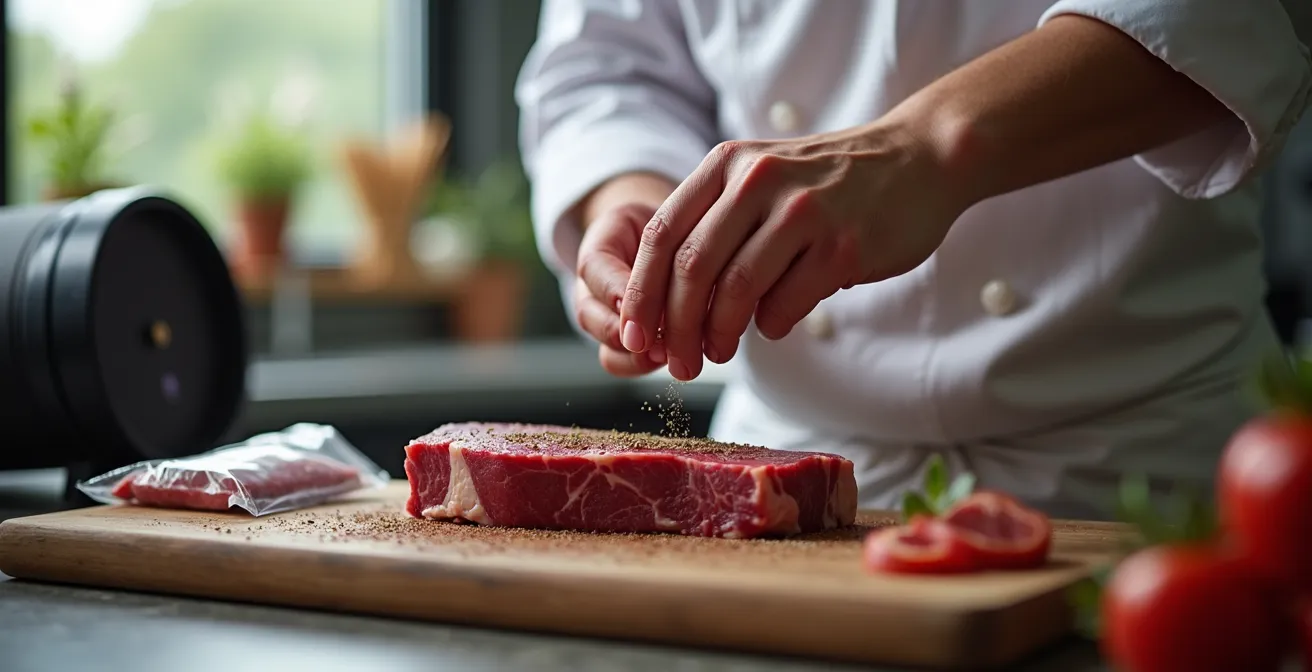
Bison meat is rapidly gaining traction as a premium Canadian export, celebrated for its lean profile, rich flavour, and compelling sustainability story. With Canadian bison exports achieving $90 million in 2021, the global demand is clear. However, its greatest strength—its leanness—is also its greatest culinary challenge. The key to cooking bison steak without making it tough is to respect its low-fat content through precise temperature control and avoiding overcooking at all costs.
Because bison has less fat marbling than beef, heat doesn’t distribute as easily, and moisture can be lost quickly. The best methods involve either a quick, high-heat sear for rare to medium-rare results or a low-and-slow technique. Modern culinary techniques like sous-vide cooking are perfectly suited for bison, allowing chefs to bring the steak to a precise internal temperature before a final, brief sear for crust development. This guarantees a tender, juicy result every time and positions bison as a sophisticated, chef-driven product.
This technical aspect is part of a larger product narrative that resonates with modern consumers. As Terry Kremeniuk, Executive Director of the Canadian Bison Association, notes, the appeal goes beyond the plate.
Bison are gaining favour among eco-conscious consumers as the livestock help balance and maintain a healthy ecosystem where they graze
– Terry Kremeniuk, Executive Director, Canadian Bison Association
This story of ecological harmony, combined with its nutritional benefits and premium flavour, creates a powerful export identity. Teaching consumers and chefs how to properly prepare it is the final, crucial step in unlocking its global potential.
Nanaimo Bars vs. Butter Tarts: The Sweet Rivalry Explained
The debate over Canada’s superior dessert—the no-bake, chocolatey Nanaimo Bar from the West Coast or the gooey, baked Butter Tart from Ontario and Quebec—is a classic piece of Canadiana. For an exporter, however, this rivalry is less about taste and more about a case study in regional identity and, crucially, export readiness. The path to international success for these traditional sweets lies in value-chain innovation and adapting recipes for a global supply chain.
A simple comparison reveals their differing strengths and weaknesses from an export perspective. The Nanaimo Bar, with its layers of custard, chocolate, and coconut crumb base, is often sold frozen. The Butter Tart’s strength is its simple, iconic filling of maple syrup, butter, and eggs in a pastry shell. The real innovation, as highlighted by members of the Canadian Food Exporters Association, is transforming these beloved recipes into shelf-stable baking mixes or fillings. This allows international consumers to recreate an authentic Canadian experience in their own kitchens, overcoming the challenges of shipping finished, perishable baked goods.
This table breaks down the core differences and how they translate to export potential.
| Aspect | Nanaimo Bars | Butter Tarts |
|---|---|---|
| Regional Identity | West Coast innovation | Ontario/Quebec tradition |
| Core Ingredients | Coconut, chocolate, custard | Maple syrup, butter, eggs |
| Export Format | Frozen bars, mix kits | Shelf-stable filling, pastry mix |
| Premium Variations | Haskap berry ganache | Birch syrup versions |
Furthermore, premium variations—like adding Haskap berries (another emerging Canadian fruit) to a Nanaimo Bar ganache or using artisanal birch syrup in a butter tart—elevate these homespun treats into high-end products. The winner of the “sweet rivalry” in the export market won’t be decided by Canadian taste buds, but by which dessert can be more effectively deconstructed, packaged, and reassembled with a premium story in a foreign market.
The 5 Kensington Market Food Stalls That Locals Keep Secret from Tourists
Toronto’s Kensington Market is more than a vibrant, multicultural neighbourhood; it’s a living laboratory for Canada’s next food trends. While tourists flock to the more visible shops, the real insights are found in the small, unassuming stalls where culinary innovation happens daily. It is here that fusion concepts are born, and local ingredients are tested on one of the world’s most diverse palettes. As esteemed food journalist Alexandra Gill puts it, this is ground zero for the future of Canadian food.
Kensington Market acts as an R&D lab for Canada’s next exportable food trends
– Alexandra Gill, Award-winning food journalist and Iron Chef Canada judge
For a trend forecaster, the specific stalls are less important than the patterns they reveal. One stall might be perfecting a Colombian-Canadian cheese arepa, another might be incorporating Ontario-grown ginger into Jamaican patties. These are not just meals; they are proof-of-concept for new product categories. An exporter can observe which fusion flavours have the broadest appeal, trace unique ingredients back to local farms, and witness the genesis of a product’s “artisanal story” firsthand. The journey from a local market favourite to a packaged, export-ready product follows a clear strategic path.
Blueprint: From Market Stall to Export Success
- Identify fusion concepts with global appeal potential (e.g., Asian-Latin, European-Canadian).
- Trace unique ingredients to Ontario farms to build a compelling supply chain story.
- Document the product’s journey from a local favourite to a scalable, packaged good.
- Test market reception by leveraging Toronto’s diverse demographics as a focus group.
- Develop a plan to scale production while maintaining the artisanal quality and story that made it unique.
The “secret” of Kensington Market isn’t a list of five specific places, but the understanding that this dynamic environment provides a real-time blueprint for identifying, developing, and validating the next wave of Canadian food exports.
Lobster or Scallops: Which Is Fresher in Nova Scotia in September?
For premium seafood, freshness is the ultimate currency. In Nova Scotia, the answer to this question in September is unequivocally scallops. While lobster seasons vary, the Digby scallop fishery is often in full swing, offering a product of exceptional quality. This seasonal distinction is not just trivia for locals; it’s a powerful marketing tool for exporters looking to create a narrative of urgency and terroir.
The strategy is to market “September Scallops” not just as a product, but as an event. By tying the product to a specific, limited time and place, exporters create a sense of exclusivity that commands a premium. A case study of Nova Scotia exporters demonstrated that this storytelling—focusing on the unique cold-water terroir of the Atlantic and the limited seasonal availability—resulted in ‘September Scallops’ fetching price premiums of up to 30% in high-end restaurants in Dubai and Tokyo. This is a masterclass in turning a logistical detail into a luxury brand.
This premium positioning is only possible because of Canada’s excellence in logistics. The promise of “fresh from the Atlantic” must be delivered upon. Advanced cold-chain logistics ensure that it can take as little as 24-48 hours to get from the boat to international plates, preserving the delicate, sweet flavour and firm texture that define a world-class scallop. In the global seafood market, the story sells the first scallop, but it’s the logistical perfection that ensures the second order.
To remember
- Product Narrative is Key: The story behind an ingredient (terroir, seasonality, sustainability) drives its premium value.
- Innovation Unlocks Tradition: Modern techniques and packaging are making traditional Canadian foods export-ready.
- Market-Specific Strategy Wins: The most successful exports are tailored to the tastes and demands of specific global markets.
How to Build a Weekly Meal Plan Around a CSA Box in Winter?
At first glance, a Canadian winter Community Supported Agriculture (CSA) box—filled with hearty root vegetables, storage apples, and greenhouse greens—seems like the epitome of local, non-exportable food. However, for a savvy trend forecaster, this box represents a treasure trove of raw materials for high-value, innovative export products. The strategy is not to export the raw vegetables, but to transform them through processing and preservation.
This is where value-chain innovation becomes paramount. A surplus of winter carrots can be transformed into a vibrant, nutrient-dense powder for the health food market. Cold-hardy greens like kale can be fermented into kimchi or kraut with a unique Canadian twist. Storage apples can become shelf-stable artisanal preserves, and greenhouse-grown peppers and tomatoes can be packaged for US winter markets willing to pay a premium for freshness from a nearby, reliable source.
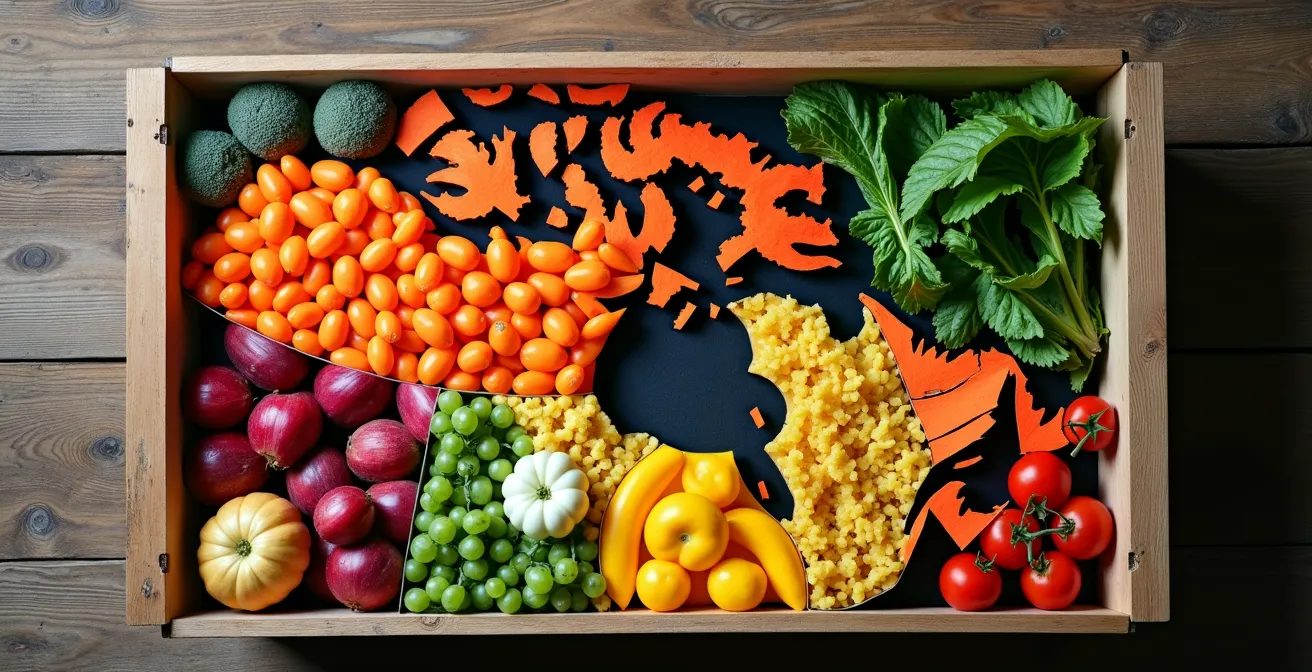
The weekly meal plan for a local consumer becomes a product development plan for an exporter. Each item in the box is assessed for its potential:
- Unique Root Vegetables (Parsnips, Rutabaga): Ideal for powder/concentrate production.
- Cold-Hardy Greens (Kale, Cabbage): Perfect for developing unique fermented products.
- Storage Fruits (Apples, Pears): Foundation for creating shelf-stable preserves and butters.
- Greenhouse Produce (Peppers, Tomatoes): Can be marketed as fresh, local alternatives for nearby winter markets.
This approach views the CSA box not as an end-point, but as the starting point of a creative and profitable journey. It’s about seeing the potential for a global product in the most local of ingredients, capturing the essence of Canadian agricultural resilience and ingenuity.
For exporters and food innovators, the next step is to identify the unique narrative within your own product and build a strategy to share it with the world. By focusing on terroir, innovation, and market-specific storytelling, Canada’s pantry is ready for its global close-up.